Medication Safety Conversation Guide
If your medication has a Black Box Warning, it doesn't necessarily mean you shouldn't take it. Use this tool to generate a personalized list of questions for your healthcare provider based on your specific concerns.
Your Profile & Concerns
Your Doctor Discussion List
Fill out the form to create your personalized checklist.
You're at the pharmacy, picking up a new prescription, and you notice a bold, black border surrounding a section of the fine print. It looks ominous, and for good reason. This isn't just another list of side effects like dry mouth or drowsiness; it's a FDA black box warning is the most serious safety advisory the U.S. Food and Drug Administration can mandate for a prescription medication . When you see this, the government is telling you that the risk of a severe reaction-potentially death or permanent injury-is high enough that it needs to be front and center before you take the first pill.
But here is the part that often confuses people: a boxed warning doesn't mean the drug is "poison" or that you should never take it. It means the risk-benefit conversation needs to be much more intense. For some, the life-saving benefit of a drug outweighs a serious risk, while for others, the warning is a hard "no." Understanding these alerts helps you ask your doctor the right questions and stay safe while getting the treatment you need.
What exactly is a boxed warning?
In the medical world, these are officially called "boxed warnings." They get the nickname "black box" because the FDA requires the text to be enclosed in a prominent black border. This ensures that no doctor or pharmacist can claim they "missed it" in the pages of a drug insert. Unlike standard precautions, these alerts highlight risks that can lead to death or serious disability.
As of 2022, over 400 medications carry these warnings. They aren't just about side effects; sometimes they include specific instructions on how to use the drug safely or warnings about certain groups of people-like pregnant women or the elderly-who should avoid the medication entirely. Essentially, it's the FDA's way of shouting, "Pay attention here!"
| Feature | Standard Warning | Boxed Warning (Black Box) |
|---|---|---|
| Visual Presentation | Standard text in a list | Bold text inside a black border |
| Risk Level | Common or mild side effects | Life-threatening or permanent harm |
| Placement | Middle or end of labeling | Very beginning of the package insert |
| Clinical Impact | General caution | Requires rigorous risk-benefit analysis |
How the FDA decides to add a warning
The FDA doesn't just slap a black box on a drug on a whim. There's a rigorous process involved, often involving the Federal Food, Drug, and Cosmetic Act . While some warnings are added before a drug even hits the market during clinical trials, many are added years later. This happens through post-marketing surveillance , where the FDA monitors how the drug behaves in the "real world."
Most of this data comes from the FDA Adverse Event Reporting System (FAERS). This system relies on reports from patients and doctors via the MedWatch program. When the FDA notices a pattern-say, a sudden spike in liver failure across thousands of patients using a specific drug-they investigate. If the evidence shows a significant risk, they mandate the boxed warning.
Typically, the FDA looks for three triggers:
- The risk is so severe that it could outweigh the drug's benefits for certain people.
- The risk can be managed if the doctor follows a very specific monitoring protocol.
- The drug is simply too dangerous for a specific population (a contraindication).
Does a black box warning mean you shouldn't take the drug?
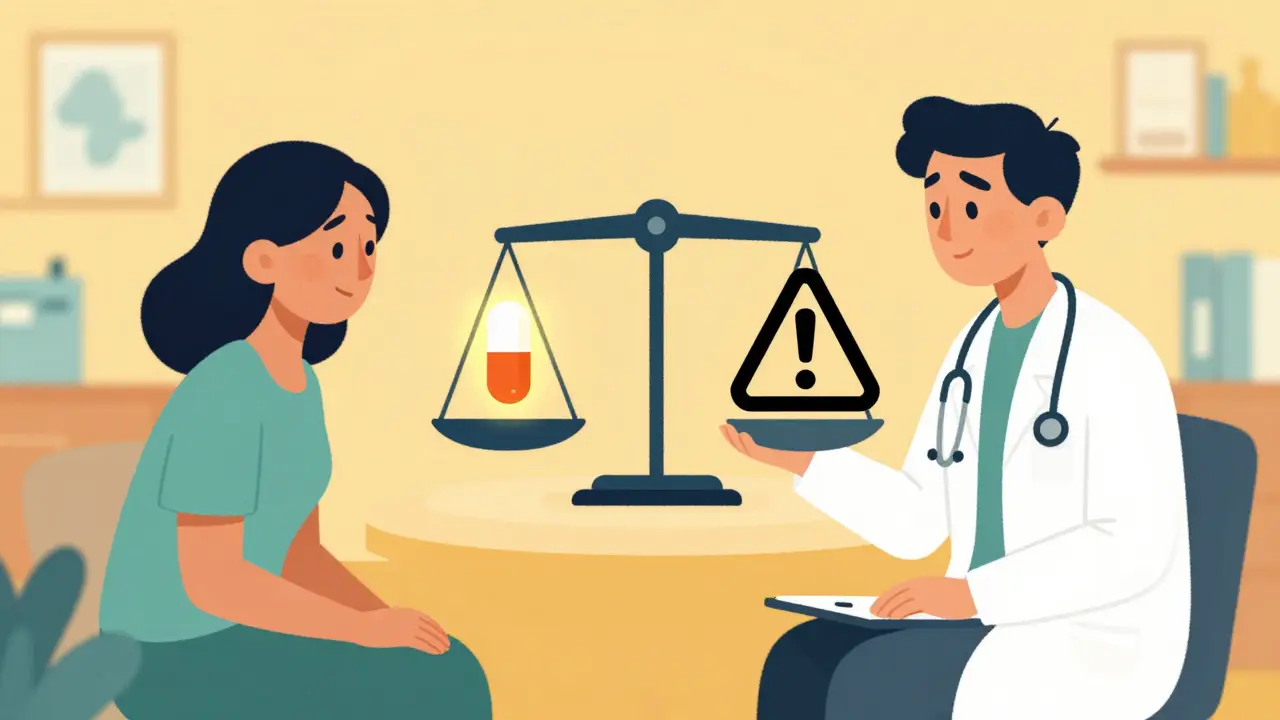
Not necessarily. This is where professional medical judgment comes in. A pharmacist or physician will use their expertise to decide if the drug is right for you. For example, if you have a condition that can only be treated by one specific medication, and that medication has a boxed warning, the risk of the untreated disease might be far worse than the risk of the drug's side effects.
Experts often suggest the STEPS framework to evaluate these choices: Safety, Tolerability, Effectiveness, Price, and Simplicity. If a drug is incredibly effective but has a safety alert, the doctor must decide if the effectiveness justifies the potential danger. A classic example is the drug rosiglitazone (Avandia). After a boxed warning was issued, prescriptions dropped by 70%, yet millions of people stayed on it because no other option worked for their specific health needs.
In some extreme cases, the FDA goes beyond a label. They implement Risk Evaluation and Mitigation Strategies (REMS). This might mean the doctor has to be specially certified to prescribe the drug, or the patient must be entered into a registry to ensure they are being monitored closely.
What you should do if your medication has a boxed warning
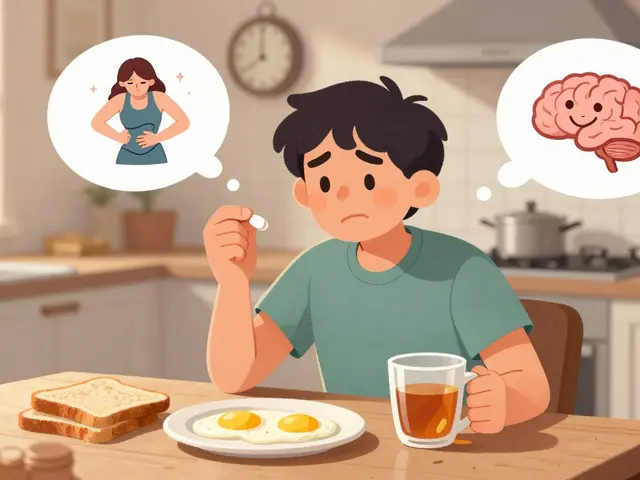
If you discover your medication has a high-level alert, don't panic, but do get proactive. Your goal is to move from "blind trust" to "informed consent." Start by asking your healthcare provider specifically why this drug is the best choice for you despite the warning.
You should also ask about monitoring. Many black box warnings are manageable if you get regular blood tests or screenings. For instance, if a drug carries a risk of kidney toxicity, a simple monthly blood test can catch the problem before it becomes a crisis. If you aren't getting monitored, ask your doctor why.
Finally, keep a log of your symptoms. Because these warnings are often based on adverse reactions , you are the first line of defense. If you notice something off, report it to your doctor and consider filing a report with MedWatch. This helps the FDA protect other people by updating the safety data for everyone.
The future of safety alerts: Genetic precision
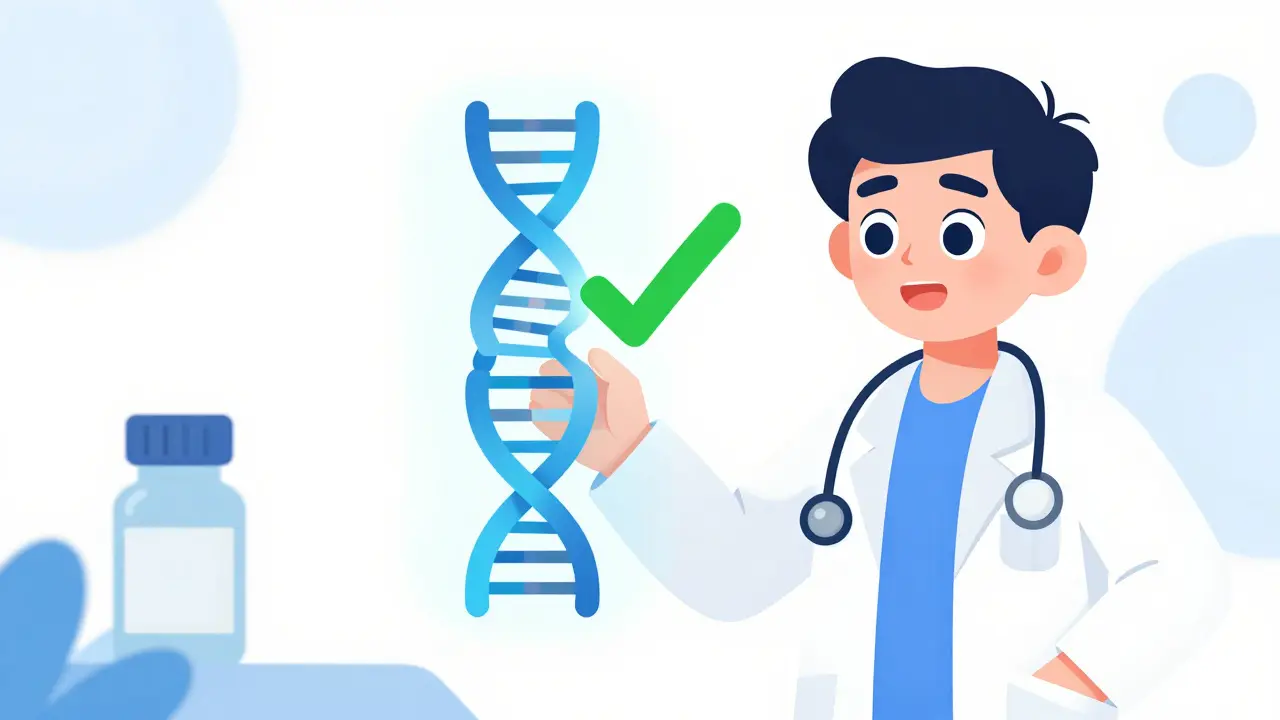
The "one size fits all" approach to warnings is starting to change. In the coming years, we'll likely see a shift toward pharmacogenomics . Instead of a blanket warning saying "this drug may cause a severe skin reaction in some people," the warning might say "this drug is dangerous for people with the HLA-B*1502 genetic marker."
This means your doctor could run a quick genetic test before prescribing the drug. If you have the marker, they switch you to a different medication. If you don't, you can take the drug without the same level of worry. This transforms a scary "black box" into a precise tool for personalized medicine, reducing unnecessary fear and increasing patient safety.
Can a black box warning be removed?
Yes, but it's rare. For a warning to be removed, the pharmaceutical company or independent researchers must provide new, high-quality clinical evidence proving that the risk is lower than previously thought or that the warning is no longer necessary based on new data. The FDA reviews this evidence before deciding to modify or lift the restriction.
Where can I find the black box warnings for my current medications?
The most direct way is to check the "package insert" (the long folded paper) that comes with your prescription. You can also use the FDA's Drugs@FDA database, search the Physicians' Desk Reference, or check the official website of the company that manufactures the drug.
Does a black box warning mean the drug is banned?
No. A boxed warning is a safety alert, not a ban. The drug remains legal and available for prescription. It simply warns the prescriber and the patient about the highest risks so they can make an informed decision about whether the benefits outweigh those risks.
What is the difference between a boxed warning and a contraindication?
A boxed warning alerts you to a severe risk that might occur during use. A contraindication is a specific reason why a person should not take a drug at all (e.g., a person with severe kidney failure should not take a specific drug because it could be fatal). A boxed warning might include contraindications, but it also includes risks for people who can take the drug but need close monitoring.
Who reports the side effects that lead to these warnings?
Reports come from three main sources: healthcare providers (doctors, nurses, pharmacists), the patients themselves, and the pharmaceutical companies. These reports are all funneled into the FDA's FAERS database via the MedWatch program.


Sophia Rice
April 19, 2026 AT 00:03I had a med with this once and i was so scared!! My docter explained it was okay for me though, its just importent to read those papers even if they look boreing lol
Nikki Grote
April 19, 2026 AT 09:42The integration of pharmacogenomics is the real game-changer here. We're moving away from empirical prescribing and toward a model where we can mitigate adverse drug reactions (ADRs) by analyzing specific alleles. For instance, screening for CYP450 polymorphisms can tell us if a patient is a poor metabolizer, which essentially turns a high-risk dosage into a toxic one. When you combine this with REMS protocols, you're not just managing risk, you're optimizing the therapeutic index for the individual. It's all about shifting from a population-based safety margin to a patient-specific molecular profile. This should theoretically eliminate the 'trial and error' phase that leads to many of the FAERS reports we see. The shift toward precision medicine reduces the iatrogenic burden on the healthcare system significantly. It's a massive leap in how we handle drug safety and clinical efficacy. We'll likely see a reduction in broad boxed warnings as they get replaced by genomic contraindications. This ensures the drug reaches those who need it without endangering those genetically predisposed to severe toxicity. It's a win-win for patient outcomes and pharmaceutical oversight. The future of the FDA's safety pipeline is definitely in the DNA.
Theresa Griffin MEP
April 20, 2026 AT 12:11Medical literacy is mandatory. Informed consent is non-negotiable.
Anmol Garg
April 21, 2026 AT 00:14It's interesting how we perceive risk. A black box looks like a warning to stop, but in reality, it's an invitation to be more mindful and present with our own bodies. We often trust the system blindly, but true healing happens when we balance that expert advice with our own inner intuition and awareness of how a substance actually feels in our system.
ira fitriani
April 22, 2026 AT 03:21OMG yes!! 🌟 I always tell people to be their own biggest advocate in the exam room! Don't let anyone brush off your concerns just because they're in a rush! Your health is literally everything!! 💖✨
Rock Stone
April 23, 2026 AT 10:36Just keep it chill and follow the monitoring plan. If the doc says a monthly blood test is the move, then that's the move. No need to stress if you're staying on top of the checkups.
Bonnie Piersall
April 24, 2026 AT 02:09It's absolutely imperative to maintain a meticulous log of any physiological anomalies. While some may find the paperwork tedious, it's a vital component of a robust health strategy. This empowers the patient and provides the clinician with concrete data to adjust the regimen effectively.