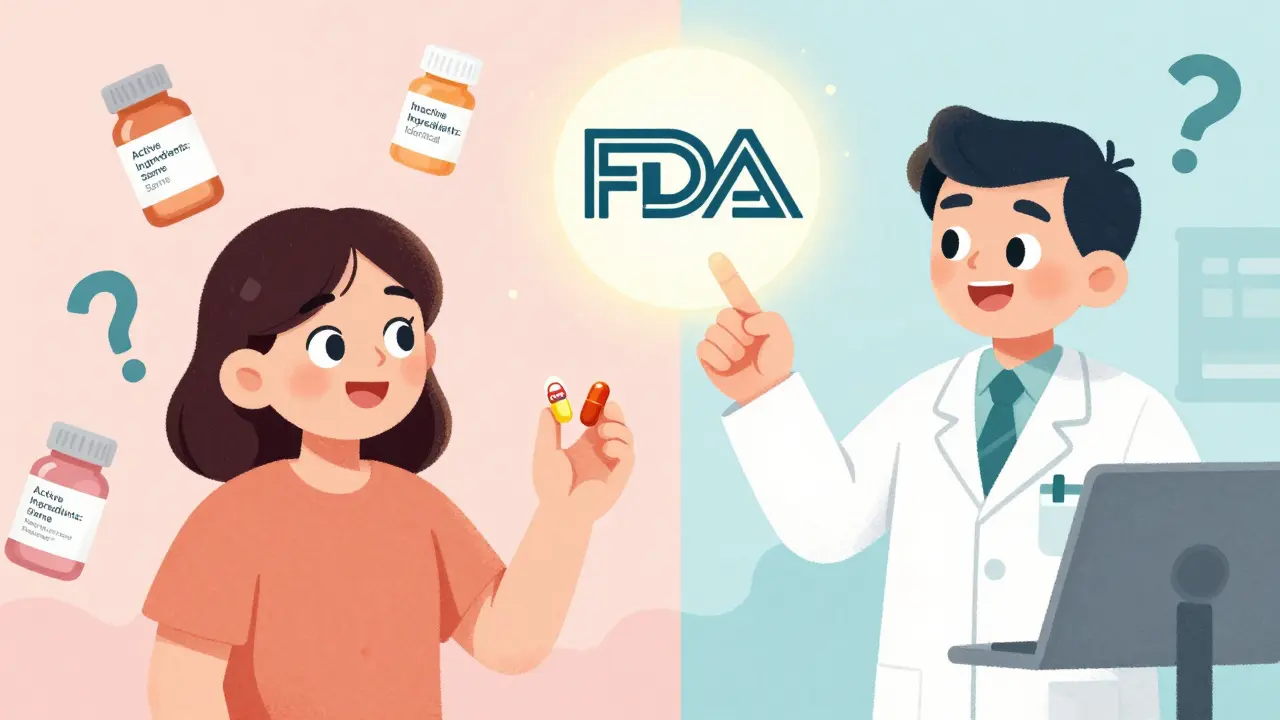
When you switch from a brand-name drug to a generic, you expect to save money. But what if the generic you get doesn’t feel the same? Maybe your stomach acts up, or your symptoms don’t improve like they used to. That’s because traditional generics can have different inactive ingredients-fillers, dyes, coatings-that don’t affect the main drug but can still change how your body responds. This is where authorized generics come in. They’re not just cheaper versions. They’re the exact same pill, capsule, or inhaler as the brand name, just without the brand label.
What Exactly Is an Authorized Generic?
An authorized generic is made by the same company that produces the original brand-name drug-or by a partner using the exact same formula, equipment, and production line. It’s not a copy. It’s the real thing, repackaged. The U.S. Food and Drug Administration (FDA) defines it clearly: "Other than the fact that it does not have the brand name on its label, it is the exact same drug product as the branded product." That means identical active ingredients, identical inactive ingredients, same manufacturing process, same quality controls. No bioequivalence testing is needed because there’s nothing to test-it’s the same product.
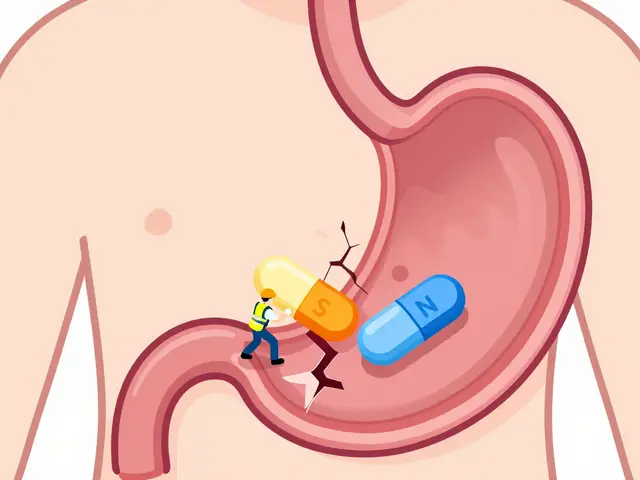
Traditional generics, by contrast, must prove they’re "bioequivalent" to the brand. That means their absorption rate in the body must fall within 80-125% of the brand’s. But even within that range, differences in fillers can cause real problems. For example, patients taking levothyroxine for thyroid issues have reported changes in energy, weight, or heart rhythm after switching to a generic with different binders. With an authorized generic, those issues vanish.
How Are Authorized Generics Different From Regular Generics?
The biggest difference is in the ingredients. Regular generics only need to match the active ingredient. Inactive ingredients-like lactose, corn starch, or dye-are not required to be identical. Authorized generics must match everything. This matters most for drugs with narrow therapeutic indexes, where tiny changes in absorption can lead to treatment failure or toxicity. Think warfarin (blood thinner), levothyroxine (thyroid hormone), or phenytoin (seizure control). For these, authorized generics are often the safest generic option.
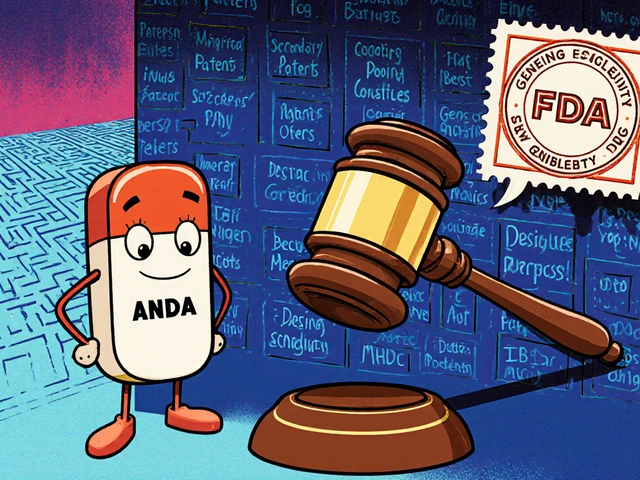
Another key difference: authorization. Regular generics go through their own approval process under an Abbreviated New Drug Application (ANDA). Authorized generics don’t. They’re produced under the brand’s original New Drug Application (NDA). That’s why they don’t appear in the FDA’s Orange Book-the official list of approved generics. Instead, the FDA maintains a separate, updated list of authorized generics, last refreshed in October 2025.
Why Do Companies Make Authorized Generics?
It sounds odd: why would a brand company help create cheaper versions of its own drug? The answer is strategy. When a patent expires, generic competitors flood the market. Prices drop fast. The brand manufacturer can lose most of its sales. But if they launch their own authorized generic-sold under a different name, often at a lower price-they can keep a chunk of that market. It’s not charity. It’s business. About 70% of authorized generics launch during the 180-day exclusivity window granted to the first generic competitor. That’s not coincidence. It’s calculated.
Some companies even use authorized generics to block price drops. Research shows that when an authorized generic enters the market, prices for traditional generics fall 15% less in the first year than they do in markets without them. The brand company keeps control, and patients get a reliable, familiar product.
Which Drugs Have Authorized Generics?
As of October 2025, the FDA lists over 200 authorized generics. Not every brand has one, but many of the most commonly prescribed do. Here are some real examples:
- Colchicine (brand: Colcrys) - Used for gout. The authorized generic is made by Prasco Laboratories. Patients who switched reported fewer stomach issues because the inactive ingredients matched the original.
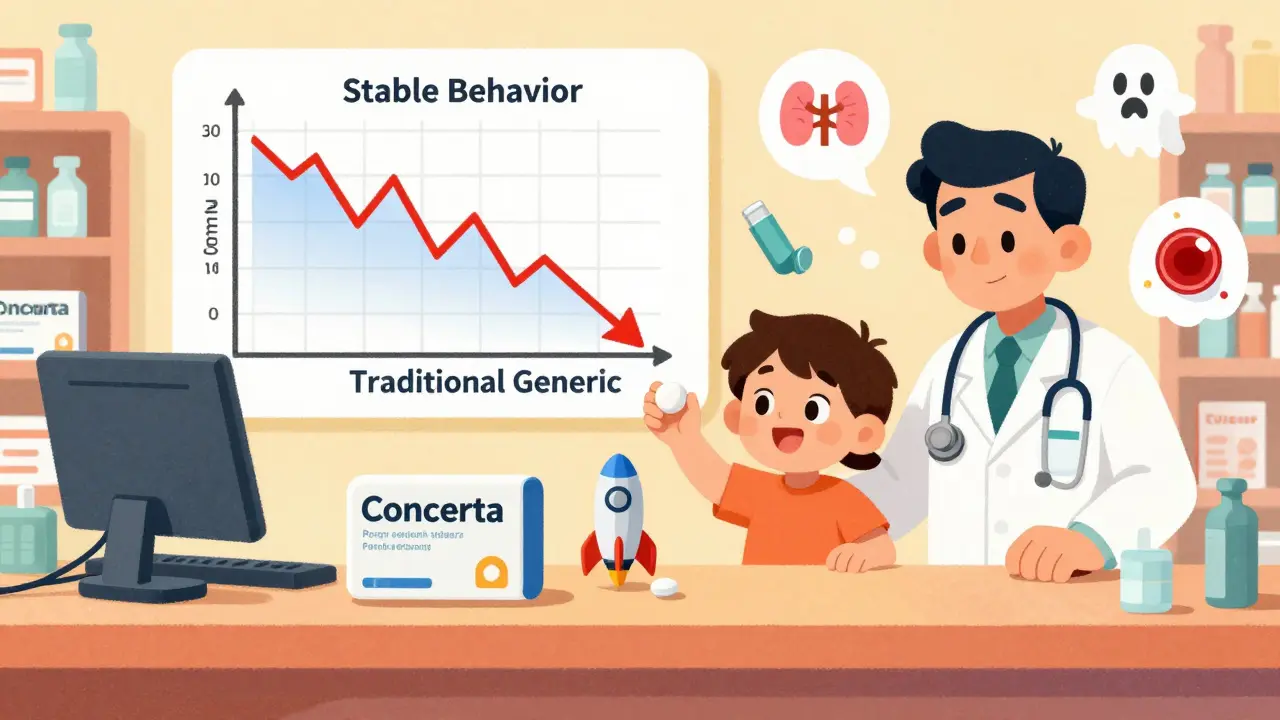
- Methylphenidate ER (brand: Concerta) - For ADHD. The authorized version is made by Watson/Actavis. Many parents noticed their child’s behavior stabilized after switching, likely because the extended-release mechanism was unchanged.
- Celecoxib (brand: Celebrex) - A pain reliever. Greenstone Pharmaceuticals produces the authorized generic. For arthritis patients, this meant no more unexpected flare-ups caused by filler changes.
- Levothyroxine (brand: Unithroid) - Thyroid replacement. Jerome Stevens Pharmaceuticals makes the authorized version. Pharmacists report fewer lab adjustments after patients switch to this version.
- ProAir HFA (brand: albuterol inhaler) - For asthma. Teva’s authorized generic launched in 2019. Patients with sensitive airways found it just as effective as the brand, with no new coughing or throat irritation.
- Jardiance (brand: empagliflozin) - For type 2 diabetes. Added to the FDA’s list in late 2025. The authorized version is now available through Boehringer Ingelheim’s partner.
These aren’t rare cases. They’re part of a growing trend. Between 2010 and 2019, there were 854 authorized generic launches. The peak year was 2014, with 128 new products. And the FDA’s 2025 update added 17 more.
How to Find Out if Your Drug Has an Authorized Generic
Ask your pharmacist. They can check your prescription against the FDA’s official list, which is updated regularly. You can also search the FDA’s website directly-though it’s not always easy to navigate. A simpler way: look at the pill. If the manufacturer is the same as the brand name (like "Pfizer" or "Merck" on the generic bottle), it’s likely an authorized version. Some pharmacies even label them as "Authorized Generic" in their systems.
Don’t assume all generics are equal. If you’ve had trouble with a generic before-side effects, lack of effectiveness-ask if an authorized version exists. It might be the missing piece.
What to Expect When Switching
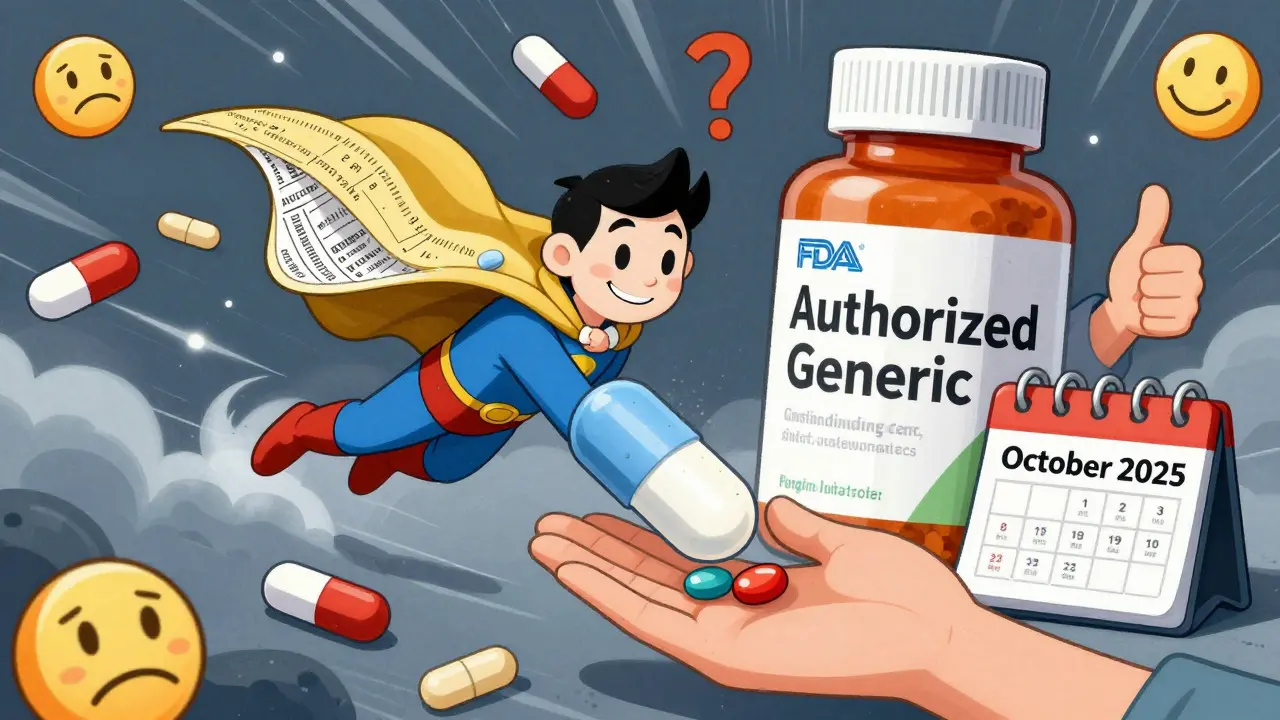
Even though authorized generics are chemically identical, they often look different. Color, shape, markings-all can change. That’s normal. It’s not a different drug. It’s just the brand’s product without the logo. Patients sometimes panic when they see a new pill. Pharmacists should explain: "This is the exact same medicine you’ve been taking. The only thing different is the label."
Insurance coverage varies. Some plans treat authorized generics the same as regular generics. Others may still charge more. Always check your formulary. If your plan doesn’t cover it, ask your doctor to write a letter explaining why you need the authorized version-especially if you’ve had issues with other generics.
Why This Matters for Your Health
For many people, switching to a generic saves hundreds of dollars a year. But if that switch makes you feel worse, the savings aren’t worth it. Authorized generics bridge that gap. They offer affordability without compromise. For patients on chronic medications-especially those with sensitive conditions-they’re not just a cost-saving option. They’re a safety net.
The bottom line: if your medication has an authorized generic, it’s worth asking for. It’s not just cheaper. It’s better-because it’s the same as what you were already taking.
Are authorized generics as safe as brand-name drugs?
Yes. Authorized generics are made using the exact same formula, ingredients, and manufacturing process as the brand-name drug. The FDA requires them to be identical in every way except for the label. They don’t require separate approval because they’re not new products-they’re the original drug under a different name. For patients who had issues with traditional generics due to different fillers or coatings, authorized generics often resolve those problems.
Can I ask my pharmacist for an authorized generic?
Absolutely. Pharmacists are trained to identify authorized generics and can usually tell you if one exists for your prescription. Just ask: "Is there an authorized generic version of this drug?" They can check the FDA’s list or their pharmacy system. If it’s available, they can often fill your prescription with it unless your doctor specifically wrote "dispense as written."
Why don’t all drugs have authorized generics?
Only about 10% of brand-name drugs have authorized generic versions. It’s a business decision. Brand manufacturers only create them when it makes financial sense-usually when they expect strong generic competition. Smaller drugs, older medications, or those with low sales volume rarely get authorized generics because the cost of setting up a separate production line isn’t worth it.
Do authorized generics cost less than traditional generics?
Sometimes, but not always. Authorized generics are often priced similarly to traditional generics, especially when multiple generics are competing. In some cases, they’re slightly more expensive because they’re made by the original brand company. But they’re still far cheaper than the brand-name version. Their value isn’t in price alone-it’s in consistency and reliability.
How do I know if I’m getting an authorized generic?
Check the manufacturer name on the bottle or pill. If it matches the brand-name maker (like "Pfizer" for Lipitor), it’s likely authorized. Some pharmacies label it as "Authorized Generic" in their system. You can also ask your pharmacist directly. The FDA’s official list, updated through October 2025, is the most reliable source for confirming availability.

Roshan Gudhe
February 3, 2026 AT 19:16Interesting piece. It reminds me of how we treat medicine like a commodity when it’s really about human biology. In India, we often don’t have the luxury of choice-any generic is better than none. But this idea that the same pill, just unlabeled, could be the difference between stability and crisis… that’s profound. It’s not about cost anymore. It’s about dignity in treatment.
Wendy Lamb
February 5, 2026 AT 11:08Ask your pharmacist. Seriously. It’s that simple.
Janice Williams
February 6, 2026 AT 12:36Let me be clear: this entire article is a marketing ploy disguised as patient advocacy. Authorized generics are not ‘better’-they’re just the brand’s attempt to retain profits under a different label. If you’re having side effects from a generic, it’s more likely due to individual variability than filler differences. The FDA’s bioequivalence standards are rigorous. Don’t fall for the fear-mongering.
Prajwal Manjunath Shanthappa
February 7, 2026 AT 22:17One must question the epistemological foundations of pharmaceutical regulation: if a drug is ‘bioequivalent’ within a 20% margin, is it truly ‘the same’? Or is this a linguistic sleight-of-hand to mask the commodification of biological integrity? The authorized generic, while ostensibly identical, still operates within a capitalist framework that privileges profit over purity-no matter how many times they repackage it.
caroline hernandez
February 8, 2026 AT 14:15As a clinical pharmacist, I see this daily. Patients on levothyroxine or warfarin who switch to a traditional generic often present with erratic INRs or TSH levels within weeks. Authorized generics? Zero adjustments needed. The inactive ingredients matter more than insurers want to admit-especially for narrow-therapeutic-index drugs. This isn’t anecdotal; it’s pharmacokinetic reality.
Ed Mackey
February 9, 2026 AT 17:10I switched my dad to the authorized generic for Celebrex last year. He’d been having stomach cramps with the regular one. Didn’t even notice the pill looked different. No more issues. Just wish my insurance didn’t make us jump through hoops to get it.
Alex LaVey
February 10, 2026 AT 19:24Thank you for writing this. So many people don’t realize that ‘generic’ doesn’t mean ‘identical.’ I’ve seen friends give up on meds because they felt ‘off’ after a switch-only to find out an authorized version existed. It’s not about being picky. It’s about being informed. Keep sharing this kind of stuff.
Jhoantan Moreira
February 12, 2026 AT 02:43This is why I love the U.S. healthcare system sometimes-when transparency wins. 🙌 Even if it’s driven by profit, if patients get better outcomes, that’s a win. Thanks for the clarity!
Rachel Kipps
February 12, 2026 AT 17:53Just to clarify-authorized generics are not always cheaper than traditional ones. My insurance still charges me $10 more for the authorized version of Concerta, even though it's the same pill. The label says 'authorized generic' but the price doesn't reflect it. I asked my pharmacist. She said it's because the manufacturer is still Pfizer. So… what's the point? I'm confused.