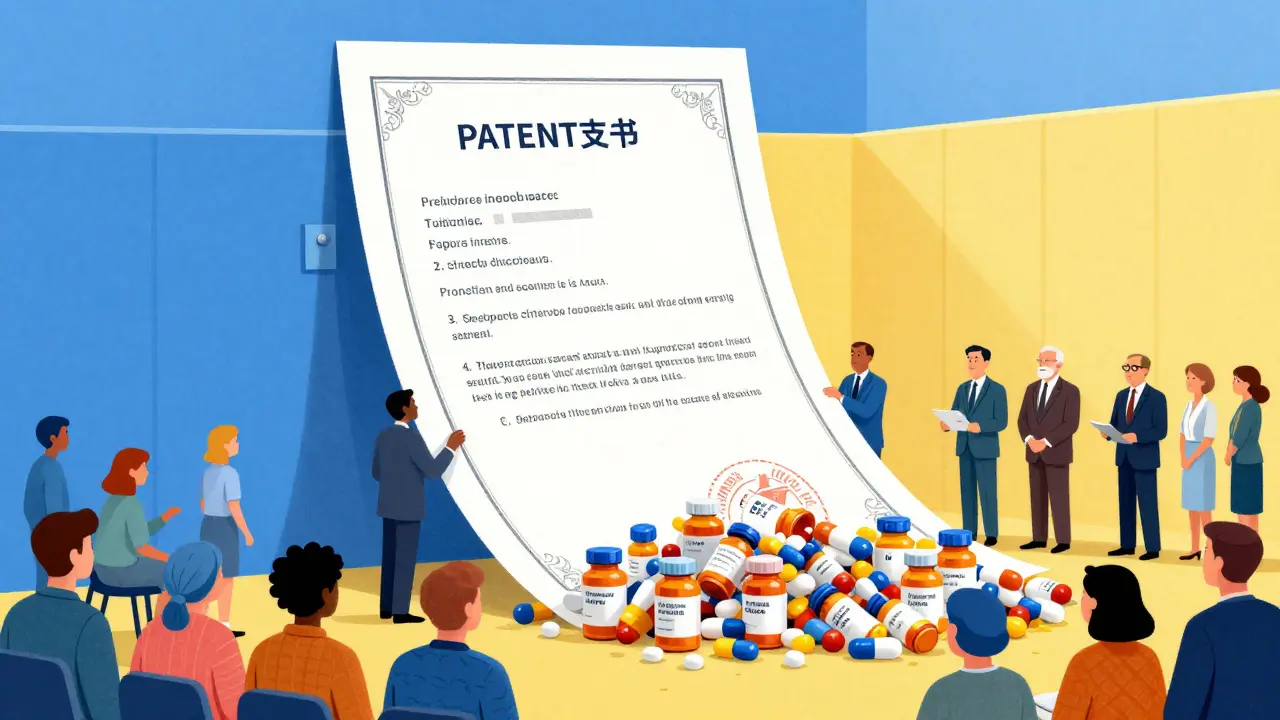
The scale of this transition is staggering. Between 2025 and 2030, an estimated $250 billion in global prescription drug sales are at risk. This isn't a gradual slide but a series of steep drops as high-revenue products lose their exclusivity. For the average person, this means the difference between paying $300 a month for a heart medication or $20 for the same drug. For the companies, it's a race to innovate new products before their old ones become commodities.
| Drug Name | Primary Use | Estimated Expiration | Annual Revenue (2024) |
|---|---|---|---|
| Entresto | Heart Failure | July 2025 | $7.8 Billion |
| Eliquis | Anticoagulant | November 2026 | $13.2 Billion |
| Keytruda | Oncology (Cancer) | 2028 | $29.3 Billion |
| Ibrance | Oncology (Cancer) | 2025-2030 Window | High Value |
How the Patent Cliff Actually Works
To understand the timeline, you first have to understand that a drug isn't protected by just one patent. Companies build "patent thickets"-layers of legal protection. The most important is the composition-of-matter patent, which covers the actual chemical structure. Once that expires, the door opens for generic competitors. However, companies also file formulation patents (how the drug is delivered) or method-of-use patents (what the drug treats) to stretch their exclusivity. This is often called "evergreening."
There is also a massive difference between small-molecule drugs and biologics. Small-molecule drugs are simple chemicals that can be easily copied. When their patents expire, we get generic drugs, which are exact chemical copies. These usually see price drops of 80-90% within a year. Patent cliff events for small molecules happen fast and hit hard.
Biologics are different. They are complex proteins grown in living cells. You can't just "copy" them; you have to create a biosimilar, which is a "highly similar" version. Because biosimilars are harder to make and require more rigorous FDA approval, the price drops are slower (usually 30-40% initially) and the market shift takes years rather than months. This is why a biologic's patent expiration is less of a cliff and more of a slope.
The Big Hits: 2025 to 2028
The immediate future is dominated by cardiovascular and oncology drugs. Take Entresto, for example. With its core combination patent expiring in July 2025, physicians are already prepping patients for the switch. For a patient paying $150 to $300 monthly, the generic version could drop that cost to under $40. This is a huge win for patient access, though it creates a massive revenue hole for Novartis.
Next comes Eliquis in November 2026. As an anticoagulant, it's used by millions to prevent strokes. Because the market for anticoagulants is already crowded, the entry of generics will likely trigger a rapid price war, wiping out a $13.2 billion annual revenue stream for Bristol Myers Squibb and Pfizer almost overnight.
Then there is the "Big One": Keytruda. This immunotherapy drug is a juggernaut, bringing in nearly $30 billion a year. When its core patent expires in 2028, it will likely trigger the largest single-year revenue decline in pharmaceutical history. Merck is already pouring billions into next-generation therapies to try and offset this loss, but replacing a $30 billion product is no easy feat.
Why Some Drugs Drop Faster Than Others
Not all expirations are created equal. The speed at which a brand loses market share depends on the therapeutic area. In primary care, such as diabetes treatments like Trulicity, the switch to generics is lightning fast. Patients and doctors are highly sensitive to cost and are quick to swap to a cheaper alternative.
In oncology, however, the shift is slower. Treatment protocols are complex, and doctors are often hesitant to switch a cancer patient to a biosimilar mid-treatment if the branded drug is working. This means oncology companies can often hold onto a larger chunk of their market share even after the patent is gone.
We also see a regional divide. The United States is the primary battlefield. Because the U.S. lacks the strict price controls found in Europe, it represents about 63% of the total financial impact of these expirations. For a pharmaceutical company, losing the U.S. market to generics is the real catastrophe.
How Pharma Companies are Fighting Back
Big Pharma isn't just sitting around waiting for their revenue to vanish. They use several strategies to survive the cliff:
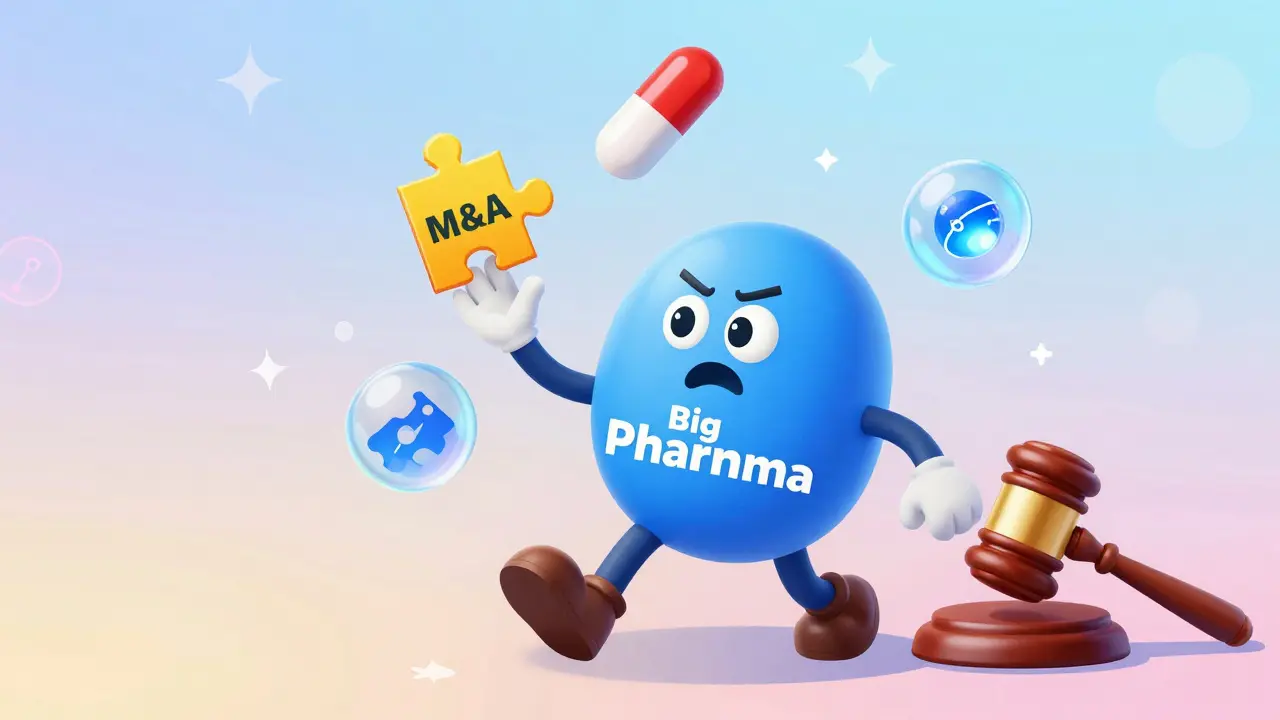
- M&A Activity: Companies are buying smaller biotech firms to acquire new, patented drugs. Bristol Myers Squibb's acquisition of Karuna Therapeutics is a prime example of diversifying into neuroscience to offset losses in other areas.
- Next-Gen Versions: They launch "improved" versions of the drug (e.g., changing from a pill to a long-acting injection) to move patients over to a new patent before the old one expires.
- Patent Litigation: They use "pay-for-delay" agreements, where they pay generic companies to stay out of the market for a few more years. However, the FTC is cracking down on this, with a 23% increase in investigations into these settlements.
What This Means for the Healthcare System
From a public health perspective, the 2025-2030 window is a goldmine. The Congressional Budget Office estimates that these expirations could reduce national healthcare spending by $312 billion over the decade. This frees up billions of dollars for insurance companies and government programs like Medicare, which can then be reinvested into other areas of care.
However, it's not without risk. When a branded drug expires, there can be initial supply chain hiccups. We saw this with Humira biosimilars. If five different generic manufacturers all launch on the same day, but two of them have production issues, we could see temporary shortages of critical medications.
What is the difference between a generic and a biosimilar?
Generics are exact chemical copies of small-molecule drugs and are relatively easy to manufacture. Biosimilars are "highly similar" versions of complex biological proteins; they aren't identical because they are grown in living cells, but they provide the same clinical effect.
Why do patents only last 20 years?
The goal of the patent system is to balance innovation with access. The 20-year term gives companies enough time to recover their R&D costs and make a profit, but eventually, the knowledge must become public so that cheaper versions can make the medicine affordable for everyone.
Will my doctor automatically switch me to a generic in 2025?
Not necessarily. While many pharmacies and insurance plans implement "therapeutic interchange" (automatic swapping), some doctors prefer to manage the transition themselves, especially for complex medications like Entresto or oncology biologics.
Which company is most affected by the upcoming patent cliff?
In absolute dollars, Merck is the most exposed due to Keytruda's massive revenue. In terms of percentage of revenue, Amgen is hit hardest, with over 50% of its 2024 revenue potentially at risk by 2030.
Where can I track these expiration dates?
The FDA's Orange Book (for small molecules) and Purple Book (for biological products) are the official records for patent expirations and exclusivity in the U.S.
Next Steps for Patients and Providers
If you are a patient taking a high-cost branded drug, start the conversation with your doctor now. Ask if the medication you're on is facing a patent expiration in the next 24 months. This allows you to plan for the transition and potentially save thousands of dollars.
For healthcare providers, the focus should be on education. Transitioning a patient to a biosimilar requires a different conversation than switching a statin to a generic. Understanding the "interchangeability" status of a drug-whether the pharmacist can swap it without a new prescription-is key to avoiding gaps in treatment.