Imagine a world where every prescription pill costs hundreds of dollars because only one company is allowed to make it. That was the reality in the United States before the mid-1980s. Today, generic drugs account for roughly 90% of all prescriptions filled in the U.S., saving consumers and the healthcare system trillions of dollars. But how did we get here? The answer lies in a specific legal framework that balances innovation with competition. It starts with the Federal Food, Drug, and Cosmetic Act (FD&C Act) and culminates in the pivotal Hatch-Waxman Amendments.
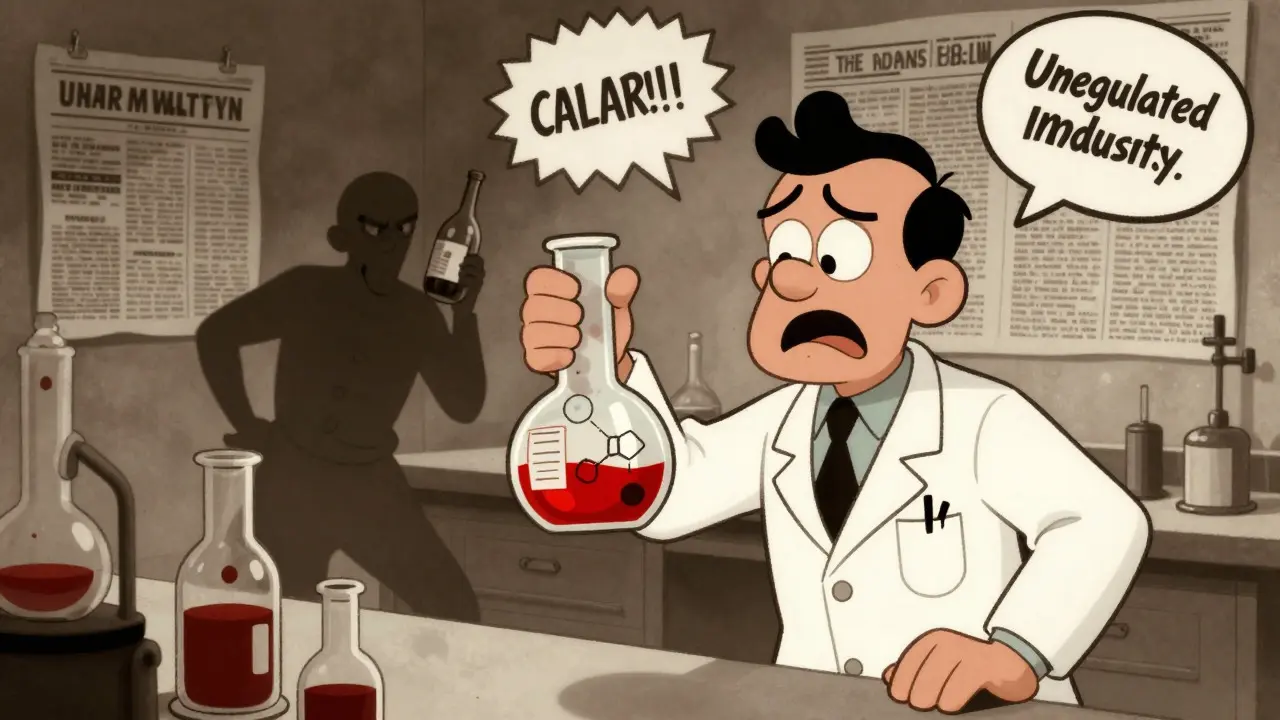
The FD&C Act isn't just a rulebook; it's the foundation upon which modern pharmaceutical regulation stands. Originally signed into law by President Franklin D. Roosevelt on June 25, 1938, this legislation was born out of tragedy. The 1937 elixir sulfanilamide disaster killed over 100 people across 15 states when an untested solvent, diethylene glycol, was used in an antibiotic formulation. Before this act, drug makers could sell anything as long as it wasn't labeled misleadingly. There was no requirement to prove safety. The FD&C Act changed that by giving the Food and Drug Administration (FDA) the power to ensure new drugs were safe before they hit the market.
From Safety to Efficacy: The Evolution of Drug Laws
While the 1938 Act solved the safety problem, it didn't solve the efficacy problem. For decades, a drug could be sold if it was safe, even if it didn't actually work. This gap was closed by the Kefauver-Harris Amendments in 1962. These amendments mandated that new drugs must demonstrate both safety and effectiveness through rigorous clinical trials. This set the stage for the high bar that brand-name manufacturers had to clear, but it also created a massive hurdle for anyone wanting to make a copy of an existing drug. If you wanted to make a generic version of a proven drug, you theoretically had to run your own full set of clinical trials to prove it worked, which was incredibly expensive and time-consuming.
This regulatory bottleneck meant that for years, generic competition was minimal. According to historical data from the FDA, before the major changes in the 1980s, generics represented only about 19% of prescriptions and a mere 3% of pharmaceutical spending. The system was designed to protect innovators, but it inadvertently locked out competitors who could have offered the same medicine at a lower price.
The Game Changer: Hatch-Waxman Amendments
The turning point came in 1984 with the passage of the Drug Price Competition and Patent Term Restoration Act, widely known as the Hatch-Waxman Amendments. Named after Senator Orrin Hatch and Representative Henry Waxman, these amendments are arguably the most significant piece of legislation regarding generic drugs. They introduced a new pathway into Section 505(j) of the FD&C Act: the Abbreviated New Drug Application (ANDA).
The ANDA pathway is the legal mechanism that allows generic manufacturers to skip the expensive human clinical trials. Instead of proving that a drug works from scratch, a generic maker must prove two things:
- Pharmaceutical Equivalence: The generic drug has the same active ingredient, strength, dosage form, and route of administration as the brand-name reference drug.
- Bioequivalence: The generic drug is absorbed into the bloodstream at the same rate and extent as the brand-name drug. This is typically demonstrated through pharmacokinetic studies showing that the 90% confidence intervals for key metrics like Cmax (peak concentration) and AUC (area under the curve) fall within 80-125% of the reference product.
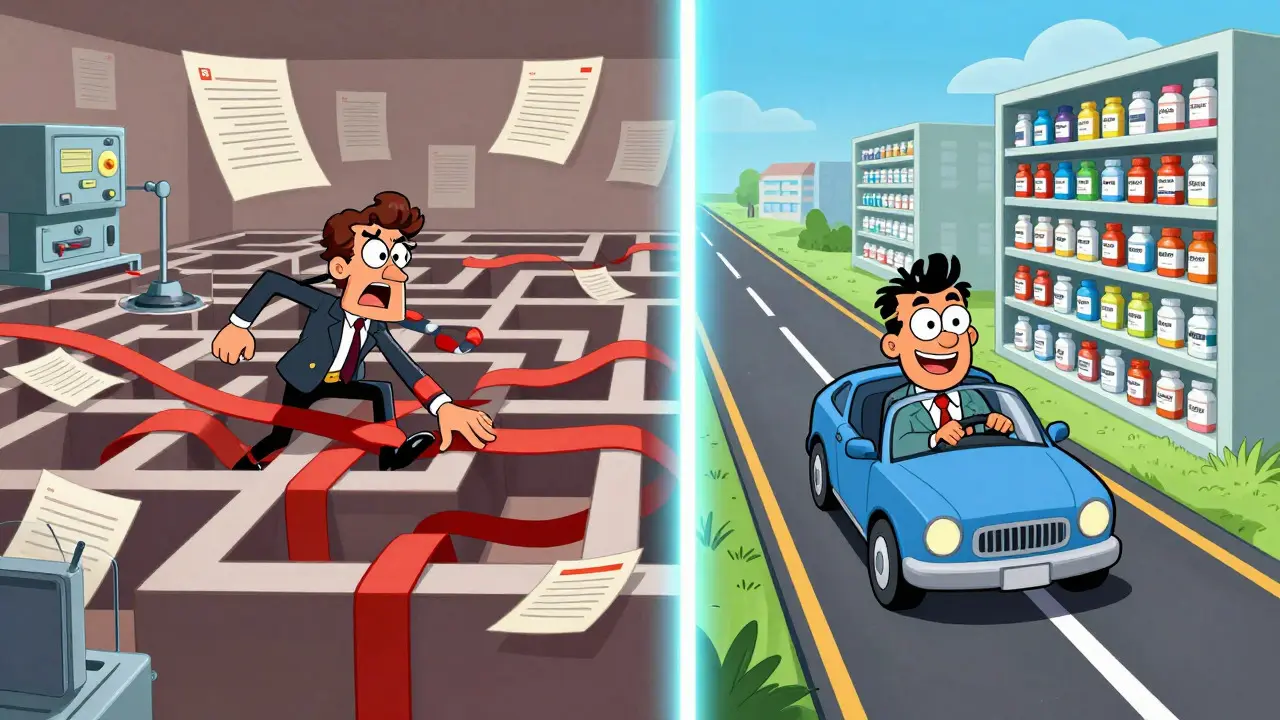
This shift transformed the industry. By removing the need for duplicative clinical trials, the cost and time required to develop a generic dropped significantly. The result was a flood of affordable alternatives entering the market.
How Patents and Exclusivity Work Together
You might wonder: if generics can bypass clinical trials, why don't they come out immediately after a brand-name drug is approved? The answer is patents. The Hatch-Waxman framework creates a delicate balance between protecting the original inventor's investment and allowing eventual competition.
Brand-name manufacturers must list their relevant patents in the FDA's "Orange Book" (officially the Approved Drug Products with Therapeutic Equivalence Evaluations). When a generic company wants to launch a competitor, they must file an ANDA and certify against these patents. There are four possible certifications, ranging from "no patent exists" to "the patent will expire in X months."
If a generic company believes a patent is invalid or not infringed, they can challenge it. To encourage this, the law grants the first successful challenger a period of 180-day marketing exclusivity. During this window, no other generic versions of that specific drug can enter the market, giving the first challenger a head start and a guaranteed profit margin. This incentive structure has driven many generic companies to actively litigate against brand-name holders, leading to more competitive markets.
Conversely, to compensate brand-name makers for the time lost during FDA review, the amendments allow for patent term restoration. This can extend a patent's life by up to five years, though the total post-approval patent term cannot exceed 14 years. This ensures that innovators still have a reasonable period of market protection while eventually opening the door for generics.
The Impact on Healthcare Costs and Access
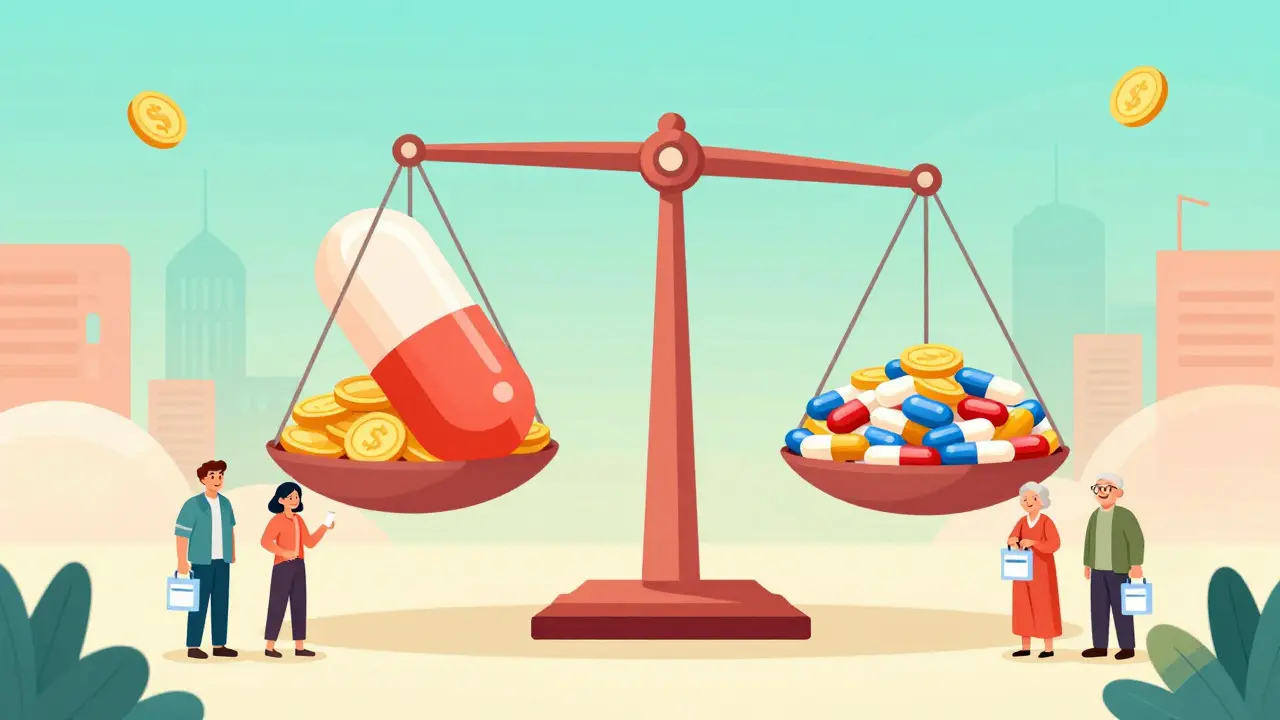
The economic impact of this legal framework is staggering. According to the FDA's 40th Anniversary report, today's generics account for 90% of prescriptions but only 17% of pharmaceutical spending. In contrast, brand-name drugs represent a much smaller share of volume but a disproportionately large share of cost. The Federal Trade Commission estimated that the Hatch-Waxman system saved consumers approximately $2.2 trillion over the past decade alone.
For patients, this means access. Without the ANDA pathway, chronic conditions like diabetes, hypertension, and asthma would remain financially out of reach for millions of Americans. The legal foundation provided by the FD&C Act, specifically through its 1984 amendments, ensures that once a drug's patent expires or is challenged, affordable versions can legally enter the market without repeating the entire scientific validation process.
| Feature | Brand-Name Drug (NDA) | Generic Drug (ANDA) |
|---|---|---|
| Legal Basis | Section 505(b) of FD&C Act | Section 505(j) of FD&C Act (Hatch-Waxman) |
| Clinical Trials Required | Yes (Safety & Efficacy) | No (Bioequivalence Studies Only) |
| Patent Status | Holder of listed patents | Must certify against Orange Book patents |
| Market Exclusivity | Up to 5 years (New Chemical Entity) | 180 days (if first to successfully challenge patent) |
| Average Review Time | ~10-12 months | ~10 months (95% of cases per FDA 2022 data) |
Navigating Modern Challenges and Compliance
Despite its success, the system isn't perfect. Critics point to tactics like "evergreening," where brand-name companies file secondary patents or use citizen petitions to delay generic approvals. Dr. Aaron Kesselheim of Harvard Medical School has noted that these strategies can extend market exclusivity beyond what the law intended. Additionally, complex drugs like inhalers and injectables face higher barriers to generic entry due to manufacturing difficulties, with some analysts suggesting generic entry for these products is reduced by 42% compared to simple tablets.
To keep the system efficient, the FDA operates under the Generic Drug User Fee Amendments (GDUFA), reauthorized in 2022. This agreement sets performance goals, such as approving 90% of priority ANDAs within 10 months. Recent reports show the FDA is meeting or exceeding these targets, with 98% of priority ANDAs approved within the timeframe in fiscal year 2022.
For companies looking to enter this space, compliance is non-negotiable. Violations of the FD&C Act, such as failing to meet Current Good Manufacturing Practice (cGMP) standards, can lead to severe penalties. In 2023, civil penalties for violations reached up to $1,100,194 per instance. Common issues cited in FDA warning letters include inadequate quality control and data integrity problems. Understanding these legal nuances is critical for any stakeholder in the pharmaceutical supply chain.
Looking Ahead: The Future of Generic Regulation
The legal landscape continues to evolve. The 21st Century Cures Act of 2016 and the CREATES Act of 2019 have introduced provisions to tackle "product hopping" (where brands switch formulations to reset exclusivity) and to facilitate generics for complex products. The FDA's strategic plan for 2023-2027 prioritizes modernizing the pathway for these complex drugs, with new guidance expected for nasal sprays and ophthalmic suspensions.
Ultimately, the FD&C Act remains the bedrock of pharmaceutical law. Its evolution from a simple safety check in 1938 to a sophisticated competition engine in 1984 demonstrates how law can shape public health outcomes. As the global generic drug market grows, reaching an estimated $259 billion in 2022, the clarity and stability of this legal framework will continue to determine how accessible and affordable medicines remain for patients worldwide.
What is the main difference between an NDA and an ANDA?
An NDA (New Drug Application) requires proof of safety and efficacy through clinical trials, used for brand-name drugs. An ANDA (Abbreviated New Drug Application) is used for generics and only requires proof of bioequivalence to the reference drug, skipping the need for new clinical trials.
What are the Hatch-Waxman Amendments?
The Hatch-Waxman Amendments, passed in 1984, are additions to the FD&C Act that created the ANDA pathway for generic drugs and established the patent certification system, balancing innovation incentives with market competition.
How does the Orange Book affect generic drug development?
The Orange Book lists approved drug products and their patent information. Generic manufacturers must consult this list to determine which patents they need to certify against or challenge when filing an ANDA.
Why do generic drugs cost less than brand-name drugs?
Generics cost less because they do not require the expensive research and development costs associated with discovering a new molecule or running full clinical trials. They only need to prove bioequivalence, which is significantly cheaper and faster.
What happens if a generic company challenges a patent successfully?
The first generic company to successfully challenge a patent gains 180 days of marketing exclusivity. During this period, no other generic versions of that drug can be approved, giving the challenger a protected market share.