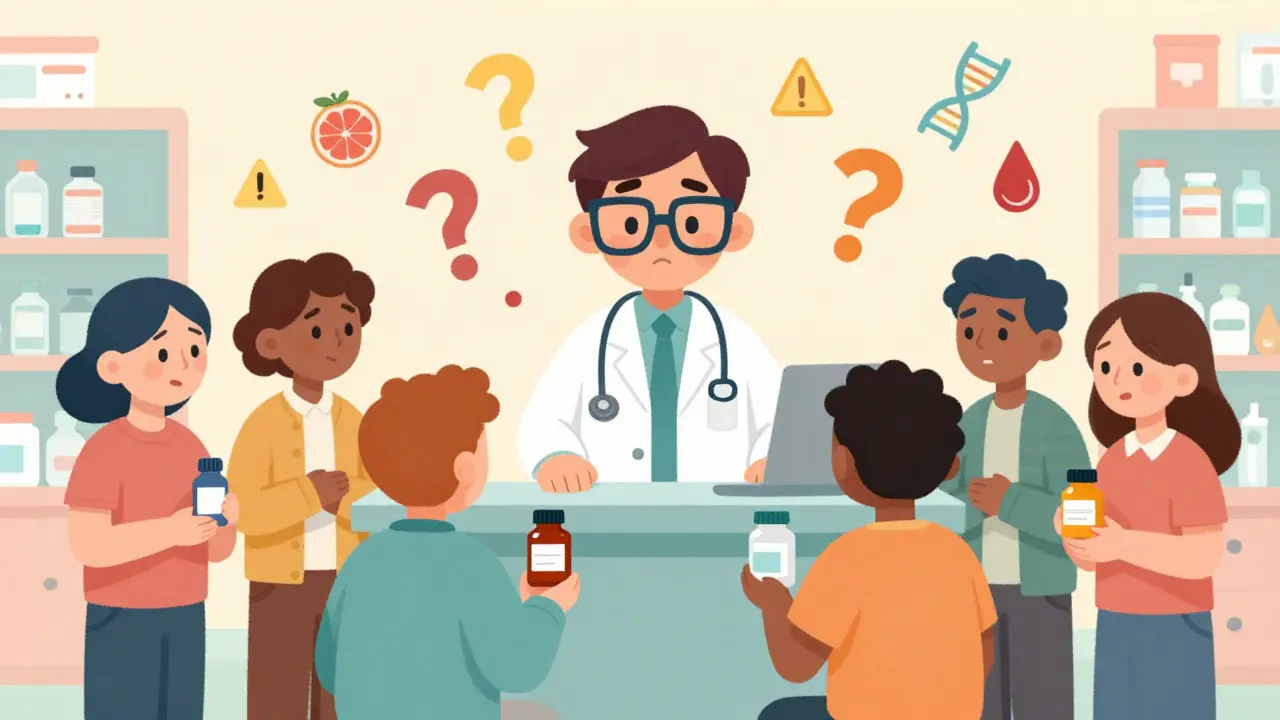
Getting a new prescription should feel like a step toward feeling better-not a gamble with your health. But here’s the truth: drug interactions are one of the most common-and preventable-reasons people end up in the emergency room. In the U.S. alone, over 1.3 million ER visits each year are caused by medication errors, many of them from unnoticed interactions between drugs, supplements, food, or existing health conditions. You don’t need to be a medical expert to protect yourself. You just need to know what to ask.
Why Drug Interactions Matter More Than You Think
Drug interactions aren’t rare oddities. They’re everyday risks. Take statins, for example. If you eat grapefruit while taking them, your body absorbs too much of the drug. That can lead to muscle damage or kidney failure. Or consider warfarin, a blood thinner. A simple course of ciprofloxacin, a common antibiotic, can turn a stable dose into a dangerous one, causing internal bleeding. Even something as common as calcium supplements can block the absorption of thyroid medication like Synthroid, making your treatment useless. The numbers don’t lie. Nearly half of American adults take at least one prescription drug. One in five take three or more. And one in eight take five or more. With that many medications in circulation, the chance of a bad interaction grows fast. The CDC estimates that preventable drug interactions cause 700,000 ER visits and 100,000 hospitalizations every year. And it costs the system $30 billion annually. That’s not just money-it’s lives, time, and unnecessary suffering.The Four Types of Drug Interactions You Need to Know
Not all interactions are the same. Understanding the categories helps you ask the right questions:- Drug-drug interactions: When two or more medications affect each other. This includes prescriptions, over-the-counter pills, and even herbal remedies. For example, taking ibuprofen with blood pressure medication can make the BP drug less effective.
- Drug-food/beverage interactions: Certain foods change how your body handles a drug. Grapefruit juice is the classic example-it interferes with over 85 medications. But even dairy can block antibiotics. Alcohol? It can multiply drowsiness from sleep aids or painkillers.
- Drug-supplement interactions: Vitamins, minerals, and herbal products aren’t harmless. St. John’s Wort can make birth control, antidepressants, and even heart medications stop working. Iron supplements can ruin the effect of thyroid meds.
- Drug-condition interactions: Your health history matters. Decongestants like pseudoephedrine can spike blood pressure in people with hypertension. Antihistamines can worsen glaucoma or an enlarged prostate. Even asthma inhalers can be risky if you have heart disease.
Seven Questions to Ask Every Time You Get a New Prescription
You don’t have to wait for your doctor to bring it up. Be proactive. Here are the exact questions you should ask-no sugarcoating, no jargon:- “Will this interact with any of my other medications, supplements, or vitamins?” This includes everything: your blood pressure pill, your daily multivitamin, that turmeric capsule you take for your knees. Don’t assume your doctor knows all of it. Write it down.
- “Should I avoid certain foods, drinks, or products while taking this?” Grapefruit juice, alcohol, dairy, caffeine-they all matter. Ask specifically about what’s in your kitchen or medicine cabinet.
- “What side effects should I watch for, and which ones mean I need to call a doctor right away?” Some side effects are normal. Others are red flags. Know the difference. For example, mild nausea? Fine. Black stools or chest pain? Call 911.
- “Will this make my existing health conditions worse?” If you have diabetes, heart disease, kidney problems, or liver issues, this question is non-negotiable. A drug that’s safe for most people might be dangerous for you.
- “Can I take this with my other meds, or should I space them out?” Some drugs need to be taken hours apart. Others can’t be taken together at all. Timing matters.
- “Is there a better option for my specific situation?” Sometimes, there are two drugs that treat the same thing. One might have fewer interactions with your current meds. Ask if there’s a safer alternative.
- “Could my genes affect how my body handles this drug?” This is newer, but growing. Some people metabolize drugs too fast or too slow because of their DNA. Testing for this is becoming more common, especially for antidepressants, pain meds, and blood thinners. Ask if your pharmacy or doctor offers pharmacogenetic testing.
Bring Your Medication List-And Show It to the Pharmacist
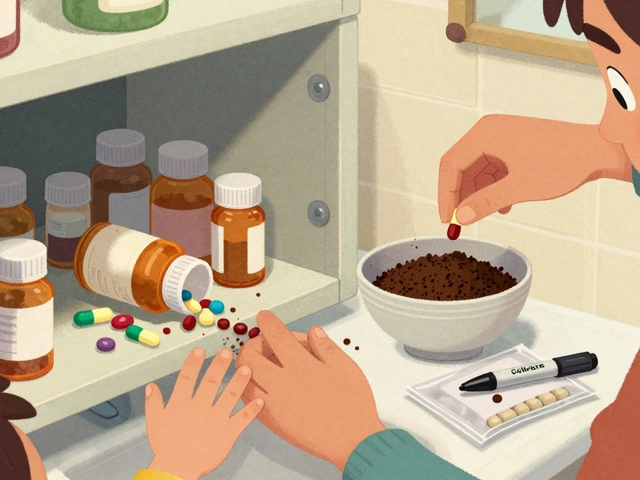
Your doctor might not have the full picture. But your pharmacist does. Pharmacists are trained specifically to catch interactions. In fact, 92% of them run full drug interaction checks before handing out a prescription. That’s not a bonus-it’s their job. Do this: Before your appointment, write down every single thing you take. Include:- All prescription drugs
- All over-the-counter pills (painkillers, antacids, sleep aids)
- All vitamins, minerals, and supplements
- All herbal remedies (ginseng, echinacea, fish oil)
- Any recreational substances (alcohol, tobacco, cannabis)
What to Do If You’re Already Taking Multiple Drugs
If you’re on five or more medications, you’re at higher risk. But you’re not alone. Many people in this situation use pharmacy services that offer medication reviews. Ask your pharmacy if they have a medication therapy management (MTM) program. These are free or low-cost sessions where a pharmacist sits down with you, reviews everything you take, and flags risks. Some pharmacies now use software that checks for interactions across your entire profile-including genetic data. Genomind and similar services analyze how your genes affect drug metabolism. If you’ve ever been told a medication “didn’t work” or gave you strange side effects, this might be why.Real Consequences. Real Stories.
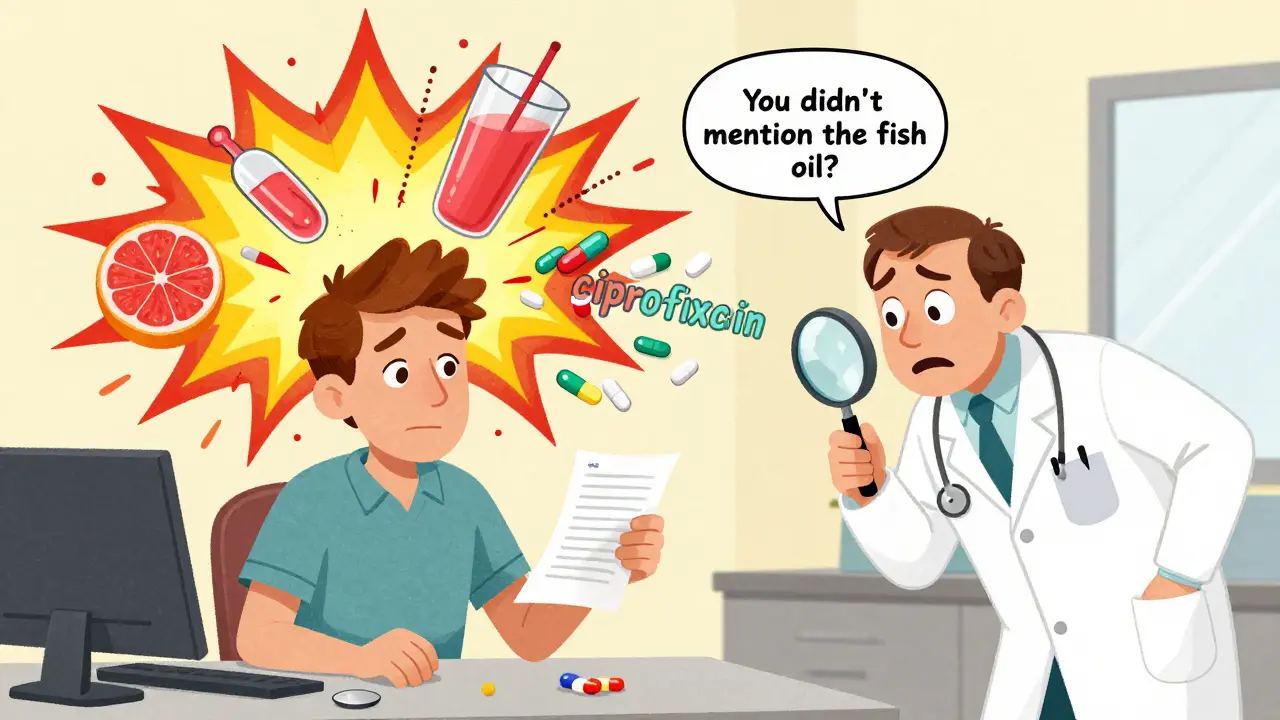
A 68-year-old man in Ohio started ciprofloxacin for a UTI. He was also on warfarin. He didn’t mention the blood thinner to his doctor. Within days, he had internal bleeding. He almost died. That interaction is well-documented. It’s on every drug database. But no one asked. Another woman in Florida took a common cold medicine with pseudoephedrine. She had high blood pressure but didn’t think it mattered. Her pressure shot up. She had a stroke. The pharmacy had flagged it. But she never brought her list. These aren’t edge cases. They’re preventable.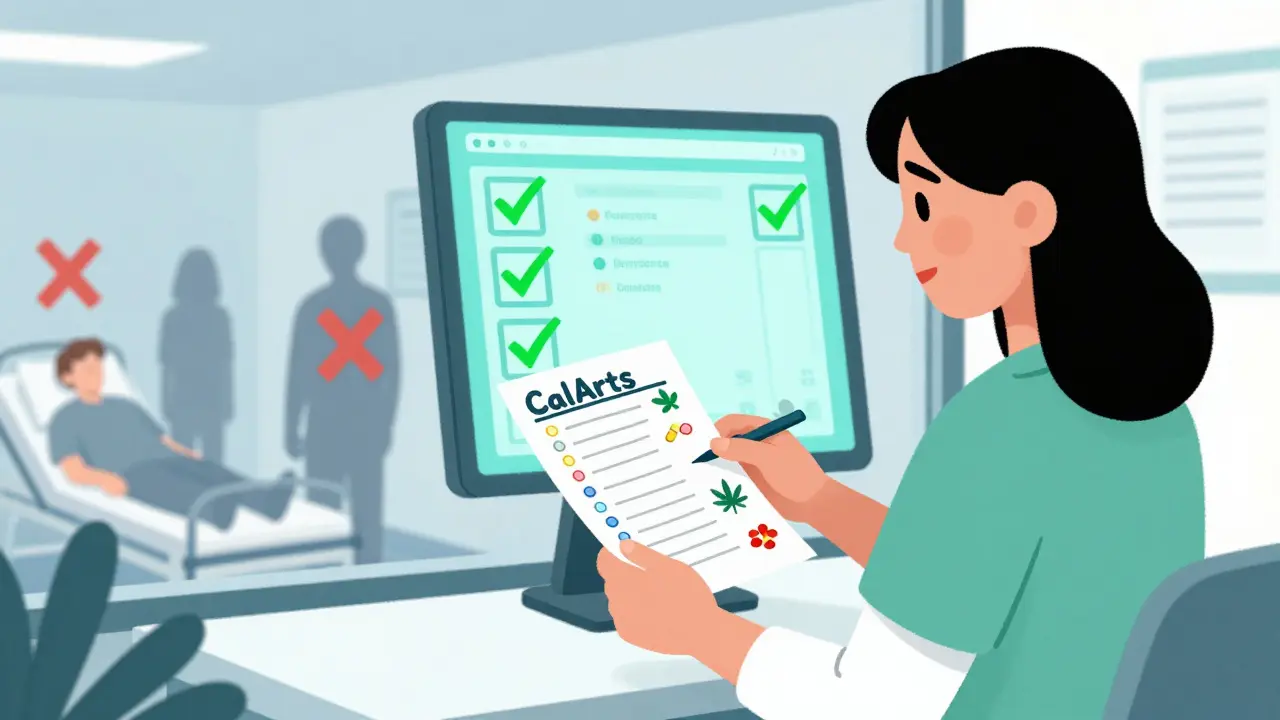
What’s Changing Now-and What’s Coming
The tools are getting better. In 2023, 28% of new drugs included genetic information on their labels. That’s up from just 5% in 2015. Pharmacists now use advanced software that scans for interactions in real time. Many community pharmacies have upgraded from basic checkers to systems that alert them to dangerous combos before the pill even leaves the counter. But here’s the key: technology doesn’t replace conversation. The FDA says 83% of serious interactions could be avoided with better communication. That means you. Your questions. Your honesty.Next Steps: What to Do Today
Don’t wait for your next appointment. Do this now:- Make a list of everything you take. Include dosages and how often.
- Bring your pill bottles or photos of labels to your next doctor or pharmacy visit.
- Ask the pharmacist: “Can you check this new prescription against everything else I take?”
- If you take more than three medications, ask if your pharmacy offers a free medication review.
- Update your list every time you start, stop, or change a medication-even if it’s just a one-time painkiller.
What if I forget to mention a supplement I take?
It happens. But the sooner you correct it, the better. If you realize you forgot something-like melatonin, fish oil, or a herbal tea-you can call your pharmacy or doctor right away. Most pharmacies have a 24-hour hotline for medication questions. Don’t wait until your next appointment. A simple call can prevent a serious interaction.
Can my pharmacist change my prescription if there’s a conflict?
They can’t change it themselves, but they can and will call your doctor. Pharmacists are trained to spot dangerous interactions. If one is found, they’ll contact your prescriber and suggest a safer alternative. Many doctors appreciate this. It’s part of their safety net. Don’t be shy-your pharmacist is there to help, not to judge.
Do I need to tell my doctor about alcohol or cannabis use?
Yes. Alcohol can intensify drowsiness from painkillers, anxiety meds, or sleep aids. Cannabis can interfere with blood pressure control and interact with antidepressants. Your doctor needs to know to assess risk properly. This isn’t about judgment-it’s about safety. Providers are trained to handle this without stigma.
Is it worth getting genetic testing for drug reactions?
If you’re on multiple medications, especially for mental health, chronic pain, or heart conditions, it can be. Testing shows how your body breaks down drugs. For example, some people process codeine too quickly and get dangerous levels of morphine. Others process it too slowly and get no pain relief. If you’ve had bad reactions to meds before, or if your meds don’t seem to work, ask about testing. It’s becoming more common and sometimes covered by insurance.
What if I get a new prescription from a different doctor?
Always bring your updated list to every appointment-even if it’s a specialist. Doctors don’t always see your full history. A cardiologist might not know you’re on a new antidepressant from your primary care doctor. That’s when interactions happen. Your list is your shield. Use it every time.
Are over-the-counter drugs really risky?
Absolutely. About 40% of serious drug interactions involve OTC meds. Pain relievers like ibuprofen can raise blood pressure and harm kidneys if you’re on ACE inhibitors. Antacids can block absorption of thyroid or antibiotic meds. Even allergy pills can worsen glaucoma. Never assume something is “too mild” to cause problems.
How often should I update my medication list?
Every time you start, stop, or change a medication-even if it’s just for a few days. Keep a digital copy on your phone and a printed one in your wallet. Update it weekly if you’re on a new regimen. This habit alone cuts your risk of interaction errors by more than half.
Patrick Jackson
March 7, 2026 AT 17:28Just took my mom to the pharmacy yesterday and the pharmacist caught a deadly combo between her blood thinner and that new OTC cold med she’d been taking. She didn’t even know it was risky. I cried in the parking lot. This post? Lifesaver. 🙏
Joe Prism
March 8, 2026 AT 04:30Pharmacists are the unsung heroes of modern medicine. They’re the only ones who actually read your whole med list. Doctors? They’re rushed. Nurses? Overworked. Pharmacist? They’ve got 400 tabs open and still catch the one interaction you missed.
phyllis bourassa
March 9, 2026 AT 22:09I’m sorry but why are we still treating patients like they’re dumb? You don’t need seven questions. Just say: ‘I take X, Y, Z. What’s going to kill me?’ That’s it. Stop overcomplicating. People aren’t stupid-they’re overwhelmed.
Weston Potgieter
March 11, 2026 AT 06:14So you’re telling me my daily turmeric and fish oil are quietly sabotaging my thyroid med? Cool. Just like how my ‘natural’ CBD gummies made my blood pressure spike last month. No one warned me. Now I’m on 8 meds. And my pharmacist laughs when I show up. 😅
Andrew Poulin
March 11, 2026 AT 20:20Stop being passive. Bring your pills. Ask the questions. If your doctor rolls their eyes, find a new one. Your life isn’t a suggestion box. This isn’t rocket science. It’s basic self-defense.
Vikas Verma
March 12, 2026 AT 00:37MTM programs are underutilized goldmines. In India, we call it 'Medication Reconciliation'-it’s standard in public health clinics. If you’re on 5+ meds, you’re already in the risk zone. Don’t wait for a crisis. Schedule the review. It’s free. It’s efficient. It’s mandatory for your safety.
Sean Callahan
March 12, 2026 AT 10:31wait so if i forgot to tell my doc about my weed use then i could die?? like literally?? omg i just took a hit 2 hours ago and im on cymbalta and a beta blocker i think im gonna die
Pranay Roy
March 14, 2026 AT 07:24Let’s be real. This whole system is a scam. Big Pharma knows interactions happen. They don’t want you to know. They don’t want pharmacists to have full access to your data. They profit from ER visits. The ‘free review’? It’s a trap. They want you to keep buying meds. Always question the source.
Ferdinand Aton
March 15, 2026 AT 20:24Uhh… have you considered that maybe people don’t take 5+ meds because they’re dumb, but because the system forces them to? One drug causes a side effect, so they get another drug to fix it. Then another. Then another. This isn’t about asking questions. It’s about fixing the damn cycle.
William Minks
March 16, 2026 AT 15:48My grandma started taking a new statin. She brought her whole drawer of pills to the pharmacy. The pharmacist spotted a grapefruit interaction she didn’t even know existed. She’s fine now. Just bring the bottles. It’s that simple. 🌿💊