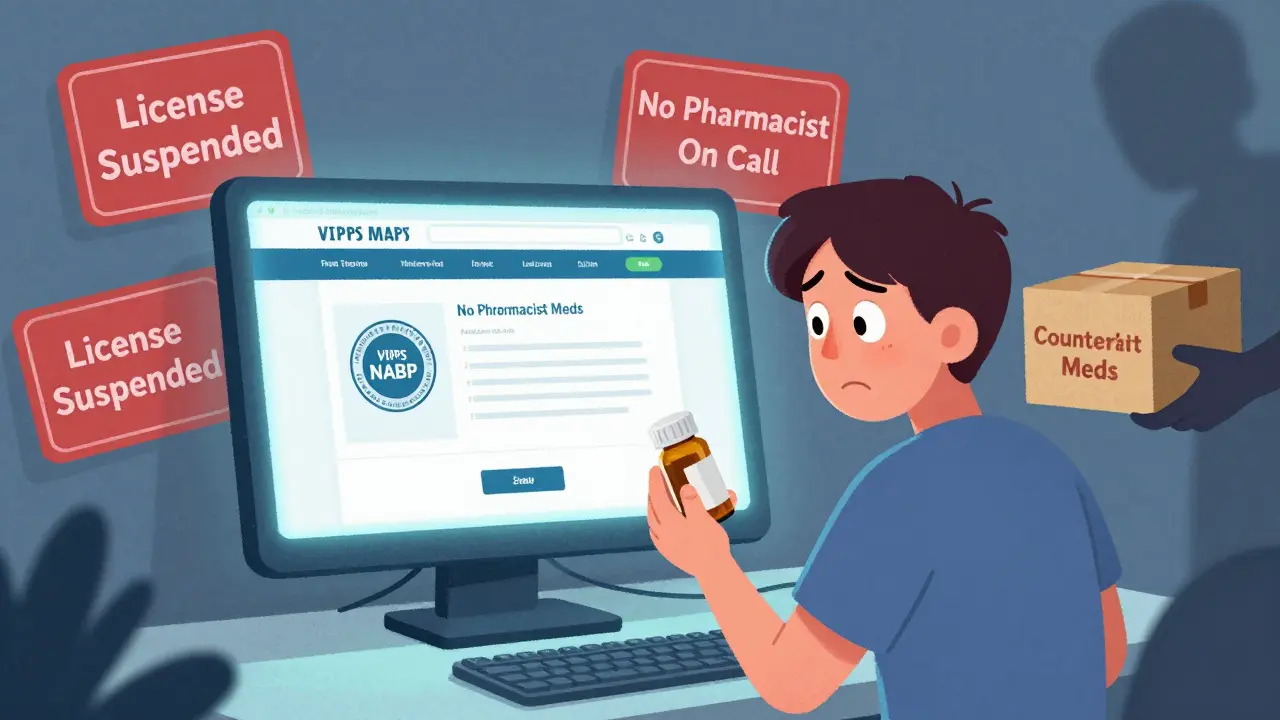
Every year, millions of people buy medications online or from unfamiliar pharmacies without checking if they’re legal. That’s how counterfeit drugs enter the system - pills made in unregulated labs, laced with chemicals, or missing active ingredients entirely. In 2023, the FDA estimated that 1% to 3% of the $575 billion U.S. prescription drug market came from illegal sources. That’s between $5.75 billion and $17.25 billion in fake or dangerous medicine. And it’s not just happening overseas. Some fake pharmacies operate right here in the U.S., using convincing websites, fake seals, and stolen license numbers to look real.
What Makes a Pharmacy Licensed?
A licensed pharmacy isn’t just a business with a sign out front. It’s a facility that has gone through strict state-level approval to handle prescription drugs. Each state has its own Board of Pharmacy, and to operate legally, a pharmacy must hold an active license from that board. That license means the pharmacy has passed inspections, hired licensed pharmacists, and follows rules on storage, labeling, record-keeping, and controlled substances.The pharmacists working there must also be licensed. That means they passed the North American Pharmacist Licensure Examination (NAPLEX), scored at least 75 out of 150, and often took a state-specific law exam like California’s CPJE. These aren’t easy tests. They’re designed to make sure the person handing you your medicine knows exactly what they’re doing.
But here’s the catch: a license isn’t permanent. It must be renewed annually. Fees range from $100 in Texas to $409 in California. And if a pharmacist gets disciplined, gets arrested, or the pharmacy fails an inspection, that license can be suspended or revoked - and the public should know about it.
How to Check if a Pharmacy Is Legit
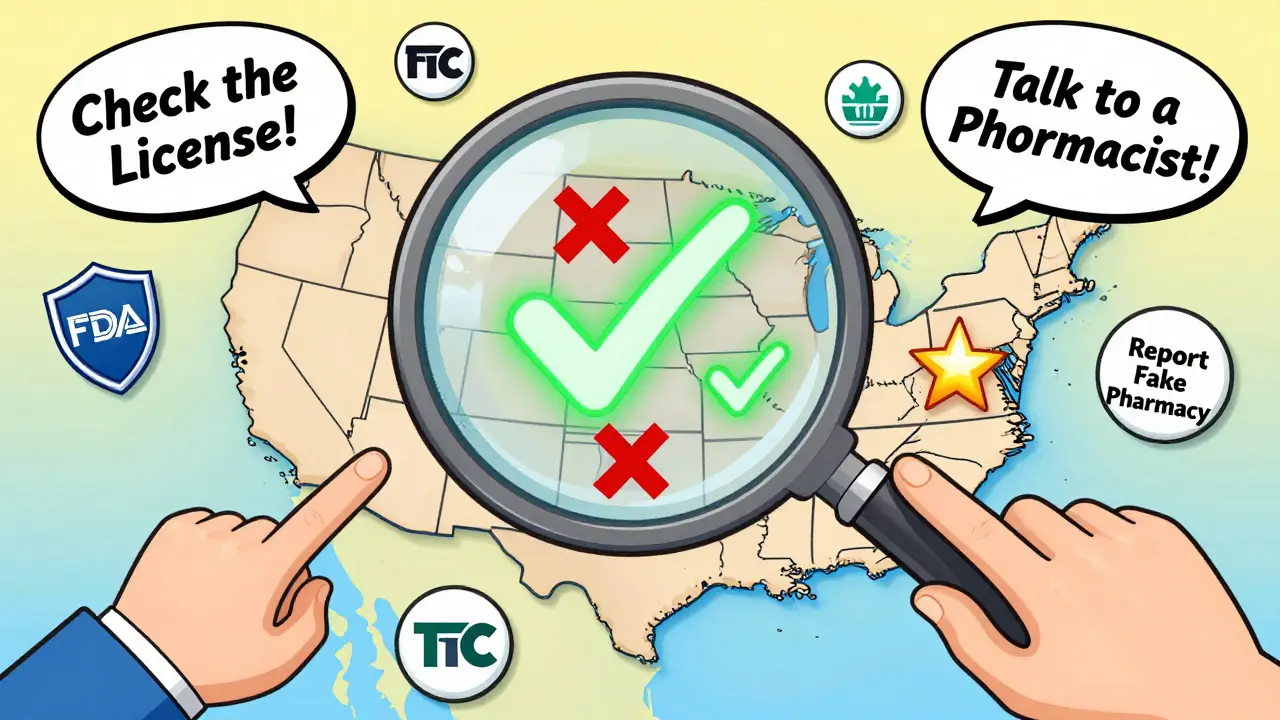
You don’t need a degree in pharmacy to verify a pharmacy. You just need five minutes and the right tools. Here’s how to do it:- Find the pharmacy’s license number. It should be displayed on their website, in their storefront, or on receipts. Look for phrases like “Licensed by the State of California Board of Pharmacy” or “NABP Verified.”
- Go to your state’s Board of Pharmacy website. Most states have a free online portal. In Florida, you can search instantly. In California, you enter the license number without any prefix like “Pharm.” or “P-.”
- Check the license status. Is it “Active”? Good. If it says “Inactive,” “Suspended,” or “Under Investigation,” walk away.
- Look for a physical address and phone number. Use Google Maps Street View. If the building looks like a warehouse, a residential house, or doesn’t exist, that’s a red flag.
- Verify the pharmacist is available. Legitimate pharmacies must have a pharmacist on-site or on-call 24/7 for questions. If you can’t reach one, it’s not legit.
For online pharmacies, look for the VIPPS seal - Verified Internet Pharmacy Practice Sites. It’s issued by the National Association of Boards of Pharmacy (NABP). Only pharmacies that pass strict audits get this seal. As of 2023, NABP’s LegitScript program identified 98.7% of illegitimate online pharmacies. If a site claims to be VIPPS-certified but you can’t find it on the NABP’s official list, it’s fake.
The Hidden Dangers of Fake Pharmacies
Counterfeit drugs aren’t just ineffective - they’re deadly. In 2022, NABP enforcement data showed that unlicensed pharmacies were 4.7 times more likely to dispense the wrong medication and 8.2 times more likely to be involved in diverting controlled substances like oxycodone or fentanyl.One real case from March 2024 involved a California woman who checked her pharmacy’s license after noticing her blood pressure pill looked different. The state board showed the pharmacist-in-charge had resigned six months earlier - and no one was replacing him. She stopped taking the medication and reported it. That’s how you prevent harm.
Another case from July 2023 involved a consumer who lost $850 to a fake pharmacy that used a forged NABP seal. They received pills with no active ingredient. The FDA later traced the shipment to a lab in India with no regulatory oversight.
These aren’t rare. The FDA reported a 22% increase in enforcement actions against illegal online pharmacies in 2023. And with telehealth prescriptions rising, scammers are getting better at mimicking real sites. Some even copy the logos of CVS, Walgreens, or Kaiser Permanente.

Multi-State Pharmacies and the NABP Verify Program
If a pharmacy ships drugs across state lines - say, from Arizona to New York - it needs licenses in every state it serves. That’s expensive and messy. That’s why the NABP created the Verify Program in 2018. It lets you check a pharmacy’s license status across all 50 states and territories in one search.It costs $125 a year for pharmacies to subscribe. But for consumers? It’s free. Just go to the NABP website, enter the pharmacy name or license number, and you’ll see its status in every state it’s licensed in. Results usually come back within 24 hours.
But here’s the problem: not every state uses NABP Verify. California still requires you to use its own portal. Florida doesn’t charge anything. Some states require fingerprint background checks; others accept online ones. That inconsistency confuses people. A 2023 University of Florida study found that 38% of consumers didn’t understand what “administrative suspension” meant - and didn’t realize it meant the pharmacy was unsafe.
What to Do If You Find a Fake Pharmacy
If you suspect a pharmacy is unlicensed, don’t just stop buying from them - report them.- Report to your state’s Board of Pharmacy - they can investigate and shut it down.
- File a complaint with the FDA’s MedWatch program. They track counterfeit drugs nationwide.
- Use the FTC’s complaint portal. Many fake pharmacies steal credit card info too.
- Leave a review on Trustpilot or Google. Other people need to know.
Don’t wait for someone else to get hurt. One report can prevent dozens of cases.
Why This Matters More Than Ever
In 2024, the FDA launched a $15 million initiative to crack down on illegal online pharmacies. They’re using AI to scan websites, track shipping patterns, and identify fake seals. By 2026, they aim to cut consumer harm from unverified pharmacies by 40%.Meanwhile, 43 states have joined NABP’s new InterConnect system, which gives real-time license updates. California now requires out-of-state pharmacies to provide an 800 number so customers can speak to a pharmacist. That’s a big step.
But technology alone won’t fix this. The real solution is awareness. Most people don’t know how to check a pharmacy’s license. A 2023 study found the average consumer spends only 2.7 minutes verifying a pharmacy - and most of that time is spent scrolling past the fine print.
You don’t need to be an expert. You just need to know where to look. And you need to make it a habit - every time you refill a prescription, whether it’s online or in person.
Final Checklist: Is Your Pharmacy Legit?
Before you pay or pick up your meds, ask yourself:- Does the pharmacy require a valid prescription from a licensed doctor? (Legit ones do. Fake ones don’t.)
- Can you find the pharmacy’s license number on their website or in-store?
- Have you checked that license on your state’s Board of Pharmacy website?
- Is there a real physical address? Can you see it on Google Maps?
- Can you talk to a pharmacist? Do they answer questions about your meds?
- Does the pharmacy display the VIPPS seal? And can you verify it on NABP’s official site?
If you answered yes to all five, you’re safe. If even one is no - stop. Walk away. Report it.
How do I know if my online pharmacy is licensed?
Look for the VIPPS seal from NABP and verify the pharmacy’s license number on your state’s Board of Pharmacy website. Legitimate online pharmacies require a prescription, have a physical address you can verify on Google Maps, and offer direct access to a pharmacist. If any of these are missing, it’s not legit.
Are all pharmacies with a license safe?
Not necessarily. A license means the pharmacy met basic legal requirements, but it doesn’t guarantee quality. Some licensed pharmacies have disciplinary records - like untrained staff or improper storage. Always check the license status for warnings like “suspended” or “under investigation.” A clean license is good, but it’s not the only red flag to watch for.
Can I trust pharmacies that offer cheap medications without a prescription?
Absolutely not. Any pharmacy that sells prescription drugs without a valid prescription is breaking federal law. These are almost always fake. The drugs may contain toxic substances, no active ingredients, or the wrong dosage. Even if the price seems too good to be true, it is. No legitimate pharmacy operates this way.
What’s the difference between NABP Verify and VIPPS?
NABP Verify is a tool to check if a pharmacy holds active licenses in any U.S. state. VIPPS is a certification program for online pharmacies that meet strict standards for safety, privacy, and pharmacist availability. A pharmacy can be in NABP Verify without being VIPPS-certified, but if it’s VIPPS-certified, it’s automatically in NABP Verify. Always look for both.
I found a fake pharmacy. What should I do?
Report it immediately. File a complaint with your state’s Board of Pharmacy, the FDA’s MedWatch system, and the FTC. If you bought medication, keep the packaging and any receipts. Share your experience on review sites so others don’t get fooled. One report can stop a scam before it hurts someone else.
Stephen Craig
January 4, 2026 AT 14:40It’s wild how we trust pharmacies like they’re automatic vending machines. You don’t check the barcode on your cereal, but you’ll swallow a pill from a site that looks like it was built in 2003. The real danger isn’t the fake ones-it’s the ones we assume are safe because they have a .com and a logo that looks official.
Connor Hale
January 6, 2026 AT 02:33License numbers mean nothing if nobody’s looking. I’ve seen pharmacies with active licenses that still hand out meds without counseling. The system’s broken because compliance isn’t monitored-it’s just paperwork.
Roshan Aryal
January 7, 2026 AT 22:12Let’s be real-this whole ‘licensed pharmacy’ thing is a capitalist farce. The FDA spends millions chasing fake sites while letting Big Pharma overprice insulin and push opioids like candy. You want to stop counterfeit drugs? Regulate the real ones first. Stop policing the small fry while the giants burn the whole forest.
Catherine HARDY
January 9, 2026 AT 08:16Did you know the NABP seal can be cloned? I’ve seen phishing sites with perfect VIPPS logos. And the state boards? They’re understaffed and slow. If you get your meds from anywhere that doesn’t call you back within 24 hours, you’re playing Russian roulette with your liver.
bob bob
January 9, 2026 AT 12:45Just checked my local pharmacy’s license after reading this. Turned out their pharmacist had been suspended last month. I walked out and went to CVS. Seriously, take five minutes. It’s not hard. You’re worth it.
Vicki Yuan
January 11, 2026 AT 02:41There’s a gap between legal compliance and ethical practice. A pharmacy can be licensed and still have unlicensed techs filling prescriptions, or expired refrigeration for insulin. License status is the floor-not the ceiling. Always ask: ‘Who’s actually touching my medicine?’
en Max
January 11, 2026 AT 08:12It is imperative to recognize that the regulatory architecture governing pharmaceutical distribution is predicated upon a multi-layered, inter-jurisdictional framework, wherein state boards of pharmacy, the NABP, and federal agencies such as the FDA operate under distinct statutory mandates. The absence of real-time data synchronization across these entities creates systemic vulnerabilities that are exploited by bad actors. Therefore, the implementation of a unified, blockchain-verified licensing ledger is not merely advisable-it is a necessary evolution of public health infrastructure.
Angie Rehe
January 12, 2026 AT 15:26Who the hell is checking these licenses? I called my state board last year and they put me on hold for 47 minutes. Meanwhile, I’ve got a guy on Instagram selling ‘generic’ Adderall for $3 a pill with a fake NABP seal. This isn’t a consumer issue-it’s a government failure. Someone should be fired.
Dee Humprey
January 14, 2026 AT 05:13My grandma took a pill from a site that looked like Walgreens. Turned out it was sugar and chalk. She ended up in the ER. I didn’t know how to check her pharmacy. Now I check every single one. Just go to your state’s board site. It takes 2 minutes. Don’t wait for someone to get hurt. ❤️