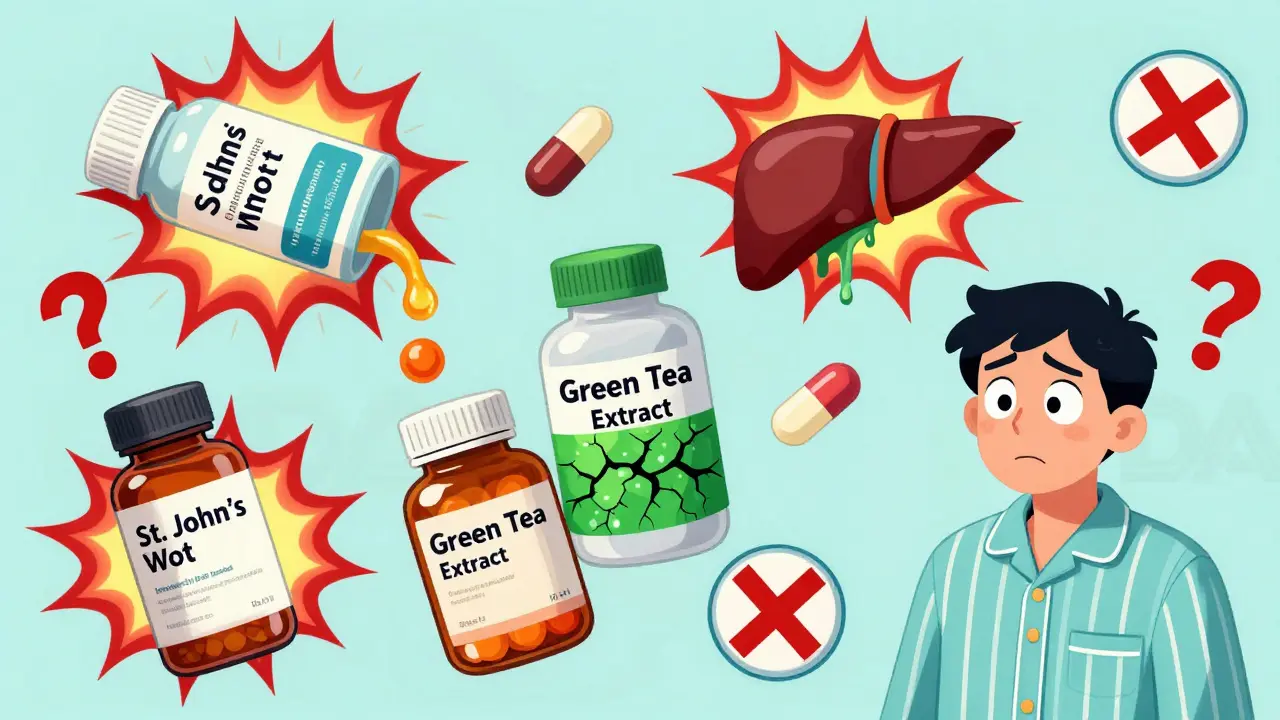
Many people assume that because something is labeled "natural," it’s safe. That’s a dangerous myth. Medication risks and dietary supplement dangers are real, often hidden, and sometimes life-threatening. You might be taking a vitamin, an herbal pill, or a prescription drug without realizing how they could collide inside your body - and the consequences aren’t always obvious until it’s too late.
Supplements Aren’t Regulated Like Medicines
Dietary supplements - from fish oil to ashwagandha to multivitamins - don’t have to prove they’re safe or effective before hitting store shelves. Under the Dietary Supplement Health and Education Act (DSHEA) of 1994, the FDA can only act after harm has already happened. That means a supplement can be sold for months, even years, before anyone notices it’s causing liver damage, heart palpitations, or dangerous interactions with your blood pressure pills.
Compare that to prescription drugs. Before a new medication gets approved, it goes through years of clinical trials, involving thousands of people, to test for side effects and interactions. Supplements? No such requirement. The burden of proof is on the FDA to prove something is unsafe - not on the company to prove it’s safe first.
Hidden Dangers in Common Supplements
Some of the most popular supplements carry serious risks you might not know about.
- St. John’s wort - often taken for mood support - can slash the effectiveness of birth control pills by up to 15%, raise the risk of unplanned pregnancy, and cut levels of antidepressants, chemotherapy drugs, and HIV medications by half. One study showed it dropped cyclosporine (used after organ transplants) by 60% in just two weeks.
- Green tea extract - promoted for weight loss and antioxidants - is linked to over 20% of supplement-related liver injuries in the U.S. It’s not the tea you drink; it’s concentrated pills that overload your liver.
- Vitamin A - taken for skin and immunity - can cause vomiting, blurred vision, and liver damage at doses over 10,000 IU per day. Acute toxicity from a single high dose (300,000 IU or more) can be fatal.
- Vitamin D - often taken for bone health - can spike calcium levels in your blood, leading to kidney stones, confusion, and even coma if taken in massive doses like 300,000 IU monthly.
- Garlic, ginkgo, and fish oil - all thought to be heart-healthy - can increase bleeding time by 20-30% when mixed with blood thinners like warfarin. One woman was hospitalized after combining ginkgo with aspirin. She didn’t tell her doctor about the supplement.
Supplements Can Sabotage Medical Treatments
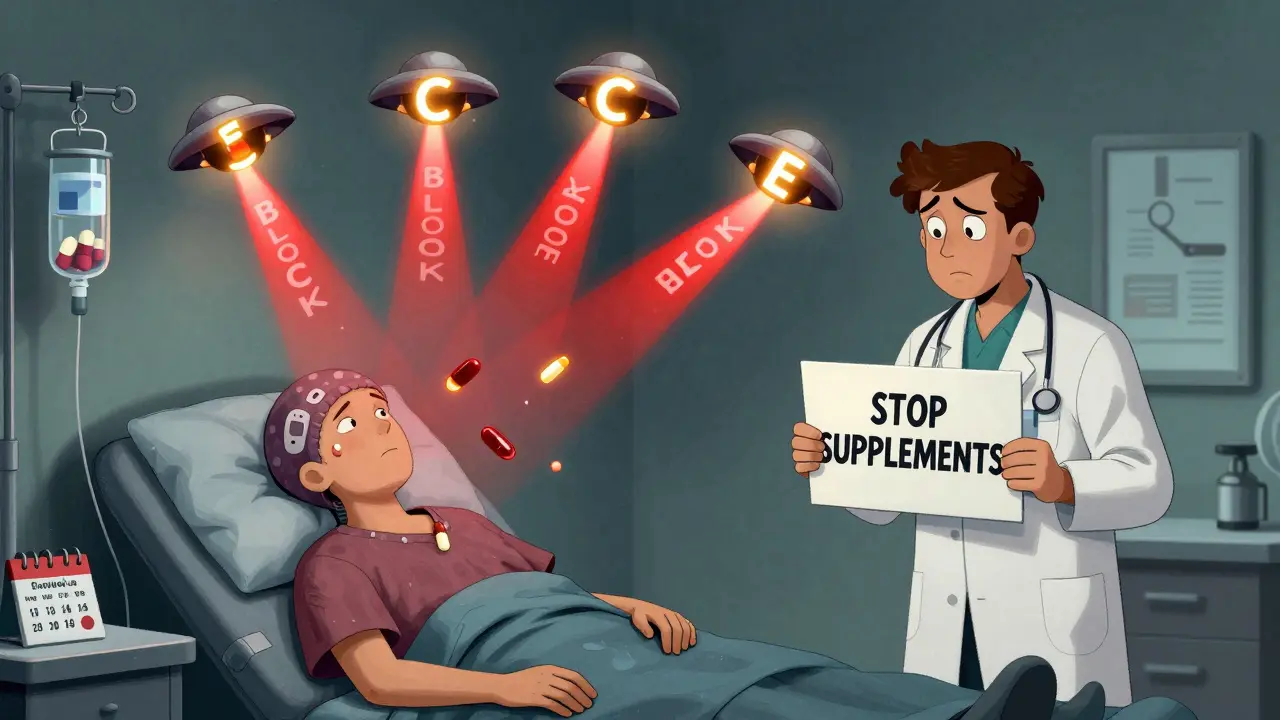
If you’re undergoing cancer treatment, radiation, or surgery, supplements aren’t harmless extras - they’re potential saboteurs.
Antioxidants like vitamins C and E can reduce chemotherapy effectiveness by 25-30% in certain regimens. That means your treatment might not work as well, and your cancer could keep growing. Radiation oncologists at Memorial Sloan Kettering have seen patients delay treatment for weeks because their skin reacted badly to vitamin E supplements during radiation.
Vitamin K, often taken for bone strength, can neutralize warfarin - a blood thinner - by up to 50%. That raises your risk of stroke or heart attack. Meanwhile, bitter orange, found in weight-loss supplements, can raise blood pressure by 10-15 mmHg and trigger irregular heart rhythms. One Reddit user reported severe insomnia and heart palpitations after taking ashwagandha with their blood pressure medication.
Drug Interactions Are the Silent Killer
The real danger isn’t just the supplement itself - it’s what happens when it meets your prescription.
Many supplements affect the same liver enzymes (CYP3A4) that break down drugs. When they do, they can either make your medication stronger or weaker. Ginseng boosts enzyme activity, making drugs like statins and antidepressants less effective. Goldenseal blocks the same enzymes, causing drugs to build up to toxic levels in your blood.
St. John’s wort and antidepressants like sertraline can trigger serotonin syndrome - a rare but deadly condition that causes confusion, rapid heartbeat, high fever, and seizures. The FDA received a report in 2021 of a man who ended up in the ER after mixing the two.
Even over-the-counter meds like ibuprofen or cold remedies can clash with supplements. Mixing NSAIDs with fish oil increases bleeding risk. Taking calcium supplements with thyroid medication can block absorption, making your treatment useless.
Who’s Most at Risk?
You don’t have to be elderly or sick to be in danger. But certain groups face higher risks:
- Older adults - take more medications and supplements. One study found high-dose vitamin D increased fall and fracture risk by 15-20% in seniors.
- Cancer patients - 40% of common supplements interfere with chemotherapy metabolism. The American Cancer Society says: avoid all supplements during treatment unless your oncologist says it’s safe.
- People on blood thinners, antidepressants, or immunosuppressants - even small doses of ginkgo, St. John’s wort, or garlic can trigger serious reactions.
- Those buying online - 45% of supplement-related adverse events come from products bought online, where ingredients are often mislabeled, contaminated, or include hidden drugs like steroids or stimulants.
What You Should Do - and What You Shouldn’t
Here’s what actually works to protect yourself:
- Tell your doctor about every supplement you take - even if you think it’s "just a vitamin." Only 33% of people do this. That’s why 67% of dangerous interactions happen.
- Keep a written list - update it every time you see a provider. The NIH offers a free tool called "My Dietary Supplement and Medicine Record" used by over 1,200 clinics.
- Don’t assume "natural" means safe - many of the most dangerous supplements are plant-based. Herbal products make up just 19% of the supplement market but cause 38% of adverse events.
- Stop taking supplements before surgery - many increase bleeding risk. Ask your surgeon what to pause and when.
- Watch for red flags - rashes, shortness of breath, diarrhea, joint pain, slurred speech, or blood in urine could be signs of a reaction. Don’t wait.
And if you’ve had a bad reaction? Report it. The FDA’s MedWatch system processed over 18,000 supplement-related reports in 2022. Your report could help prevent someone else’s emergency.
The Bigger Picture: Why This Keeps Happening
The supplement industry made $52.2 billion in the U.S. in 2022. With over 85,000 products on the market, profit drives innovation - not safety. The FDA has banned only 12 ingredients since 1994. Meanwhile, new high-risk substances like yohimbe and bitter orange keep appearing, often hidden in weight-loss or energy products.
The FDA’s new Dietary Supplement Ingredient Advisory List, launched in 2023, flags 12 dangerous ingredients. The LiverTox database now tracks 45 supplements linked to liver damage. And AI tools are being tested to scan social media for early warning signs - like people posting about heart palpitations after taking a new pill.
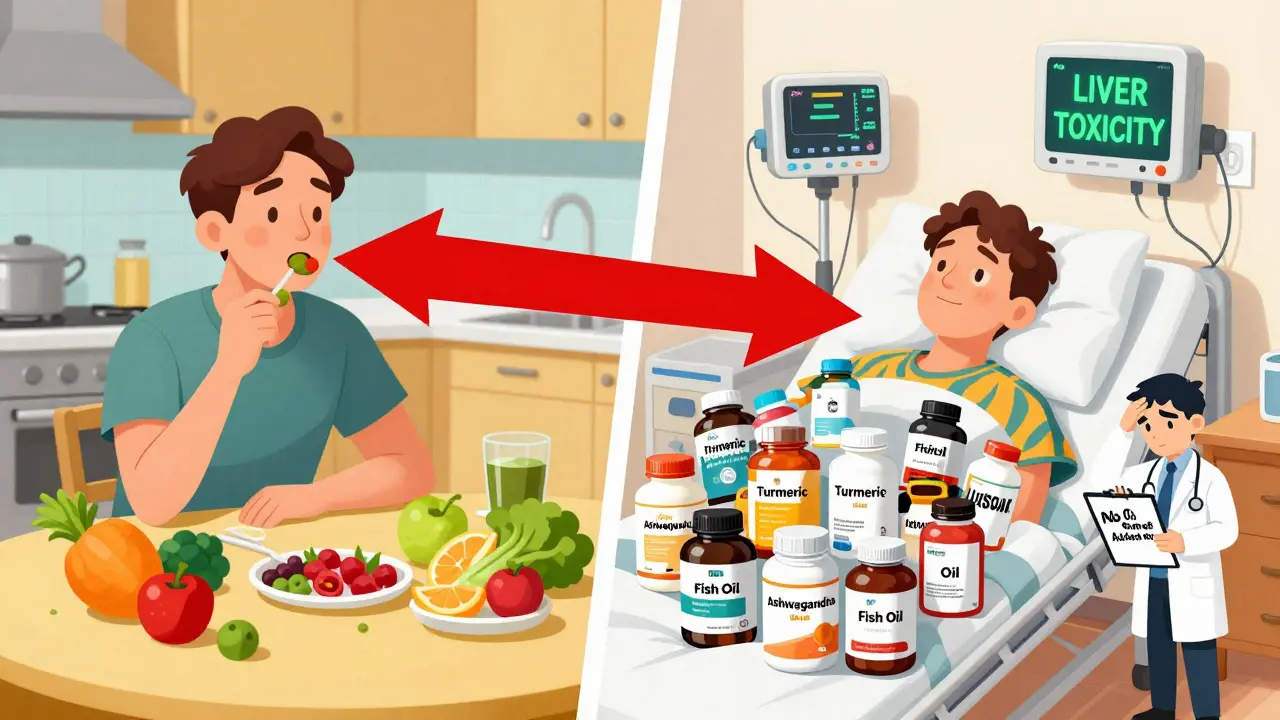
But until the law changes - and requires pre-market safety reviews - you’re on your own. No regulator is checking your supplement bottle before you take it. No one’s warning you that your turmeric capsule might interfere with your heart medication.
Final Reality Check
You don’t need every supplement. Most healthy people get all the nutrients they need from food. The idea that you need a pill to be healthy is largely marketing - not science.
If you’re considering a supplement, ask yourself: Why am I taking this? Is there real evidence it helps? And most importantly - could it hurt me or interfere with something I’m already taking?
There’s no such thing as a risk-free pill. Even aspirin can cause internal bleeding. But with supplements, the risks are invisible, untested, and often ignored. Don’t let your next vitamin be the one that lands you in the hospital.
Can dietary supplements really cause liver damage?
Yes. The NIH’s LiverTox database tracks 45 supplement ingredients linked to liver injury. Green tea extract is the most common culprit, responsible for 22% of reported cases. Other high-risk supplements include weight-loss products with bitter orange, kava, and black cohosh. Symptoms include jaundice, dark urine, fatigue, and abdominal pain. If you suspect liver damage, stop the supplement and get tested immediately.
Is it safe to take supplements with my prescription meds?
Not without checking. Many supplements interact with medications in ways that can be dangerous or even deadly. St. John’s wort can make birth control, antidepressants, and transplant drugs fail. Garlic and ginkgo can cause dangerous bleeding when taken with blood thinners. Always show your pharmacist or doctor your full list of supplements and medications before starting anything new.
Why don’t supplement labels warn about drug interactions?
Because they’re not required to. Under current U.S. law, supplement manufacturers aren’t obligated to test for drug interactions or include warnings on labels. Unlike prescription drugs, which must list all known interactions, supplements can be sold with no safety information at all. That’s why you can’t rely on the label - you need to ask your doctor.
Are multivitamins safe to take daily?
For most healthy people, a standard multivitamin is low-risk. But they’re not necessary if you eat a balanced diet. Some studies show high doses of certain vitamins - like vitamin A, E, and beta-carotene - may increase long-term health risks, including cancer and heart disease. The biggest danger comes from taking multiple supplements that overlap, accidentally exceeding safe limits. Stick to one daily multivitamin, and avoid stacking with extra single-nutrient pills unless prescribed.
What should I do if I think a supplement is making me sick?
Stop taking it immediately. Contact your healthcare provider and describe your symptoms. If it’s serious - chest pain, trouble breathing, severe rash, confusion - go to the ER. Then report it to the FDA through MedWatch Online. Your report helps track patterns and could prevent others from being harmed. Don’t wait - many dangerous reactions are only recognized after multiple cases are reported.
Can I trust supplements sold online?
Not without caution. About 45% of supplement-related adverse events come from online purchases. Products sold online are more likely to be contaminated, mislabeled, or contain hidden drugs like steroids or stimulants. Look for third-party testing seals (like USP, NSF, or ConsumerLab), but even those aren’t foolproof. When in doubt, buy from reputable pharmacies or retailers with strict quality controls.



Kristen Russell
January 2, 2026 AT 00:26Been taking fish oil for years and just found out it can mess with blood thinners? Yikes. I’m telling my doctor next visit - better safe than sorry.
Matthew Hekmatniaz
January 3, 2026 AT 11:37It’s wild how we treat supplements like candy but get nervous about a pill with a prescription label. The double standard is real - and it’s costing people their health.
Liam George
January 4, 2026 AT 12:54Let’s be real - the FDA’s hands are tied because Big Pharma owns Congress. Supplements are the only thing keeping the little guy from being poisoned by corporate medicine. They don’t want you to know that St. John’s wort is cheaper than SSRIs and actually works. The system’s rigged. They ban herbs, not drugs. Look at the data - 12 banned ingredients since 1994? That’s not regulation, that’s suppression.
AI scanning Reddit for heart palpitations? Cute. They’ve known for decades. The LiverTox database? Built by whistleblowers. The real conspiracy isn’t that supplements are dangerous - it’s that they’re too effective and too cheap. They’d rather you take a $500/month pill with 17 side effects than a $15 herb that fixes the root cause.
They call it ‘natural’ to scare you. But what’s more natural than your body healing itself with plants? They don’t patent turmeric. They patent synthetic analogs. Wake up.
I’ve been off all pharma for 7 years. My blood pressure’s stable. My liver’s clean. My doctor? He won’t even talk to me about it. That’s not medicine - that’s a sales funnel.
Next time you see a supplement ad, ask: who profits? Not you. Not me. It’s the same people who sold you the statin, the antidepressant, the thyroid med. They don’t want you healed. They want you dependent.
Report it to MedWatch? Nah. They’ll just bury it. The real power is in community. Talk to your neighbors. Share your story. That’s how change happens - not through bureaucracy.
They’re scared of you knowing the truth. Don’t let them win.
sharad vyas
January 6, 2026 AT 04:19In my country, we use herbs for generations - but always with a wise elder or doctor guiding us. Not just popping pills because a YouTube video says so. Maybe the problem isn’t the herbs, but the lack of wisdom around them.
Dusty Weeks
January 7, 2026 AT 21:34bro i took ashwagandha with my bp med and woke up at 3am with my heart trying to escape my chest 😵💫💀 i thought i was dying. now i just eat bananas and chill. no more ‘natural’ nonsense.
Sally Denham-Vaughan
January 8, 2026 AT 18:53My mom took 10 different supplements and ended up in the ER with liver issues. She didn’t tell anyone because she thought ‘it’s just vitamins.’ We’re all so trusting of labels. I now keep a printed list of everything I take - even the ‘harmless’ ones. Just in case.
Bill Medley
January 10, 2026 AT 01:34Regulatory asymmetry between pharmaceuticals and dietary supplements constitutes a significant public health vulnerability. The burden of proof rests erroneously upon the agency rather than the manufacturer. This paradigm necessitates structural reform.
Ann Romine
January 11, 2026 AT 06:06I’ve been wondering - if supplements aren’t tested for interactions, how do doctors even know what to warn about? Do they just guess? Or is it all anecdotal?