
Your heart is a pump, but it’s not just any pump. It has four one-way doors-valves-that keep blood moving in the right direction. When these doors get stuck shut or fail to close tightly, your heart has to work overtime. This isn’t just a minor inconvenience; it’s a serious condition that affects millions of people worldwide.
If you’ve been told you have heart valve disease, which is a condition where one or more of the heart's four valves malfunction due to narrowing (stenosis) or leakage (regurgitation), you might be feeling overwhelmed by medical jargon. You’re likely wondering what’s actually happening inside your chest, whether you need surgery, and if life can return to normal. The good news? Modern medicine has made huge leaps in treating these conditions. Understanding your specific diagnosis is the first step toward taking control of your health.
How Heart Valves Work (And What Goes Wrong)
To understand the problem, we need to look at the machinery. Your heart has four valves: the aortic, mitral, tricuspid, and pulmonary valves. Think of them like check-valves in plumbing. They open to let blood flow forward and snap shut to prevent it from flowing backward.
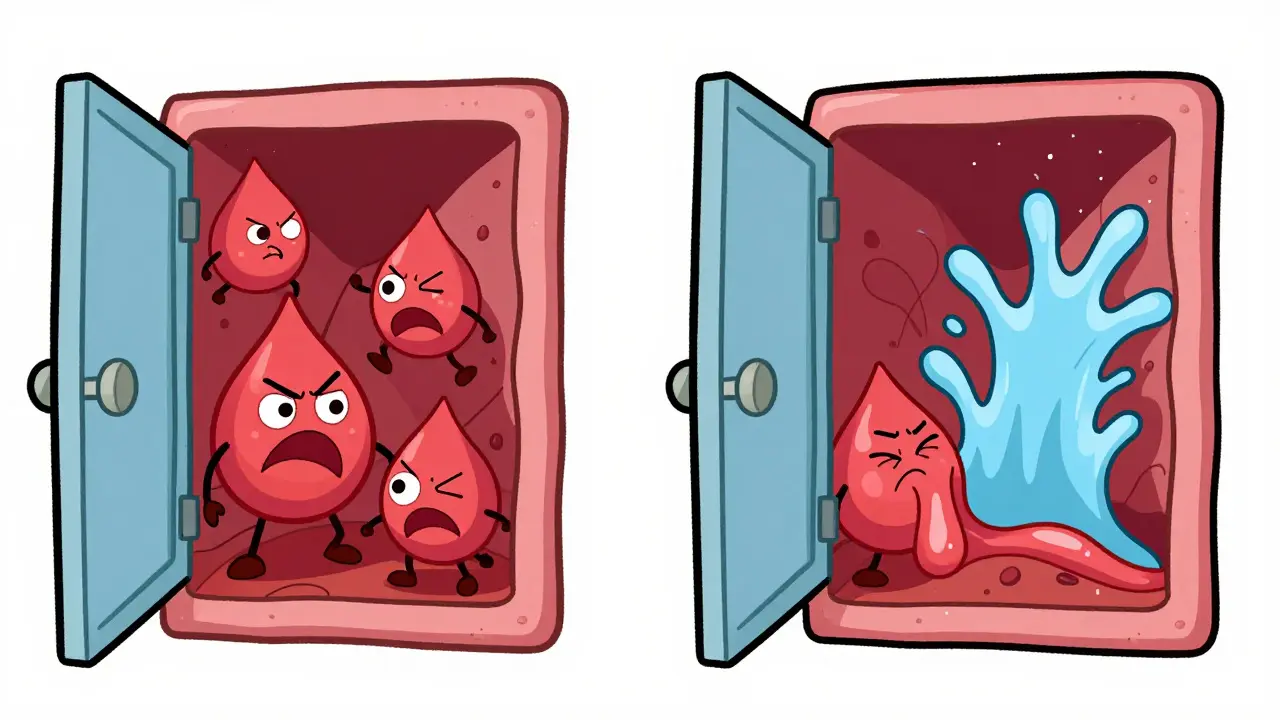
When they work correctly, blood flows smoothly from the atria to the ventricles and out to the lungs or body. But when they fail, two main things happen:
- Stenosis: The valve leaflets become stiff, thick, or calcified. They don’t open fully. This creates a bottleneck, forcing the heart muscle to squeeze harder to push blood through.
- Regurgitation: The valve doesn’t close tightly. Blood leaks backward into the chamber it just left. This causes volume overload, making the heart stretch and weaken over time.
It’s crucial to know which valve is affected and which type of dysfunction is present, as the symptoms and treatments differ significantly between, say, a leaking mitral valve and a narrowed aortic valve.
Spotting the Signs: Symptoms of Valve Dysfunction
Valve diseases are often called "silent" killers because symptoms can take years to appear. However, once they do show up, they are usually clear signals that the heart is struggling.
For aortic stenosis, defined as the narrowing of the aortic valve obstructing blood flow from the left ventricle, doctors look for a classic triad of symptoms:
- Angina: Chest pain or tightness, especially during exertion. About 54% of patients report this.
- Syncope: Fainting or dizziness, particularly when standing up or exercising. This happens because the brain isn’t getting enough blood. Roughly 33% of patients experience this.
- Heart Failure: Shortness of breath, fatigue, and swelling in the legs. Nearly half of severe cases present with these signs.
In contrast, aortic regurgitation, described as leakage of oxygen-rich blood backward from the aorta into the left ventricle, often presents differently. Patients frequently complain of shortness of breath on exertion (71%) and palpitations (feeling their heart race or skip beats).
Mitral valve issues also have distinct patterns. Mitral stenosis often leads to pulmonary congestion, causing difficulty breathing when lying flat (orthopnea). Mitral regurgitation, however, might only cause subtle fatigue until the disease is advanced. If you feel unusually tired after walking to the mailbox or climbing a flight of stairs, don’t brush it off as "just getting older."
Why Did This Happen? Causes and Risk Factors
Knowing the cause helps predict how the disease will progress. For many older adults, age is the biggest culprit. Approximately 70% of aortic stenosis cases are caused by age-related calcification. Over decades, calcium builds up on the valve leaflets, turning flexible tissue into rigid bone-like structures.
However, genetics play a role too. A bicuspid aortic valve, which is a congenital heart defect where the aortic valve has two leaflets instead of three, affects 1-2% of the population. People with this condition are much more likely to develop stenosis earlier in life, often before age 70.
In other parts of the world, infectious diseases are a major driver. Rheumatic heart disease, a complication of untreated strep throat, causes about 80% of mitral stenosis cases globally, particularly in developing nations. In developed countries, degenerative changes and aging remain the primary concerns.
| Condition | Primary Mechanism | Key Symptom | Typical Cause |
|---|---|---|---|
| Aortic Stenosis | Narrowing (Stiffening) | Chest pain, Fainting | Age-related calcification, Bicuspid valve |
| Aortic Regurgitation | Leakage (Backflow) | Shortness of breath, Palpitations | Valve prolapse, Infection, Trauma |
| Mitral Stenosis | Narrowing | Breathing difficulty when lying down | Rheumatic heart disease |
| Mitral Regurgitation | Leakage | Fatigue, Swelling | Valve prolapse, Heart attack, Dilation |

Treatment Options: From Monitoring to Surgery
Not everyone needs immediate surgery. The approach depends on the severity of the disease, your symptoms, and your overall health. Doctors use echocardiograms to measure valve area and pressure gradients. For example, severe aortic stenosis is defined by a valve area smaller than 1.0 cm².
If your condition is mild and asymptomatic, your doctor will likely recommend regular monitoring. This involves echocardiography every 6-12 months to track progression. Medications can help manage symptoms like high blood pressure or fluid retention, but they cannot fix a mechanical problem with the valve itself.
When intervention is necessary, you have several options:
1. Transcatheter Aortic Valve Replacement (TAVR)
This minimally invasive procedure has revolutionized treatment. Instead of opening the chest, doctors insert a new valve through a catheter in the groin. It’s now the preferred option for many patients over 75, accounting for 65% of aortic replacements in this group. Recovery is faster, with most patients reporting significant energy improvements within 30 days.
2. Surgical Aortic Valve Replacement (SAVR)
Traditional open-heart surgery remains the gold standard for younger, lower-risk patients or those with complex anatomy. It involves replacing the diseased valve with either a mechanical valve (which lasts longer but requires lifelong blood thinners) or a bioprosthetic valve (made from animal tissue, which may wear out faster but avoids long-term anticoagulation).
3. Mitral Valve Repair vs. Replacement
For mitral regurgitation, repair is often preferred over replacement. Procedures like the MitraClip, which is a transcatheter device used to clip the edges of the mitral valve together to reduce leakage, have shown success in reducing mortality by 32% compared to medication alone for functional regurgitation. Surgical repair offers excellent long-term survival rates, with 90% of patients alive at 10 years post-surgery.
4. Balloon Valvuloplasty
This procedure uses a balloon to stretch open a narrowed valve. It’s often used as a temporary fix or for patients who aren’t candidates for more permanent solutions. It’s quick, with an average procedure time of 90 minutes and a short hospital stay.
5. Emerging Technologies
Innovation is rapid. New devices like the Evoque tricuspid valve system (approved in 2023) and the Cardioband annuloplasty system are expanding options beyond the aortic and mitral valves. By 2030, experts predict that 80% of valve procedures could be transcatheter-based, thanks to improved durability and safety profiles.
Living with a Heart Valve Condition
Life after diagnosis doesn’t mean giving up your active lifestyle. In fact, early intervention can restore your quality of life dramatically. One patient shared how going from struggling to walk to the mailbox to hiking 3 miles daily within two months of a MitraClip procedure changed his life.
Recovery varies. Open-heart surgery requires 6-8 weeks for sternum healing, meaning no heavy lifting initially. Minimally invasive procedures allow quicker returns to normal activities. Regardless of the method, cardiac rehabilitation is highly recommended. It provides supervised exercise training and education to help you rebuild strength safely.
If you receive a mechanical valve, managing anticoagulation therapy is critical. You’ll need regular INR blood tests to ensure your blood isn’t too thin or too thick. Target ranges differ based on valve type and location, so strict adherence to medication schedules is non-negotiable.
Don’t hesitate to seek a second opinion. Many patients report feeling dismissed by physicians until symptoms became severe. Finding a dedicated heart valve clinic with a multidisciplinary team-including cardiologists, surgeons, and imaging specialists-can make all the difference in getting timely, accurate care.
What is the difference between stenosis and regurgitation?
Stenosis means the valve narrows and doesn't open fully, blocking blood flow. Regurgitation means the valve leaks and doesn't close tightly, allowing blood to flow backward. Both force the heart to work harder but in different ways.
Is TAVR better than open-heart surgery?
For high-risk or elderly patients, TAVR is often preferred due to less invasiveness and faster recovery. For younger, low-risk patients, traditional surgery may offer better long-term durability. The best choice depends on your specific anatomy and health status.
Can heart valve disease be cured without surgery?
Medications can manage symptoms and slow progression, but they cannot repair a damaged valve. Once severe symptoms develop, mechanical intervention (repair or replacement) is usually necessary to improve survival and quality of life.
How long do artificial heart valves last?
Mechanical valves can last a lifetime but require blood thinners. Bioprosthetic (tissue) valves typically last 10-15 years, though newer technologies aim to extend this to 25+ years. Durability depends on patient age and activity level.
What are the warning signs that I need immediate care?
Seek immediate help if you experience fainting (syncope), severe chest pain, sudden shortness of breath, or rapid weight gain from fluid retention. These can indicate worsening heart failure or arrhythmias.