
It is 2 AM. Your toddler is burning up with a fever, and you are reaching for the medicine cabinet in the dark. You grab the bottle of liquid pain reliever, but before you pour it into the cup, you pause. The label looks confusing. There are two charts-one for age, one for weight. Which one do you trust? And more importantly, which spoon do you use?
This scenario plays out in millions of homes every year. According to the American Academy of Pediatrics (AAP), medication errors account for approximately 1.4 million emergency department visits annually in the United States. Many of these mistakes happen not because parents are careless, but because reading Over-the-Counter (OTC) children's medication labels can be tricky. The stakes are high: Acetaminophen overdose remains the leading cause of acute liver failure in children.
The good news? You don't need a medical degree to get this right. You just need to know where to look and what to ignore. This guide breaks down exactly how to read those labels so you can treat your child safely and confidently.
Why Weight Beats Age Every Time
If you take only one thing away from this article, let it be this: Weight is the primary determinant for dosing.
You might be tempted to use the age chart on the back of the box because it feels easier. "He's four years old, so I'll give him the dose for a 4-year-old." But here is the problem: a small four-year-old might weigh the same as a large three-year-old. If you dose by age, you risk giving too much or too little.
A study published in Clinical Pediatrics found that using age-based dosing instead of weight-based dosing resulted in errors in 23% of cases. That means nearly one in four doses was wrong. Underdosing happens in 15% of these cases, leaving your child still in pain. Overdosing happens in 8%, which can lead to serious side effects.
The American Academy of Pediatrics (AAP) emphasizes in their 2023 safety update that you should always use weight whenever possible. If you know your child's weight, use the weight chart. If you don't know their exact weight, estimate it carefully, or call your pediatrician. Never guess.
Decoding the Label: What Each Section Means
Modern FDA-mandated labeling standards require specific information to be displayed clearly. Here is how to navigate the chaos:
- The Active Ingredient: Look at the very top. Is it Acetaminophen? Ibuprofen? Or something else? This matters because different drugs have different rules. For example, Ibuprofen should not be given to infants under 6 months, while Acetaminophen can be used earlier with doctor approval.
- The Concentration: This is critical. You will see numbers like "160 mg per 5 mL" or "100 mg per 5 mL." These numbers tell you how strong the medicine is. If you switch brands, check this number. A higher concentration means you give less liquid for the same effect. Mixing up concentrations is a common source of overdose.
- The Dosing Chart: This table lists weight ranges (e.g., 12-17 lbs, 18-23 lbs) alongside the corresponding volume in milliliters (mL). Find your child's weight range. If they fall between categories, round down to the lower category to be safe.
- Frequency and Limits: How often can you give it? Acetaminophen is typically every 4 hours, max 5 doses in 24 hours. Ibuprofen is every 6-8 hours. Do not exceed these limits.
- Warnings: Look for bold text. "Do not use for children under [age]" or "Liver Warning." These are there for a reason.
Acetaminophen vs. Ibuprofen: Key Differences
Most parents keep two main medicines in their cabinet: Acetaminophen (Tylenol) and Ibuprofen (Advil/Motrin). They work differently, and their labels reflect that.
| Feature | Acetaminophen | Ibuprofen |
|---|---|---|
| Minimum Age | 2 months (with doctor approval) | 6 months |
| Dosing Frequency | Every 4-6 hours | Every 6-8 hours |
| Max Daily Doses | 5 doses in 24 hours | Varies by weight, usually 4 doses |
| Primary Risk | Liver damage if overdosed | Kidney stress, stomach upset |
| Standard Concentration | 160 mg / 5 mL | 100 mg / 5 mL |
Notice the concentration difference. Standard children's Acetaminophen is 160 mg per 5 mL. Standard children's Ibuprofen is 100 mg per 5 mL. This means for the same volume (5 mL), you are giving more Acetaminophen than Ibuprofen. Always check the "mg per mL" on the bottle to ensure you are calculating correctly.
The Measurement Trap: Ditch the Kitchen Spoons
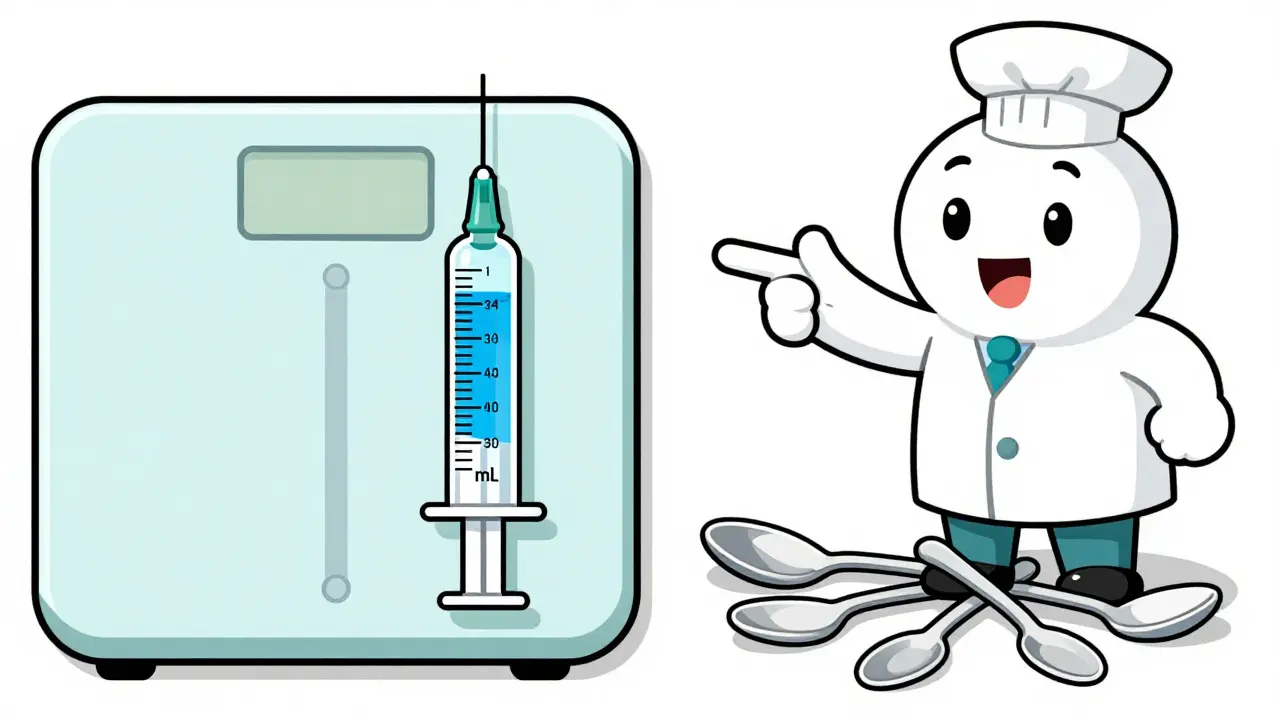
This is where most errors happen. You reach for a teaspoon from the drawer. It says "tsp" on the handle. You think, "That's 5 mL, right?"
Wrong.
A standard kitchen teaspoon holds about 4.93 mL, but household utensils vary wildly. Some hold 7 mL. Others hold only 3 mL. Using a kitchen spoon can result in a dose that is 20-30% off, potentially delivering 2-3 times the intended amount.
FDA labeling requirements now mandate that all liquid medications include a dosing device-usually an oral syringe or a marked cup. Use that device. It measures in milliliters (mL), which is precise. If you lost the original device, buy a new oral syringe at the pharmacy. They cost a few dollars and could save your child from an ER visit.
Remember: mL is the only unit that matters. Ignore teaspoons (tsp) and tablespoons (tbsp) on the label unless you are using a calibrated measuring spoon that explicitly states its volume in mL.
Hidden Acetaminophen: The Silent Danger
Here is a scary fact: 19% of acetaminophen overdoses in children stem from parents unknowingly administering additional acetaminophen through cold medicines.
Your child has a fever and a runny nose. You give them Tylenol for the fever. Then you give them a multi-symptom cold syrup for the congestion. You don't realize that the cold syrup also contains acetaminophen. Now your child has double-dosed.
Always check the "Drug Facts" panel on any multi-symptom medication. Look for "acetaminophen" in the active ingredients list. If it's there, do not give separate acetaminophen. Treat only the symptoms you need to address. Simplicity is safer.
When to Call the Doctor
Labels are guides, not substitutes for professional advice. Call your pediatrician if:
- Your child is under 3 months old and has a fever (any temperature over 100.4°F / 38°C).
- Your child is under 2 years old and you are unsure about dosing.
- The fever lasts more than 3 days.
- Your child shows signs of dehydration (no tears when crying, dry mouth, fewer wet diapers).
- You suspect an overdose. In this case, call Poison Control immediately (1-800-222-1222 in the US) or go to the ER.
Dr. Jennifer Shu, FAAP, reminds us: "Do not guess their weight. Acetaminophen and ibuprofen can be dangerous when given in the wrong dose." When in doubt, ask.
Practical Tips for Safe Dosing
To make this process smoother, try these steps:
- Weigh your child regularly. Keep a recent weight handy. Don't rely on memory.
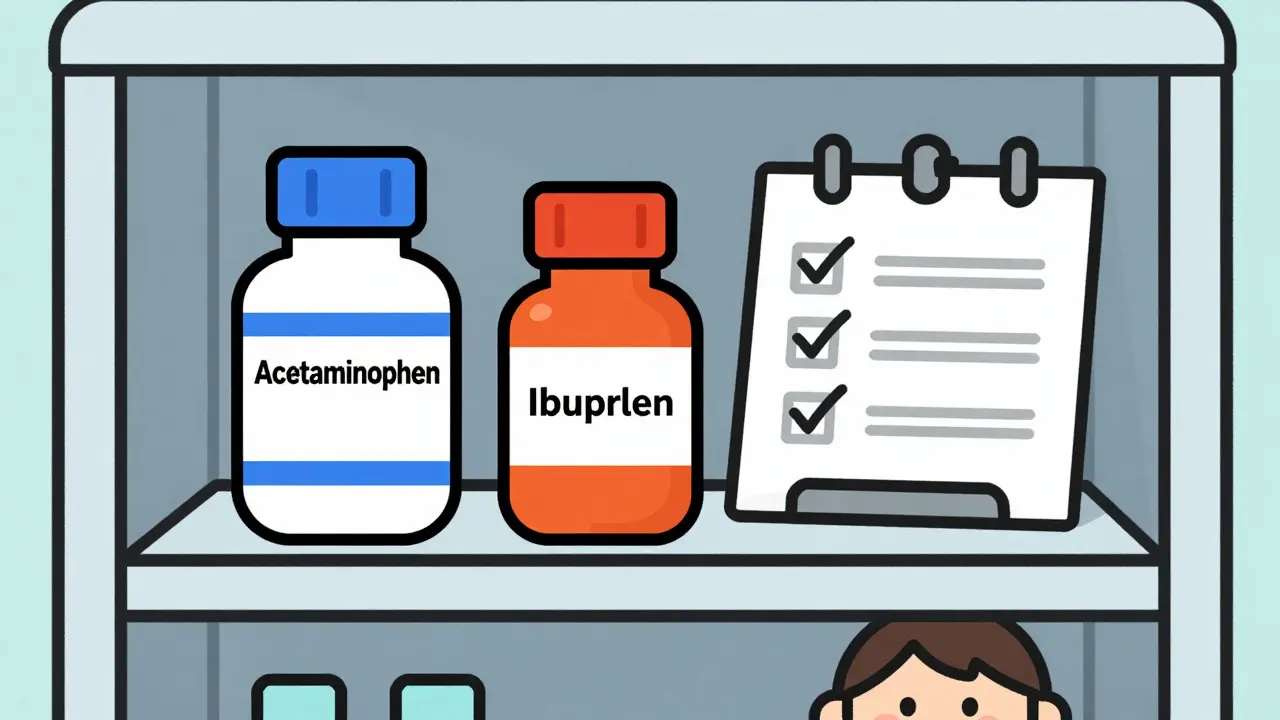
- Use a whiteboard. Write down the correct dose for your child's current weight next to the medicine cabinet. Update it as they grow.
- Check expiration dates. Old medicine loses potency and can break down into harmful compounds.
- Store safely. Keep medicines out of reach and sight of children. Accidental ingestions are still a major cause of ER visits.
- Read the entire label. Don't just scan for the dose. Read the warnings and interactions.
By taking these simple steps, you transform a stressful, error-prone task into a routine safety practice. Your child gets the relief they need, and you get peace of mind.
Should I use the age or weight chart on my child's medication?
Always use the weight chart if you know your child's weight. Weight is a more accurate indicator of how much medicine a child needs. Age-based dosing can lead to errors in 23% of cases, according to studies. If you don't know their weight, estimate it carefully or consult your pediatrician.
Can I use a kitchen teaspoon to measure medicine?
No. Kitchen spoons are not accurate. A standard teaspoon varies significantly in volume. Always use the dosing device (syringe or cup) that came with the medicine, or buy a new oral syringe from the pharmacy. Measure in milliliters (mL).
What is the difference between infant drops and children's liquid?
Infant drops are more concentrated. For example, infant acetaminophen drops were previously 80 mg per 0.8 mL, while children's liquid is 160 mg per 5 mL. Confusing these two can lead to a massive overdose. Always check the concentration (mg per mL) on the label.
How often can I give acetaminophen to my child?
Acetaminophen can typically be given every 4 to 6 hours as needed. However, do not exceed 5 doses in a 24-hour period. Giving it too frequently can strain the liver.
Is it safe to alternate acetaminophen and ibuprofen?
Alternating these medications can be effective for high fevers, but it increases the risk of dosing errors. Only do this if advised by your pediatrician, and keep a strict written log of when each dose was given.
What should I do if I think I gave too much medicine?
Stay calm. Check the label to confirm the dose. If you are sure it was an overdose, call Poison Control (1-800-222-1222 in the US) or seek emergency medical attention immediately. Do not wait for symptoms to appear.



Morikeoluwa Ayodeji
July 30, 2026 AT 00:10Great read! I always tell parents to keep a whiteboard near the meds. It saves so much panic at 2 AM when you're half asleep. Weight is definitely king here.
Dennis Leeftink
July 30, 2026 AT 15:08Most people just ignore this stuff because they think they are smarter than the label. They use a spoon from the drawer and wonder why their kid gets sick again. Basic math really.
Traci Bobbitt
July 30, 2026 AT 22:21I used to do the age thing too until my pediatrician yelled at me during a checkup. Now I weigh him every month and write it down. The syringe that comes with the bottle is a lifesaver honestly.
Michelle Alavaski
July 31, 2026 AT 23:25One must consider that these guidelines are often dictated by pharmaceutical interests rather than pure biological necessity. The push for precise milliliter measurements ignores the traditional wisdom of approximate dosing which served generations before the FDA existed. It creates unnecessary anxiety in the household.
Sansaray Jones
August 2, 2026 AT 23:20just stick to the weight chart. simple as that. no need to overthink it or debate the system
Veronica Agbanyim
August 3, 2026 AT 12:59It is frankly negligent to assume kitchen utensils are accurate enough for medicine. Parents have a moral duty to be precise. If you can't afford a proper syringe then maybe you shouldn't be giving meds. It's about respecting the child's body not guessing games.
jackie healey
August 3, 2026 AT 13:02Oh, don't be so harsh on the parents!!! Everyone makes mistakes sometimes. The important thing is that we are learning now. Please remember to check for hidden acetaminophen in cold medicines too!! It is a very common trap!
Anna Salamon
August 3, 2026 AT 22:08In many cultures we rely on community knowledge but this guide clarifies things well. I appreciate the clear distinction between infant drops and children liquid. That concentration difference is huge and easy to miss if you are rushing.