Have you ever prescribed a brand-name medication, only to have the pharmacy dispense a generic version without asking? For most doctors, this is routine. For others, it’s a source of daily anxiety. The gap between what medical societies officially say about generic drugs and what actually happens in your clinic can be wide-and confusing.
If you are a healthcare provider navigating these waters, you aren't just dealing with pharmacology; you are balancing regulatory mandates, economic pressures, and patient safety concerns. Medical society guidelines offer a roadmap, but they rarely point in a single direction. Some organizations champion generic substitution as a cost-saving imperative, while others draw hard lines around specific drug classes where even tiny variations could harm patients. Understanding these official positions isn't just academic-it affects how you write prescriptions, counsel patients, and manage chronic conditions.
The Foundation: How We Got Here
To understand why medical societies hold their current positions, we have to look back at the framework that governs generic drugs today. It all stems from the Hatch-Waxman Act, formally known as the Drug Price Competition and Patent Term Restoration Act of 1984. This legislation created the modern pathway for generic approval in the United States. Before this, getting a generic drug approved was nearly impossible due to patent protections and duplicative testing requirements.
The Act introduced the Abbreviated New Drug Application (ANDA) process. Instead of repeating expensive clinical trials, generic manufacturers must prove their product is "bioequivalent" to the brand-name original. The Food and Drug Administration (FDA) sets strict standards here: generic drugs must contain the same active ingredients, strength, dosage form, and route of administration. They must also demonstrate that they deliver the drug into the bloodstream at a similar rate and extent.
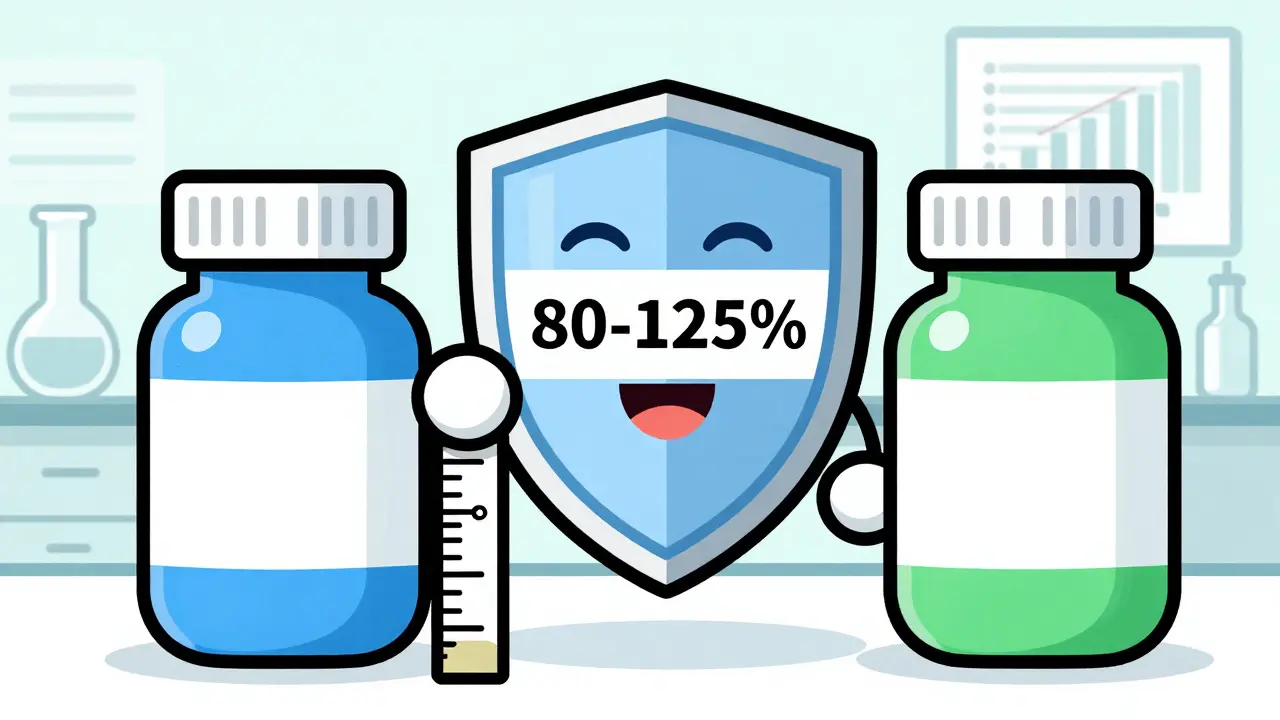
However, bioequivalence doesn't mean identical. The FDA accepts an 80-125% confidence interval for the ratio of population geometric means between the generic and brand products. In simple terms, a generic might release slightly faster or slower than the brand. For most medications-like antibiotics or blood pressure pills-this variance is clinically irrelevant. But for certain drugs, this window is too wide. This discrepancy is exactly where medical society guidelines diverge.
The General Rule: Safety and Cost Savings
For the vast majority of prescriptions, major medical organizations support generic use. The American College of Physicians (ACP), for instance, generally backs generic substitution when therapeutically equivalent products are available. Their position aligns with the broader public health goal: making care affordable without sacrificing quality.
The data supports this approach. According to FDA statistics from 2022, generic drugs account for 90% of prescriptions filled in the U.S., yet they represent only 23% of total drug expenditures. That is a massive savings for patients and the healthcare system. When there is a generic equivalent available, substitution rates hover near 90%. Most providers view this as a win-win. You get the same therapeutic outcome for a fraction of the cost.
The American Medical Association (AMA) plays a subtle but crucial role in this ecosystem through its United States Adopted Names (USAN) Council. Established in 1964, the USAN Council focuses on naming conventions. Their primary mission is patient safety-specifically, reducing medication errors caused by confusing names. As noted in the AMA Journal of Ethics (August 2023), the council works to ensure nonproprietary names are suitable for routine prescribing and dispensing. By standardizing how we name generics, they reduce the risk of mix-ups that could occur during substitution.
| Organization | General Stance | Key Concerns/Exceptions |
|---|---|---|
| American College of Physicians (ACP) | Supports substitution | Focuses on therapeutic equivalence and cost-effectiveness |
| American Academy of Neurology (AAN) | Opposes substitution for anticonvulsants | Risk of breakthrough seizures due to bioequivalence variations |
| National Comprehensive Cancer Network (NCCN) | Supports off-label generic use | Facilitates access to oncology treatments via compendia |
| FDA (Regulatory Body) | Mandates bioequivalence | Accepts 80-125% confidence interval for absorption rates |
The Exception: Narrow Therapeutic Index Drugs
This is where things get complicated. Not all drugs are created equal. Some medications have a Narrow Therapeutic Index (NTI), which is a small margin between the effective dose and the toxic dose. For these drugs, a slight change in blood concentration can lead to treatment failure or severe side effects.
The American Academy of Neurology (AAN) takes a hard line on this issue. They explicitly oppose the generic substitution of anticonvulsant drugs (medications used to treat epilepsy). Why? Because seizure control is fragile. A minor pharmacokinetic difference-caused by different inactive ingredients or manufacturing processes in a generic version-could trigger breakthrough seizures in a patient who has been stable for years.
Consider the scale of this problem. The CDC reports that approximately 3.4 million Americans have active epilepsy. For these patients, consistency is not a luxury; it is a necessity. Surveys suggest that a significant portion of neurologists-some estimates put it at 68%-have observed treatment complications linked to generic antiepileptic substitutions. The AAN’s position reflects this clinical reality. They argue that the standard bioequivalence range is too loose for such high-stakes medications.
Other NTI drugs include warfarin (a blood thinner), levothyroxine (for thyroid disorders), and lithium (for bipolar disorder). While the AAN focuses on neurology, other specialty societies often echo similar cautions for their respective fields. The challenge for providers is that state laws vary wildly. Some states require prescriber consent before substituting NTI drugs, while others allow automatic substitution. This creates a patchwork of regulations that can confuse both doctors and pharmacists.
Oncology and Off-Label Uses
In cancer care, the conversation shifts again. The National Comprehensive Cancer Network (NCCN) Guidelines are the gold standard for oncology practice. Interestingly, these guidelines frequently incorporate off-label uses of generic drugs. According to a 2022 report titled "Clearing the Path for New Uses for Generic Drugs," about 42% of NCCN-listed cancer drug uses are considered off-label.
What does this mean for you? It means that in oncology, generic substitution is often seamless because the focus is on the active ingredient's mechanism of action rather than the brand. The NCCN Compendia serve as the only accepted disease-specific compendium for Medicare coverage determinations. If a generic drug is listed as therapeutically equivalent in the NCCN guidelines, it is considered safe and effective for that indication. This flexibility helps keep cancer treatment accessible, especially given the high costs associated with branded oncology drugs.
Navigating Conflicting Guidelines in Practice
So, how do you apply this when you are standing in front of a patient? Here is a practical approach:
- Know your specialty exceptions. If you are a neurologist, cardiologist, or endocrinologist, you likely deal with NTI drugs regularly. Familiarize yourself with your society’s specific warnings. For example, if you prescribe levothyroxine, consider whether your patient is sensitive to formulation changes.
- Check state laws. Regulatory frameworks differ by location. Some states have "Dawson Lists" or similar mechanisms that identify drugs where substitution is restricted. Knowing your local rules prevents unexpected conflicts with pharmacies.
- Communicate with pharmacists. Pharmacists are partners in this process. If you have a strong preference for a brand-name product due to patient history, mark your prescription "Dispense as Written" (DAW) or "Brand Medically Necessary." Explain why. This builds trust and ensures the patient gets the exact therapy you intended.
- Educate your patients. Many patients fear generic drugs because of myths about inferior quality. Others fear them because they’ve had bad experiences with switching. Be honest. Tell them that generics are rigorously tested, but explain why you might want to stick with one specific manufacturer for stability reasons.
The Future of Generic Guidelines
Looking ahead, we are seeing a trend toward greater alignment between medical society guidelines and FDA therapeutic equivalence ratings. The FDA updates its "Orange Book" (Approved Drug Products with Therapeutic Equivalence Evaluations) regularly, categorizing products with "A" ratings as therapeutically equivalent. Medical societies are increasingly referencing these ratings in their own documents.
However, the debate over NTI drugs is unlikely to disappear. Specialty societies will continue to advocate for stricter controls where patient safety is paramount. The WHO’s international norms also play a role, influencing global standards for drug quality. As new generic versions enter the market, providers must remain vigilant. The goal remains the same: balancing affordability with uncompromising safety.
Ultimately, medical society guidelines are tools, not absolute commands. They provide evidence-based recommendations to help you make the best decision for your individual patients. By understanding the nuances-from the Hatch-Waxman Act to the latest NCCN updates-you can navigate the complex world of generic drugs with confidence.
Do all medical societies support generic drug substitution?
No. While many organizations like the American College of Physicians support generic substitution for cost savings and broad efficacy, some specialty societies oppose it for specific drug classes. For example, the American Academy of Neurology opposes substituting anticonvulsants due to risks of breakthrough seizures.
What is a Narrow Therapeutic Index (NTI) drug?
An NTI drug is a medication where the difference between a therapeutic dose and a toxic dose is very small. Examples include warfarin, levothyroxine, and lithium. Small variations in how the body absorbs these drugs can lead to serious health issues, which is why some guidelines restrict generic substitution for them.
How does the FDA define bioequivalence?
The FDA requires generic drugs to be bioequivalent to the brand-name original. This means they must deliver the same amount of active ingredient into the patient's bloodstream within a similar time frame. The acceptable range is typically an 80-125% confidence interval for absorption rates.
Why does the American Academy of Neurology oppose generic anticonvulsants?
The AAN opposes generic substitution for anticonvulsants because even minor differences in drug absorption can disrupt seizure control. Since epilepsy affects millions of Americans, maintaining consistent medication levels is critical to preventing life-threatening breakthrough seizures.
What role does the AMA USAN Council play in generic drugs?
The USAN Council, part of the American Medical Association, focuses on standardizing drug names to prevent confusion and medication errors. They ensure that generic names are distinct enough to avoid mix-ups during prescribing and dispensing, prioritizing patient safety in nomenclature.