Naloxone Co-Prescribing Risk Calculator
Assess Your Risk for Opioid Overdose
This tool helps determine if naloxone co-prescribing is recommended based on CDC guidelines. Answer the questions below to see your risk level.
Why Naloxone Is Prescribed Alongside Opioid Pain Medication
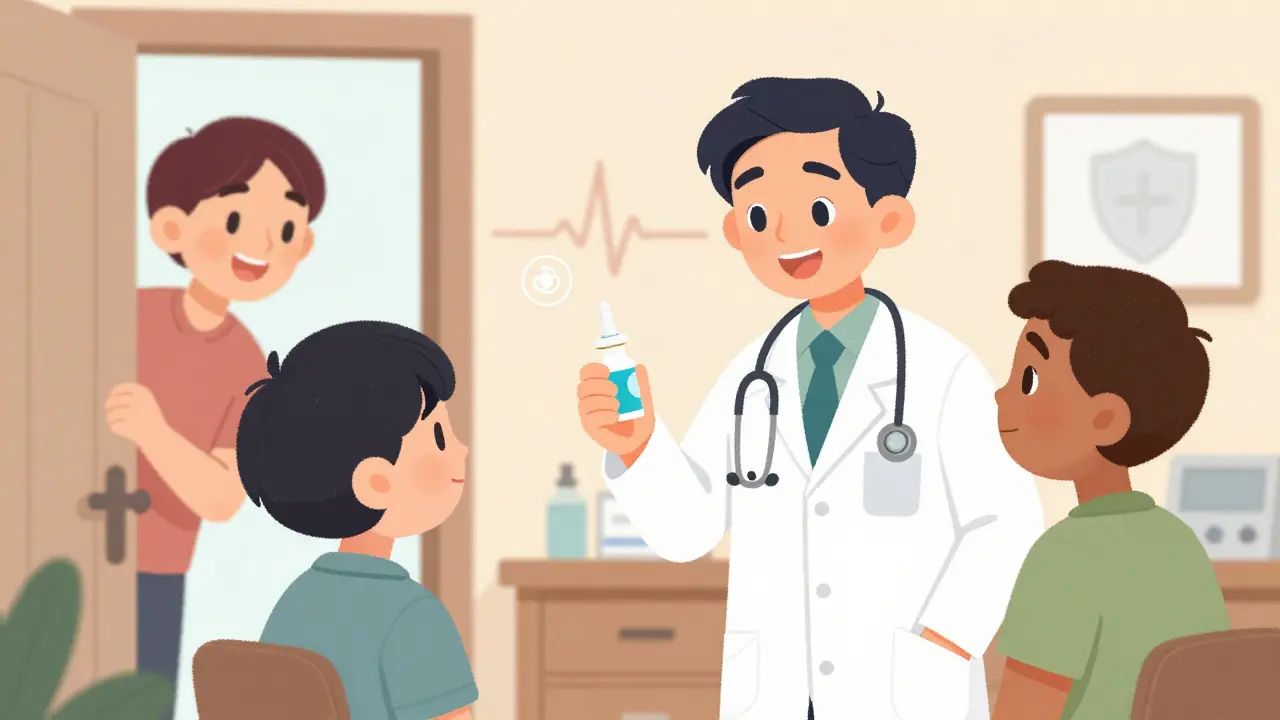
When a doctor prescribes an opioid like oxycodone, hydrocodone, or morphine for chronic pain, they’re not just managing pain-they’re also managing risk. Opioids can slow or stop breathing, especially at high doses or when mixed with other sedatives. That’s where naloxone comes in. It’s not a painkiller. It’s a lifesaver. Naloxone co-prescribing means giving patients a dose of naloxone at the same time they get their opioid prescription, so they or someone close to them can reverse an overdose if it happens.
This isn’t a new idea. The CDC pushed for it back in 2016, after more than 48,000 people died from opioid overdoses in the U.S. that year. Since then, it’s become standard practice in hospitals, clinics, and pharmacies across the country. The goal isn’t to scare patients. It’s to give them a safety net. Think of it like a seatbelt in a car-you hope you never need it, but you’re glad it’s there if something goes wrong.
Who Gets Naloxone With Their Opioid Prescription?
Not every patient on opioids needs naloxone. But many do. The CDC says doctors should offer it if any of these risk factors are present:
- Taking 50 morphine milligram equivalents (MME) or more per day
- Using benzodiazepines like Xanax or Valium at the same time
- Having a past overdose or substance use disorder
- Having COPD, sleep apnea, or other breathing problems
- Using alcohol heavily or having depression or anxiety
- Recently being released from jail or prison
Why these groups? Because their bodies are more vulnerable. Someone on high-dose opioids might not feel the warning signs until it’s too late. Someone mixing opioids with sleep aids or alcohol can slip into respiratory failure without warning. And people who’ve lost tolerance after time away from opioids-like after incarceration-are at extreme risk when they start using again.
Some states have gone further. New York requires naloxone to be offered to every patient prescribed opioids. California sets the bar at 90 MME/day. In places like this, it’s not optional-it’s part of the prescription process.
How Naloxone Actually Works
Naloxone doesn’t cure addiction. It doesn’t treat pain. It does one thing: it kicks opioids off the brain’s receptors. When someone overdoses, opioids lock onto those receptors and shut down breathing. Naloxone rushes in with a stronger grip, pushes the opioids out, and lets the person breathe again.
The effect is fast-usually within 2 to 5 minutes. But it’s also temporary. Naloxone wears off in 30 to 90 minutes. Many opioids last longer. That’s why after giving naloxone, you must call 911. The person can overdose again once the naloxone wears off.
Today, most naloxone comes in easy-to-use nasal sprays like Narcan® or Kloxxado™. These don’t need needles. You just tilt the head back, spray one dose into each nostril, and wait. There are also injectable versions, but most people prefer the spray. It’s simple, clean, and doesn’t require training to use.
What Happens When Naloxone Is Used
Real stories show why this matters. In Kentucky, a primary care clinic started co-prescribing naloxone in 2021. Since then, family members have reversed 17 overdoses using the kits. One patient in Ohio, Sarah Johnson, was offended when her doctor gave her naloxone with her oxycodone. She thought it meant he didn’t trust her. But when her 16-year-old son found her pills and took them accidentally, the nasal spray saved his life. She now tells other patients: “Don’t say no. Keep it.”
But not everyone accepts it. A 2021 survey found 68% of doctors say patients react with shame or anger. Some think naloxone means the doctor believes they’ll overdose. Others worry it makes them look like addicts. That stigma is real-and it’s one of the biggest barriers to adoption.
Providers are learning to talk about it differently. Instead of saying, “You might overdose,” they say, “Your family or friend might need this if something happens.” That shift-from blame to protection-makes a difference.
Cost, Access, and Insurance Coverage
Naloxone used to cost over $100. Now, thanks to generic versions and federal law, it’s much cheaper. A two-dose nasal spray kit can cost as little as $25 at pharmacies like CVS or Walgreens. Most insurance plans, including Medicaid and Medicare, cover it with no copay thanks to the SUPPORT Act of 2018.
But access isn’t equal. In cities, 85% of pharmacies stock naloxone. In rural areas, it’s only 42%. That gap leaves people in small towns without easy access-even if their doctor prescribes it.
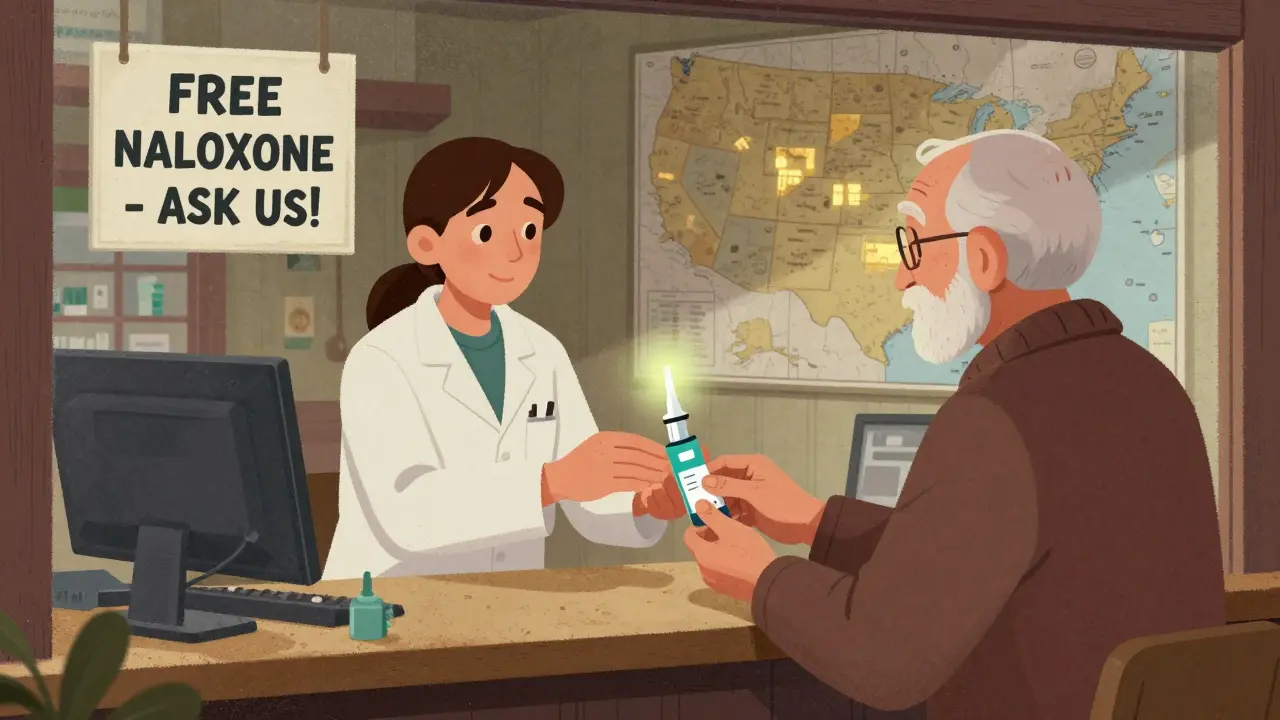
Pharmacists now play a bigger role too. In 49 states, they can hand out naloxone without a prescription under standing orders. The DEA even allows them to dispense up to 50 doses at once. That’s helping fill the gaps where doctors aren’t available.
How Doctors Actually Prescribe It
There’s a simple process most clinics follow:
- Assess risk. Check the patient’s history, current dose, other meds, and mental health. Use state prescription drug monitoring programs (PDMPs) to spot red flags.
- Talk about it. Use clear, non-judgmental language. “We’re giving you this because we care about your safety.”
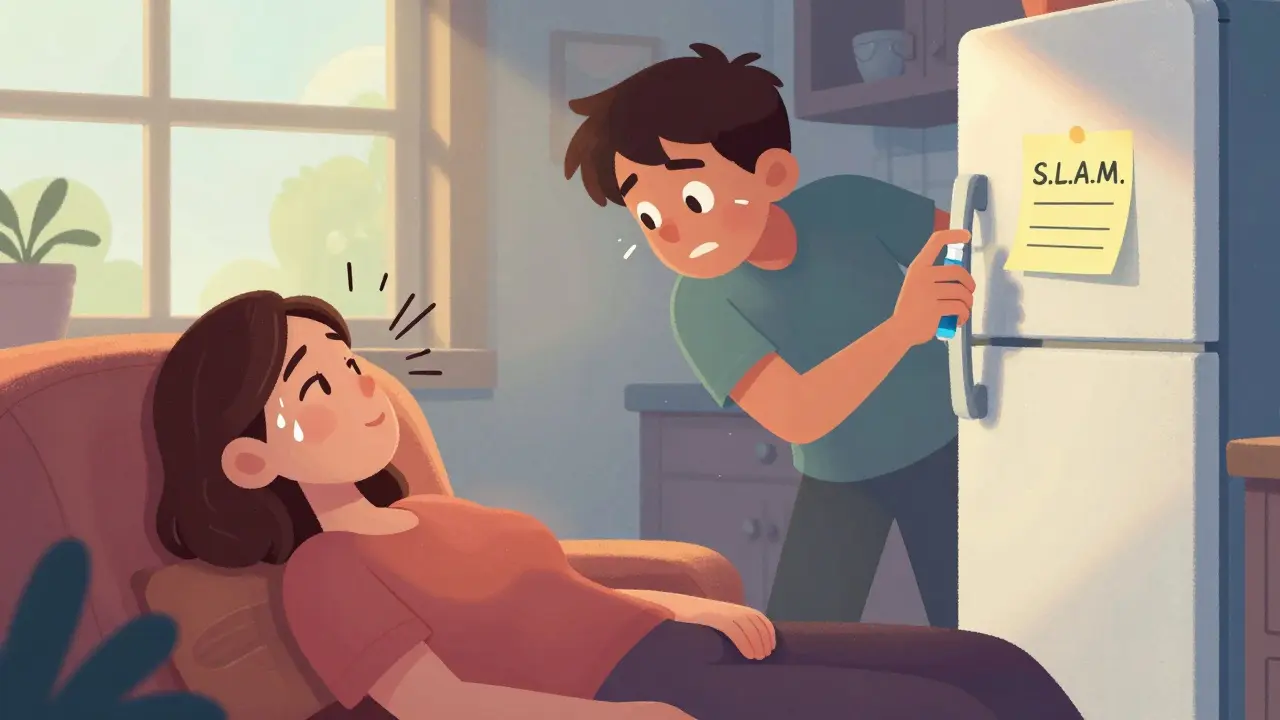
- Teach how to use it. Show the patient and a family member how to spray it. Use the S.L.A.M. method: Signs of overdose, Life-saving steps, Administer naloxone, Monitor until help arrives.
- Document it. Make sure the EHR records that naloxone was offered, discussed, and dispensed.
It takes about 5 to 7 minutes. But that time saves lives. A 2019 study found that patients who got naloxone with their opioid prescription had 47% fewer emergency room visits and 63% fewer hospital stays.
What Experts Say-And What They Warn About
Most medical groups agree: naloxone co-prescribing saves lives. The American Medical Association calls it a “standard of care.” The CDC says it’s one of the most effective tools we have. Dr. Wilson Compton from NIDA says every 10% increase in naloxone distribution leads to a 1.2% drop in overdose deaths.
But some experts caution against treating it as a fix-all. Dr. Andrew Kolodny says it doesn’t solve addiction-it just prevents death. And Dr. Jane Ballantyne worries that if we focus too much on naloxone, doctors might feel safer prescribing high doses instead of trying to reduce them.
That’s why the best approach combines naloxone with other tools: counseling, tapering plans, and access to treatment for substance use disorder. Naloxone is a safety net. It’s not the whole system.
What’s Next for Naloxone?
The future is getting better. In 2023, the FDA approved the first generic naloxone nasal spray, cutting prices even further. The Biden administration is spending $1.9 billion on overdose prevention in 2024, with $500 million going directly to naloxone distribution.
Researchers are testing long-acting naloxone-something that could last for days instead of minutes. If it works, it could change everything. Imagine a patch or implant that keeps someone protected for weeks, especially after leaving rehab or prison.
For now, the message is clear: if you’re on opioids, ask for naloxone. If you’re a doctor, offer it. If you’re a family member, keep it in your medicine cabinet. Because the next overdose might not happen to someone else. It might happen to someone you love.
Is naloxone only for people who use drugs illegally?
No. Naloxone is for anyone prescribed opioids, whether for chronic pain, cancer, or after surgery. Most overdoses happen with prescription pills, not street drugs. People on high-dose pain meds are just as at risk, especially if they mix them with alcohol or sleep aids. Naloxone is a medical safety tool-not a judgment.
Can I give naloxone to someone who isn’t on opioids?
Yes. Naloxone only works on opioid receptors. If someone overdoses on heroin, fentanyl, or prescription painkillers, naloxone will reverse it. If they overdosed on alcohol, cocaine, or benzodiazepines alone, naloxone won’t help-but it won’t hurt them either. It’s safe to use even if you’re not sure what they took. When in doubt, give it.
Do I need training to use naloxone?
No formal training is required. Nasal sprays are designed to be used by anyone-family members, friends, even strangers. Most kits come with simple instructions. The key steps are: check for unresponsiveness, call 911, spray one dose in each nostril, and wait. If there’s no response after 2-3 minutes, give a second dose. Keep monitoring until help arrives.
Will naloxone make someone sick?
If someone is dependent on opioids, naloxone can cause sudden withdrawal symptoms-like nausea, vomiting, sweating, or agitation. It’s not dangerous, but it’s uncomfortable. That’s better than dying. The goal is to save life first. Once the person is breathing, they can get medical care to manage withdrawal.
How long does naloxone last, and do I need more than one dose?
Naloxone lasts 30 to 90 minutes. Many opioids last longer, so the person can overdose again once the naloxone wears off. That’s why you need to call 911 even after giving naloxone. Always have at least two doses available. Some kits come with two sprays. If the person doesn’t respond after the first, give the second one right away.
Can I get naloxone without a prescription?
Yes, in most places. All 50 states and Washington D.C. allow pharmacists to dispense naloxone without a prescription. Many pharmacies keep it behind the counter-just ask. Some community centers, harm reduction programs, and public health departments give it out for free. You don’t need to be a patient to get it.
What to Do If You or Someone You Know Is on Opioids
If you’re taking opioids for pain, ask your doctor for naloxone. Don’t wait until something goes wrong. Keep the kit where it’s easy to reach-not tucked away in a drawer. Show your partner, kids, or roommates how to use it. Write down the steps on a sticky note and put it on the fridge.
If you’re a caregiver or family member, don’t ignore the offer. Take the spray. Learn how to use it. Practice with the training kit. You might not believe you’ll ever need it-but you might be the one who saves a life.
Overdose doesn’t always look like what you see on TV. Sometimes, it’s just someone who won’t wake up. Their skin turns blue. Their breathing is slow or shallow. They’re not responding. That’s when naloxone matters. And it only works if it’s there.
Meghan Hammack
January 10, 2026 AT 11:54RAJAT KD
January 11, 2026 AT 20:38Jacob Paterson
January 12, 2026 AT 19:05Angela Stanton
January 12, 2026 AT 22:06Johanna Baxter
January 13, 2026 AT 10:32Matthew Maxwell
January 13, 2026 AT 13:19Chris Kauwe
January 13, 2026 AT 17:53Pooja Kumari
January 14, 2026 AT 16:57Maggie Noe
January 16, 2026 AT 16:40Heather Wilson
January 17, 2026 AT 12:54Jerian Lewis
January 18, 2026 AT 02:44