Every year, urinary tract infections send millions of people to the doctor. Women are hit hardest-about half will get at least one in their lifetime. But UTIs aren’t just a women’s issue. Men, older adults, and even kids can get them too. The good news? Most are simple to treat. The bad news? They keep coming back, and antibiotics aren’t always the answer anymore.
What Actually Causes a UTI?
A urinary tract infection isn’t just a "dirty bladder." It’s a bacterial invasion. More than 90% of uncomplicated UTIs are caused by one bug: Escherichia coli (E. coli). This is the same bacteria that lives harmlessly in your gut. But when it gets into your urethra-usually from the anus-it can climb up and infect your bladder, or even your kidneys. Why do women get UTIs so much more often? It’s anatomy. A woman’s urethra is about 4 centimeters long. A man’s is around 20. That means bacteria have a much shorter trip to the bladder. Plus, the urethra sits close to the vagina and anus, making it easier for bacteria to spread. Sexual activity can push bacteria in, but you don’t need to be sexually active to get a UTI. Holding urine too long, wiping back-to-front, or even wearing tight synthetic underwear can create the perfect conditions. Other bacteria like Klebsiella, Proteus, and Enterococcus can also cause UTIs, especially in people who’ve been hospitalized or use catheters. These are called complicated UTIs-and they’re trickier to treat.How Do You Know It’s a UTI?
The symptoms are hard to miss if you’ve had one before:- Burning or stinging when you pee (reported by 92% of patients)
- Needing to go all the time, even when there’s little to come out
- Sudden, urgent need to pee
- Lower belly pain or pressure
- Cloudy, strong-smelling, or bloody urine
- High fever (over 38.3°C)
- Back or side pain under your ribs
- Nausea or vomiting
- Chills or shaking
Which Antibiotics Actually Work?
Not all antibiotics are created equal for UTIs. The right choice depends on where you live, your medical history, and local resistance patterns. For a simple bladder infection (cystitis), here’s what doctors recommend:- Nitrofurantoin (100 mg twice a day for 5 days): Works in 90% of cases. It stays in your urine, killing bacteria without wrecking your gut flora. But don’t use it if you think it’s a kidney infection-it doesn’t reach high enough.
- Trimethoprim-sulfamethoxazole (160/800 mg twice a day for 3 days): Used to be the go-to. But resistance is climbing. In many parts of the U.S., over 30% of E. coli strains now ignore it. Only use it if your doctor knows your area’s resistance rate is low.
- Fosfomycin (single 3g dose): A one-time pill. Convenient. Effective in about 86% of cases. Great for people who hate taking pills for days.
- Ciprofloxacin (500 mg twice a day for 7-14 days): Powerful, but overused. It’s linked to tendon damage and nerve problems. Many doctors now avoid it unless absolutely necessary.
- Ceftriaxone (IV shot): Often used in hospitals for severe cases.
How to Stop UTIs From Coming Back
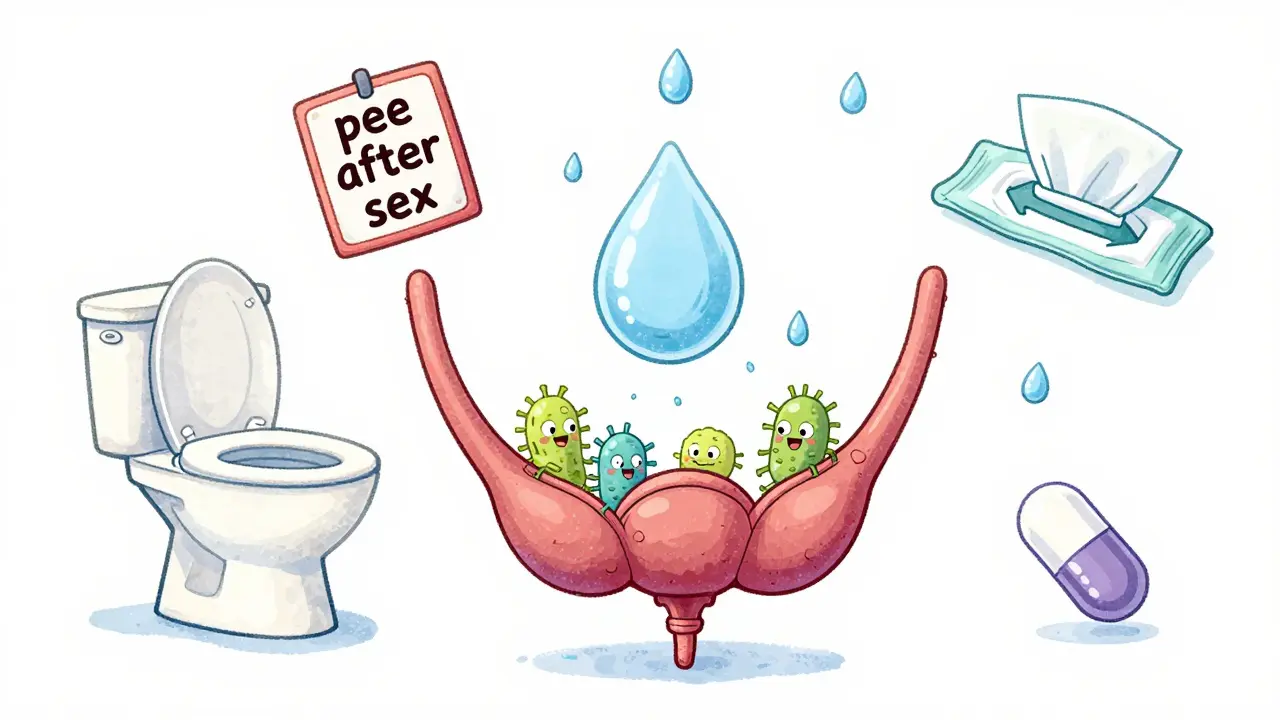
If you’ve had three UTIs in a year, you’re not alone. One in three women gets them repeatedly. But you can break the cycle. Hydration matters more than you think. A 2022 study found women who drank at least 1.5 liters of water a day cut their UTI risk by nearly half. It’s not magic-it’s flushing. The more you pee, the less time bacteria have to stick around. Urinate after sex. This simple habit cuts UTI risk by 50%. It doesn’t matter if you’re with a partner or solo-peeing clears out any bacteria that got pushed in. Avoid spermicides. Products with nonoxynol-9 (like some condoms or jellies) kill good bacteria and irritate the urethra. Studies show they make UTIs 2.5 times more likely. Wipe front to back. Sounds basic, but it’s the #1 preventable mistake. Always wipe from the urethra toward the anus-not the other way around. For postmenopausal women, vaginal estrogen helps. After menopause, estrogen drops. That thins the vaginal lining and changes the good bacteria that protect against E. coli. A tiny amount of estrogen cream or ring (0.5g twice a week) can reduce UTIs by 70%. Try D-mannose. This natural sugar, found in cranberries, sticks to E. coli and stops it from latching onto your bladder wall. A 2021 study found 2 grams a day worked better than antibiotics at preventing recurrences-83% effective versus 67%. Cranberry juice? Maybe not. Most store-bought cranberry juice has too little of the real active ingredient (proanthocyanidins). You’d need to drink a gallon a day to get enough. Stick to supplements with at least 36mg PACs daily. Even then, it’s not a cure-it’s a shield. Post-sex antibiotics for high-risk people. If you get UTIs after every encounter, your doctor might prescribe a single low-dose antibiotic (like nitrofurantoin or trimethoprim) to take right after sex. This cuts recurrence by 95%.What About Home Tests and Natural Remedies?
At-home UTI test strips (like AZO) are popular. They detect nitrites and white blood cells in urine. But they’re not perfect. They miss up to 30% of infections. If you test negative but still feel awful, go see a doctor. Don’t rely on a strip. Pain relievers like phenazopyridine (Pyridium) can numb the burning within 20 minutes. But they don’t kill bacteria. They just mask the pain. And they turn your pee bright orange-so don’t panic if your underwear looks like a highlighter exploded. Don’t skip antibiotics just because you’re worried about side effects. Untreated UTIs can turn into kidney infections or sepsis, especially in older adults. But do ask your doctor: "Is this the right antibiotic for my area?" and "Can I try a non-antibiotic option first?"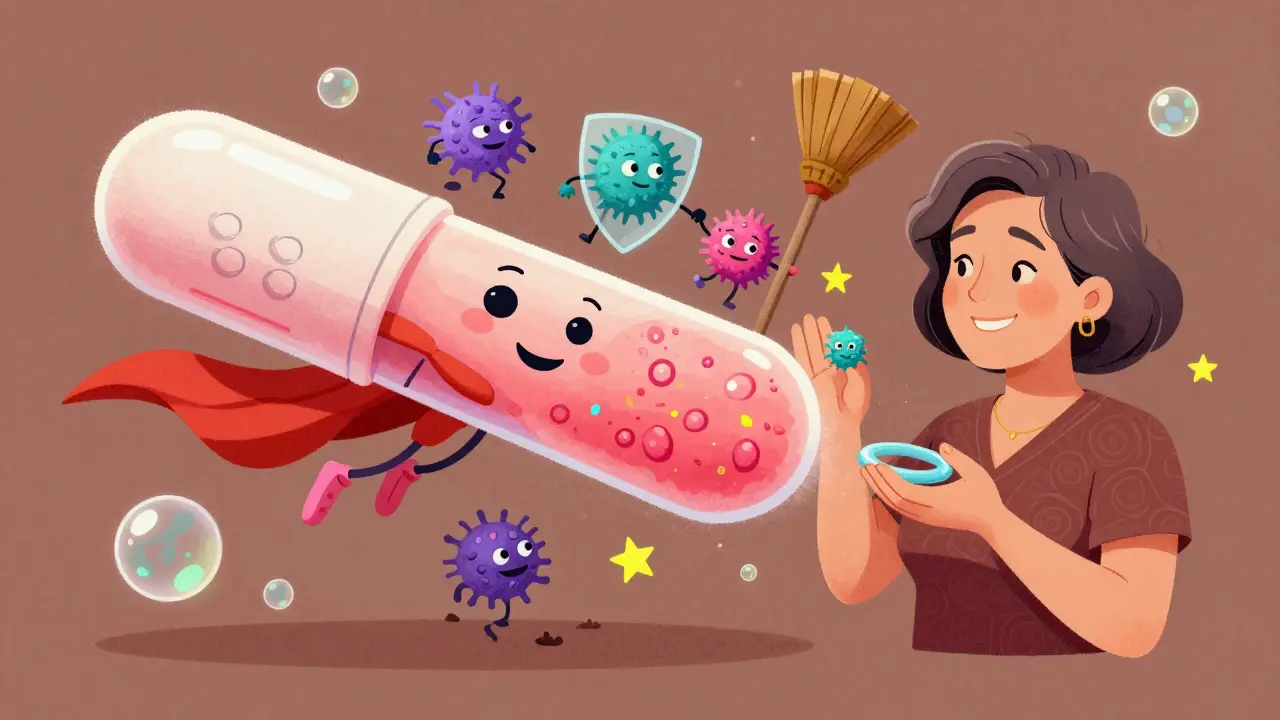
What’s New in UTI Treatment?
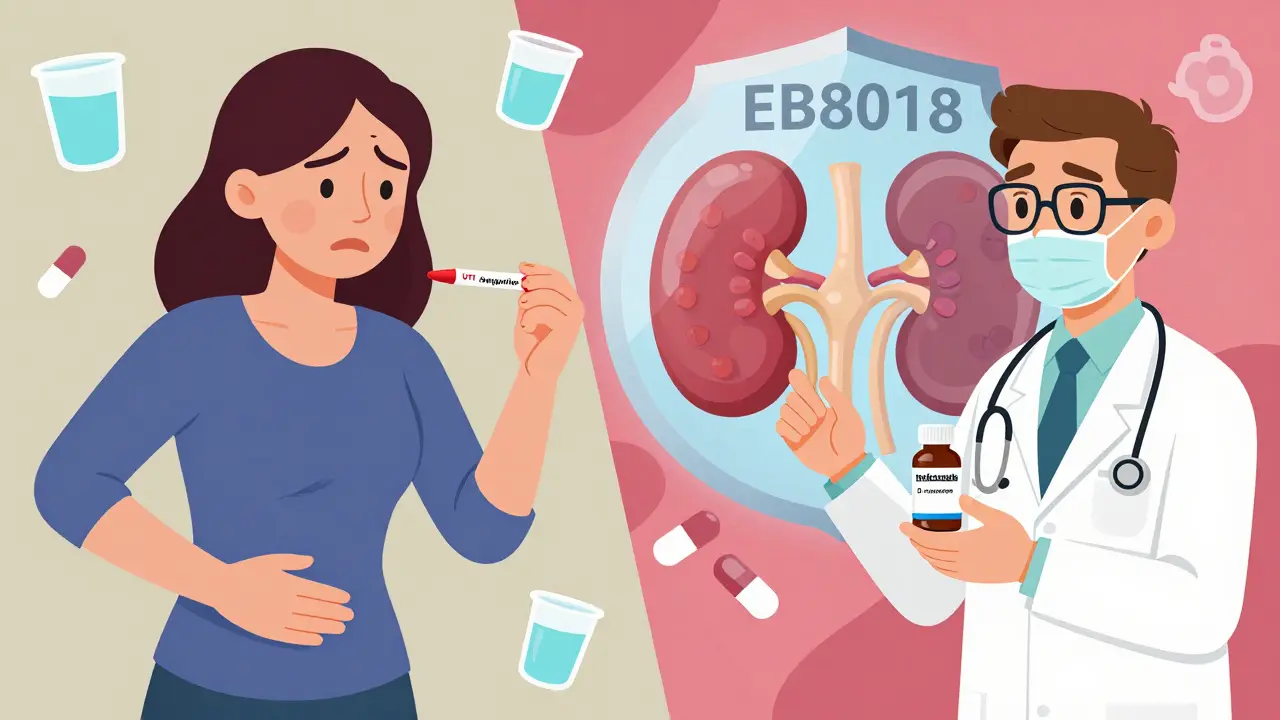
The last 20 years saw no new UTI antibiotics-until now. In 2024, the FDA approved gepotidacin, the first new oral UTI drug in two decades. It kills resistant E. coli strains with 92% success. That’s huge. In Europe, a new drug called EB8018 is already approved. It doesn’t kill bacteria-it stops them from sticking to your bladder wall. Think of it like a shield that keeps E. coli from grabbing on. Researchers are also testing Lactobacillus crispatus vaginal suppositories. In a 2024 study, women who used them saw a 55% drop in UTIs. It’s like probiotics, but targeted right where they’re needed. These aren’t magic bullets-but they’re signs we’re moving beyond just dumping more antibiotics into the system.When to See a Doctor
You don’t need to suffer. But you also don’t need to guess. See a doctor if:- Symptoms last more than 24-48 hours
- You have fever, chills, or back pain
- You’re pregnant
- You’re a man (UTIs in men are rare and often mean something else is going on)
- You’ve had more than two UTIs in six months
- You’re diabetic or have a weakened immune system
Bottom Line
Urinary tract infections are common, annoying, and sometimes dangerous. But they’re not inevitable. You can reduce your risk dramatically with simple, evidence-based habits: drink water, pee after sex, wipe front to back, and avoid spermicides. If you get recurrent UTIs, talk to your doctor about D-mannose, vaginal estrogen, or prophylactic antibiotics-not just another round of ciprofloxacin. The future of UTI care isn’t just stronger drugs. It’s smarter prevention. And you’re not powerless. Your body is designed to fight this. You just need to give it the right tools.Can a UTI go away on its own without antibiotics?
Yes, in some cases. Studies show 25-43% of uncomplicated UTIs resolve on their own, especially if caught early and you drink plenty of water. But this isn’t a gamble. If symptoms don’t improve in 48 hours, or if you develop fever or back pain, antibiotics are necessary. Untreated UTIs can spread to the kidneys and cause sepsis, especially in older adults or those with diabetes.
Why do I keep getting UTIs after sex?
Sexual activity can push bacteria from the anus or vagina into the urethra. Women are especially vulnerable because of their short urethra. Peeing within 30 minutes after sex flushes out bacteria before they can attach to the bladder wall. Avoid spermicides and use water-based lubricants if you’re prone to UTIs. If it keeps happening, talk to your doctor about postcoital antibiotics.
Is cranberry juice good for preventing UTIs?
Most store-bought cranberry juice has too little of the active ingredient (proanthocyanidins) to help. You’d need to drink a gallon a day. Supplements with at least 36mg of PACs daily can reduce UTI recurrence by about 39%, according to a Cochrane review. But they’re not a cure-just a mild preventive tool. Don’t rely on juice alone.
What’s the best antibiotic for a UTI in 2026?
For uncomplicated cystitis, nitrofurantoin and fosfomycin are now preferred over trimethoprim-sulfamethoxazole in most places because of rising resistance. For complicated cases or kidney infections, ceftriaxone or newer drugs like gepotidacin (if available) are better options. Always confirm local resistance patterns-your doctor should consider them before prescribing.
Can men get UTIs too?
Yes, but it’s rare. When men get UTIs, it’s often a sign of something else-like an enlarged prostate, kidney stones, or a urinary catheter. Men with UTIs usually need longer antibiotic courses and more testing. Don’t assume it’s "just a UTI"-see a doctor to rule out serious underlying issues.
Are at-home UTI test strips reliable?
They’re useful for initial screening but not diagnostic. They miss about 20-30% of UTIs, especially if the infection is mild or caused by bacteria that don’t produce nitrites. If you test negative but still have symptoms like burning or urgency, see a doctor. A urine culture is the gold standard.
Can D-mannose replace antibiotics?
For prevention, yes. For treatment, no. D-mannose is excellent at preventing recurrent UTIs-83% effective in one study. But if you already have an active infection with fever, pain, or blood in urine, you need antibiotics. D-mannose stops bacteria from sticking, but it doesn’t kill them. Use it as a shield, not a sword.
Why does my doctor say not to use ciprofloxacin for UTIs anymore?
Ciprofloxacin was once the go-to, but overuse has led to high resistance rates-over 25% in some areas. It’s also linked to serious side effects like tendon rupture, nerve damage, and heart rhythm issues. Guidelines now recommend reserving it for complicated cases where other options fail. Safer, targeted antibiotics like nitrofurantoin are preferred for simple infections.


SWAPNIL SIDAM
January 27, 2026 AT 21:01Just had my third UTI this year. Water, pee after sex, no spermicides - I do all that. Still happens. Felt like I was peeing glass last night. D-mannose is my new best friend. Took 2g at bedtime. Morning? Barely a sting. Not magic, but it’s something.
Also, why is cranberry juice still sold like it’s a cure? It’s sugar water with a hint of tartness.
Betty Bomber
January 29, 2026 AT 19:56My grandma used to say ‘drink cranberry juice and you’ll be fine.’ I believed her until I spent three days in the ER with pyelonephritis. Turns out, grandma’s wisdom doesn’t scale with antibiotic resistance.
Also, wiping front to back? My mom taught me that at age 5. Still the most important thing I’ve ever been told about my body.
Mohammed Rizvi
January 31, 2026 AT 19:30Let me get this straight - we’ve got a drug called gepotidacin that works on resistant E. coli, but most doctors still hand out cipro like it’s candy? That’s not medicine, that’s cowboy logic.
And don’t even get me started on the $8 bottle of cranberry juice that’s 95% high fructose corn syrup. You’re not preventing UTIs, you’re preventing your kidneys from staying out of the hospital.
eric fert
February 1, 2026 AT 11:47Look, I get it - water, D-mannose, peeing after sex. But let’s be real. The real issue here is that modern medicine has become a cult of prevention. We’re so obsessed with avoiding infection that we’ve forgotten how to treat it properly.
Antibiotics are not evil. They’re tools. And if your body can’t handle a little ciprofloxacin without a lawsuit, maybe your immune system is the problem, not the drug. Also, why are we giving women estrogen creams for UTIs? Isn’t that just patching a leaky boat with duct tape? We need systemic solutions, not hormonal Band-Aids.
And what about men? Why are we pretending UTIs in men are ‘rare’? They’re just ignored because men don’t complain as much. That’s not biology - that’s patriarchy. You think men don’t get UTIs? They do. They just die quietly.
Also, who approved this article? It reads like a pharmaceutical brochure with a side of wellness influencer.
Ryan W
February 2, 2026 AT 23:03As a former military medic, I’ve seen hundreds of UTIs. The only thing that matters is culture and sensitivity. No one gives a damn about D-mannose or cranberry juice when the patient is septic.
Also, nitrofurantoin? Only if the creatinine clearance is above 60. Otherwise, you’re just dumping a toxic metabolite into the lungs. Fosfomycin? Great for compliance, terrible for resistance if used as monotherapy.
And don’t get me started on ‘vaginal estrogen.’ That’s not prevention - that’s hormone replacement therapy with a marketing team. If you’re postmenopausal and getting recurrent UTIs, you need a urodynamic study, not a cream.
This article reads like a blog post written by a med student who binge-watched UpToDate.
George Rahn
February 3, 2026 AT 15:26There is a metaphysical truth hidden in the anatomy of the female urethra - a silent testament to the fragility of the human form. We are creatures of evolution, yet we live in a world of synthetic underwear and spermicides, of corporate medicine and profit-driven guidelines.
When a woman pees after sex, she is not merely flushing bacteria - she is performing a ritual of autonomy. When she chooses D-mannose over ciprofloxacin, she is rejecting the industrial medical complex that sees her body as a battlefield to be bombed.
Is this not the essence of modern healing? Not to conquer, but to cooperate - with our microbiomes, with our biology, with the ancient wisdom of water, of time, of stillness.
And yet, we are told to take pills. To submit. To trust the algorithm of resistance rates.
What if the cure was never in the drug - but in the dignity of listening to our own bodies?
Ashley Karanja
February 5, 2026 AT 06:05I’ve been a nurse for 18 years and I can’t tell you how many times I’ve seen patients dismiss symptoms because ‘it’s just a UTI.’ But UTIs don’t just happen - they escalate. And when they do, they don’t ask permission.
I love that this article highlights D-mannose and vaginal estrogen. Those are game-changers for patients who are tired of being treated like broken machines. I’ve had patients cry because they thought recurrent UTIs were their fault - like they weren’t clean enough or didn’t drink enough water.
They’re not. It’s biology. It’s anatomy. It’s the fact that we still don’t have enough research on female urology. We treat men’s prostate issues like emergencies. We treat women’s UTIs like inconveniences.
Also - yes, cranberry juice is mostly sugar. But if someone finds comfort in it? Let them have it. Healing isn’t just about labs and antibiotics. It’s about hope.
And if you’re using an at-home test strip? Please, please, please still see a provider. I’ve seen too many septic patients who said, ‘I tested negative.’
Stay hydrated. Be kind to your body. And don’t let anyone make you feel silly for asking for help.
Karen Droege
February 6, 2026 AT 10:04Okay, real talk: if you’re a woman over 50 and you’re getting UTIs every other month, your doctor is doing you a disservice if they’re not talking about vaginal estrogen. I’ve seen women go from three infections a month to zero in 6 weeks with a tiny ring. It’s not ‘hormone therapy’ - it’s restoring a biological balance that menopause stole.
And D-mannose? I give it to every patient with recurrent UTIs. It’s not a cure, but it’s the closest thing we have to a natural shield. No side effects. No resistance. Just sugar that tricks bacteria into thinking they’re on a cruise ship - and then they float right out.
Also - peeing after sex? Non-negotiable. Even if you’re single. Yes, solo sex counts. Your body doesn’t care who you’re with - it just cares if bacteria are getting pushed in.
And for the love of all that’s holy, stop using scented wipes. You’re not cleaning yourself. You’re irritating your urethra like you’re sanding wood.
This isn’t witchcraft. It’s science with a pulse.
Napoleon Huere
February 8, 2026 AT 07:20I’ve been thinking about this a lot - why do we treat UTIs like a personal failure? Like if you just drank more water or wiped better, you wouldn’t get them?
But you know what? My cat gets urinary issues. My dog gets infections. Even birds get them. It’s not about hygiene. It’s about biology. It’s about the fact that our bodies are imperfect systems living in imperfect environments.
And yet, we shame women for having a short urethra. We blame men for not ‘trying hard enough.’ We treat prevention like a moral test.
What if the real problem isn’t the bacteria? What if it’s the way we’ve been taught to see illness - as punishment, as weakness, as something to be controlled?
Maybe the future of medicine isn’t new drugs. Maybe it’s a new story. One where your body isn’t your enemy - it’s your ally. Even when it’s screaming.
Shweta Deshpande
February 9, 2026 AT 04:14I got my first UTI at 19. Thought it was just a bad period. Took three days to go to the doctor. Ended up in the ER with a kidney infection. Never forgot it.
Now I’m 34, and I’ve had six since then. I do everything right - water, pee after sex, no tight jeans, D-mannose daily, no spermicides. Still happens.
It’s not your fault. I know how hard it is to feel like your body is betraying you. But you’re not broken. You’re just human.
And if your doctor won’t listen? Find a new one. There are urologists who specialize in recurrent UTIs. They exist. They care. You deserve that.
Also - D-mannose works. I swear on my cat’s life. I take 2g every night. No more midnight bathroom runs. Just peace.
You got this. Seriously. You’re not alone.
Aishah Bango
February 10, 2026 AT 12:19People think natural remedies are ‘better’ because they’re ‘chemical-free.’ But that’s just pseudoscience dressed up as wellness. D-mannose is a sugar. Cranberry juice is sugar water. Vaginal estrogen? That’s a hormone. All of it is chemistry.
And now we’re telling women to avoid antibiotics because they’re ‘too strong’? That’s dangerous. Untreated UTIs kill. Sepsis doesn’t care if your supplement is organic.
Stop romanticizing ignorance. If you have symptoms, get tested. Take the antibiotic. Don’t gamble with your kidneys because you read a blog post.
This article is dangerously misleading. It’s not empowering - it’s negligent.
SWAPNIL SIDAM
February 11, 2026 AT 17:22^ I get where you’re coming from - but I’ve had two kidney infections on antibiotics. The third time, I went D-mannose + water + pee after sex. Zero infection for 11 months. I’m not saying ditch meds. I’m saying: ask for options.
My doctor laughed at me until I showed him the study. Now he prescribes it as a first-line preventive. Not instead of antibiotics. Alongside them.