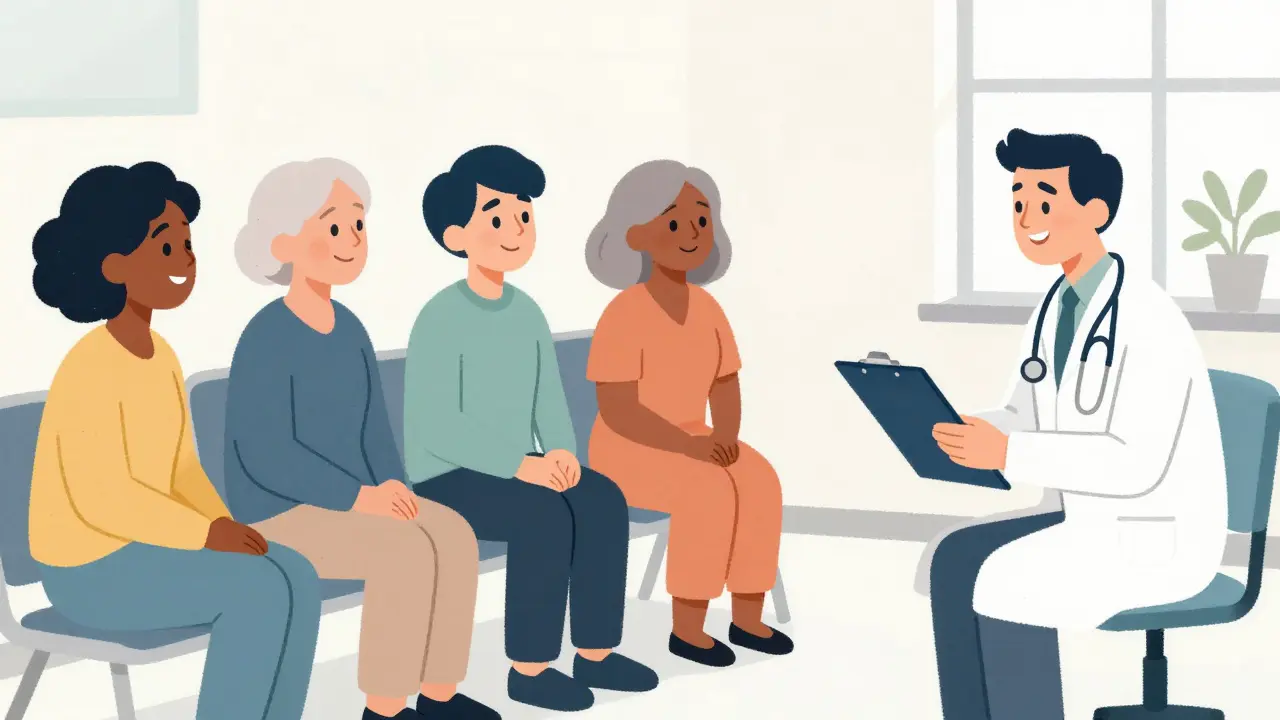
Lung cancer is often called a silent killer because symptoms usually show up only after the disease has spread. But there is a way to catch it early, when it is small and treatable. That method is Low-Dose Computed Tomography, or LDCT. It is a specialized X-ray scan that uses less radiation than a standard CT to detect tiny nodules in the lungs before they become life-threatening. For people at high risk, this simple test can mean the difference between a curable diagnosis and a fatal one.
If you have smoked for years, or if you are worried about your risk, you might be wondering if this scan is right for you. The short answer is yes, but only if you meet specific criteria. Getting screened too early or without clear risk factors can lead to unnecessary stress and costs. Understanding who qualifies, what the numbers say, and what happens after a scan is crucial for making an informed decision.
Who Actually Qualifies for Screening?
The rules for who gets screened have changed recently, and they matter. In 2021, the U.S. Preventive Services Task Force (USPSTF) updated its guidelines to make more people eligible. This group issues recommendations that influence insurance coverage and medical practice across the country.
To qualify under current USPSTF guidelines, you must meet all three of these conditions:
- Age: You are between 50 and 80 years old.
- Smoking History: You have a "20 pack-year" history. This means you have smoked one pack a day for 20 years, two packs a day for 10 years, or any equivalent combination.
- Current Status: You currently smoke OR you quit within the last 15 years.
This is different from older rules. Before 2021, you had to be at least 55 and have smoked 30 pack-years. The new rules lower the age and smoking threshold, bringing in younger patients with slightly less exposure. However, not everyone agrees on the upper limit. Some experts argue that people over 80 should still be screened if they are healthy, while others worry about the harms of testing in very elderly populations. Additionally, Medicare’s coverage rules currently cap eligibility at age 77, which creates a gap for those aged 78-80 who might otherwise qualify under private insurance plans following USPSTF advice.
The Evidence: Why We Screen
We don’t just screen because we want to; we do it because the data proves it saves lives. The landmark study behind today’s guidelines is the National Lung Screening Trial (NLST). Conducted by the National Cancer Institute, this massive study involved over 53,000 participants.
The results were striking. People who got annual LDCT scans saw a 20% reduction in lung cancer deaths compared to those who got standard chest X-rays. Chest X-rays, it turns out, miss too many early-stage tumors. LDCT finds them. Specifically, the trial showed that LDCT detects three times as many early-stage (Stage I) cancers as X-rays. When cancer is found at Stage I, the five-year survival rate jumps dramatically because surgery can remove the tumor completely.
But it’s not just about lung cancer deaths. The NLST also found a 6.7% reduction in all-cause mortality. This means that overall, fewer people died from any reason in the screening group. For every 810 people screened, one life is saved from lung cancer over a 6.5-year period. That is a powerful statistic.
What Happens During the Scan?
You might expect a CT scan to involve needles, contrast dye, or long prep times. With LDCT, none of that is true. The procedure is quick and non-invasive.
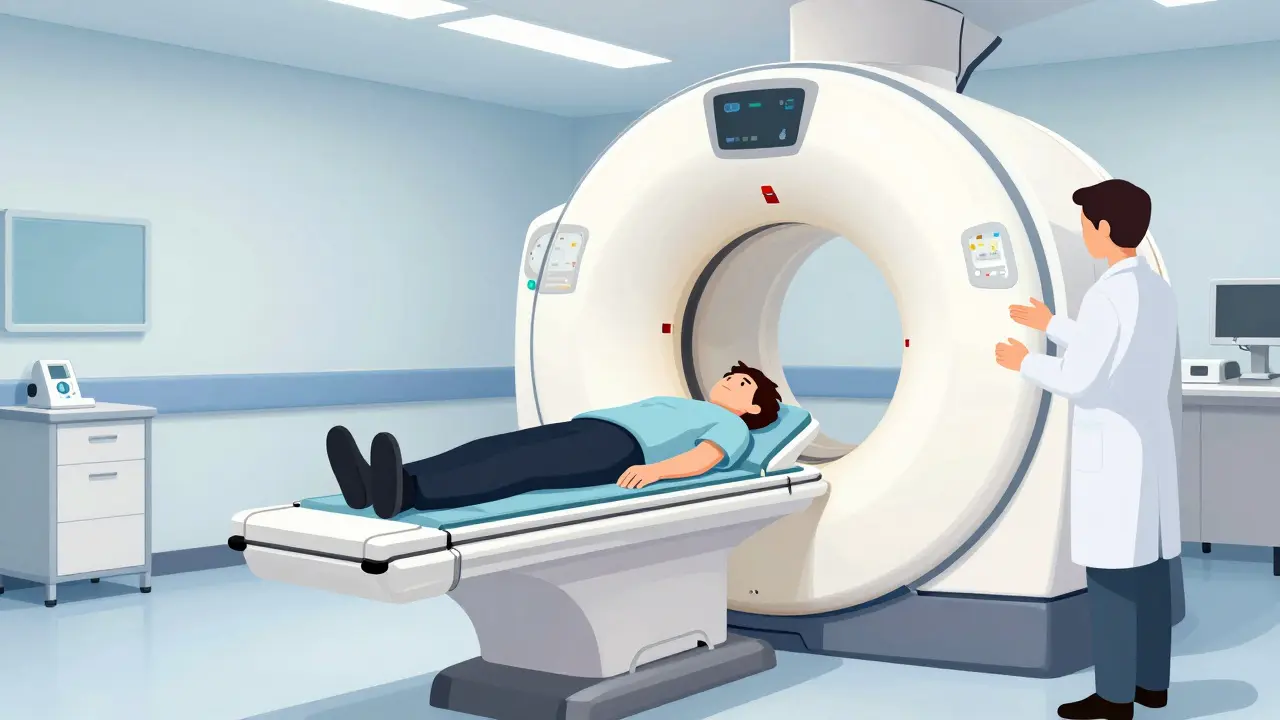
- Positioning: You lie flat on a table that slides into a doughnut-shaped machine.
- Breath Hold: The technician will ask you to take a deep breath and hold it for about 10 seconds. This ensures the images are sharp and your lungs are fully expanded.
- The Scan: The machine rotates around you, taking cross-sectional pictures. The whole process takes less than five minutes.
The key feature here is the "low dose." A standard diagnostic CT might deliver 7-15 millisieverts (mSv) of radiation. An LDCT delivers only about 1.5 mSv. To put that in perspective, that is roughly the same amount of natural background radiation you receive from the environment over four months. It is significantly safer than a full CT, reducing the risk of radiation-induced side effects while still providing high-resolution images.
Understanding Your Results: Nodules and False Positives
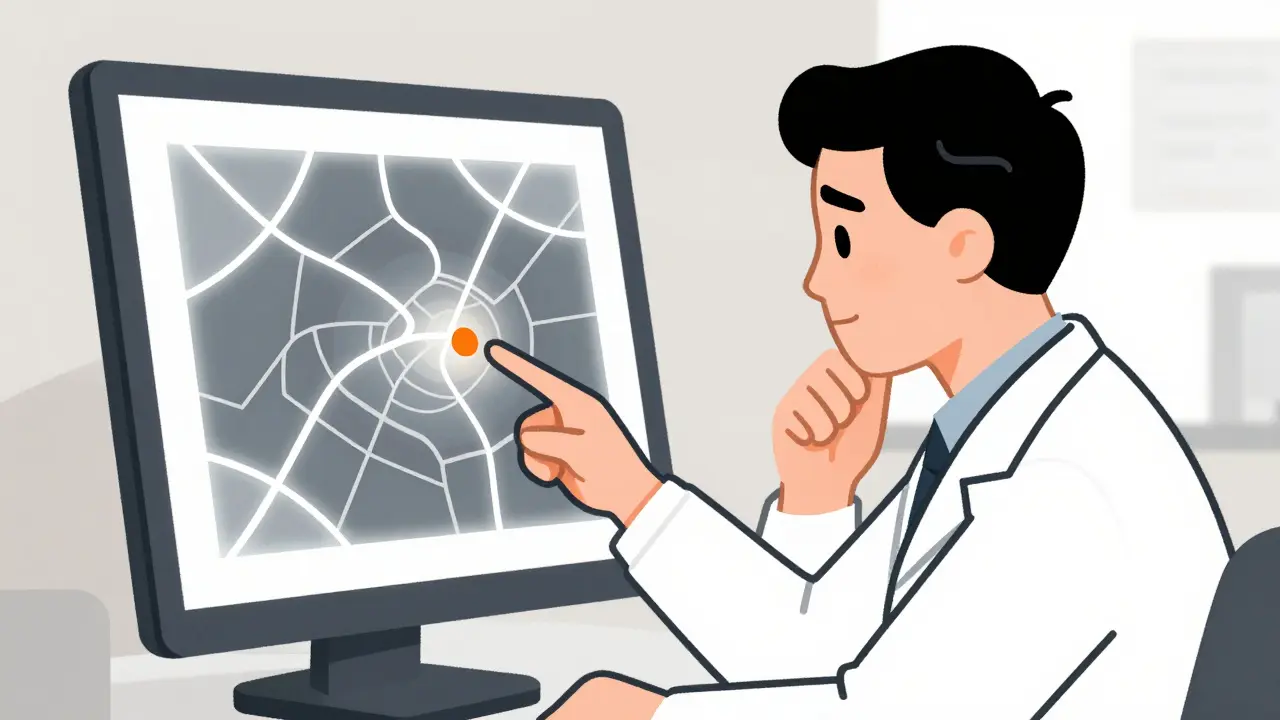
After the scan, you won’t get your results immediately. A radiologist needs to review the images carefully. Most of the time, the result is normal. But sometimes, they find something called a pulmonary nodule. This is simply a small spot or lump in the lung tissue.
Here is the tricky part: most nodules are benign. They could be scars from old infections, inflamed lymph nodes, or harmless growths. In the NLST, 96.4% of positive screens turned out to be benign. However, finding a nodule triggers a protocol. You cannot just ignore it.
If a nodule is found, your doctor will look at its size and characteristics:
- Less than 4mm: Usually considered low risk. Often, no follow-up is needed, or a repeat scan in a year is scheduled.
- 4-6mm: These require monitoring. You might need another CT in 3-6 months to see if it grows.
- Greater than 6mm: These are taken more seriously. You may need a PET scan, a biopsy, or closer surveillance to rule out cancer.
This process is where anxiety sets in. About 1 in 4 people gets a false positive on their first screen. This means the test says "something is wrong," but nothing is actually wrong. You end up waiting weeks for follow-up tests, dealing with stress, and paying out-of-pocket costs for additional imaging. One patient shared that he spent $450 and three months worrying about a nodule that was eventually proven to be a scar. It is real frustration, but it is also the price of catching the few cases that are deadly.
Costs and Insurance Coverage
If you meet the eligibility criteria, the cost of the initial screening is typically covered by insurance. Under the Affordable Care Act, preventive services recommended by the USPSTF must be covered without copays or deductibles. Medicare also covers the scan if you are 50-77 and meet the smoking criteria.
However, watch out for the hidden costs of follow-ups. If your scan shows a nodule, the subsequent diagnostic CTs, PET scans, or biopsies are often considered "diagnostic" rather than "preventive." This means your insurance may apply deductibles and coinsurance. Always ask your provider if a facility is ACR-accredited for lung screening. Accredited centers follow strict quality controls, including proper counseling visits and standardized protocols, which helps ensure you aren’t getting unnecessary tests.
Should You Quit Smoking?
If you are reading this and you still smoke, the most important thing you can do is quit. Screening does not replace quitting. It complements it. Studies show that even if you quit 15 years ago, your risk remains elevated for decades. The USPSTF includes former smokers who quit within 15 years because the benefit of screening outweighs the harm during that window.
For those who quit longer ago, the decision is more complex. The American Cancer Society suggests individualized decisions for people who quit more than 15 years ago, considering other risk factors like family history or occupational exposures (such as asbestos). If you are unsure, talk to your doctor. They can use risk prediction models, like the LYFS-CT model, to estimate whether screening would likely add value to your life expectancy.
How do I calculate my pack-year history?
Multiply the number of packs you smoked per day by the number of years you smoked. For example, if you smoked half a pack a day for 40 years, your calculation is 0.5 x 40 = 20 pack-years. If you smoked two packs a day for 10 years, that is 2 x 10 = 20 pack-years. You need at least 20 pack-years to qualify under current USPSTF guidelines.
Is the radiation from LDCT dangerous?
The risk is extremely low. An LDCT delivers about 1.5 mSv of radiation, which is similar to the natural background radiation you absorb from the sun and earth over four months. The benefit of detecting early-stage lung cancer far outweighs the minimal theoretical risk of radiation-induced cancer. By contrast, a standard diagnostic CT can deliver up to 10 times that amount.
What if I quit smoking 20 years ago? Am I still eligible?
Under strict USPSTF guidelines, you are not automatically eligible because the cutoff is 15 years since quitting. However, some organizations like the NCCN allow for screening beyond 15 years if you have other risk factors, such as a family history of lung cancer or exposure to radon or asbestos. Discuss your specific risk profile with your primary care physician to see if an exception applies to you.
Why did my doctor recommend a follow-up scan instead of immediate treatment?
Most lung nodules found on screening are benign (non-cancerous). Immediate surgery or biopsy is invasive and carries risks. Doctors use a "watch and wait" approach for small nodules (under 8-10mm) to see if they grow. If a nodule stays the same size over several months or years, it is almost certainly harmless. Growth is the key indicator of malignancy.
Does Medicare cover lung cancer screening?
Yes, Medicare covers annual LDCT screening for beneficiaries aged 50-77 who have a 20 pack-year smoking history and currently smoke or have quit within the past 15 years. You must receive the scan at a participating provider. Note that Medicare’s age limit (77) is lower than the USPSTF recommendation (80), so if you are 78-80, check with your private insurer or state Medicaid program for coverage options.

Frances Kendall
May 13, 2026 AT 01:16It is genuinely frustrating how many people still think chest X-rays are sufficient for lung cancer screening. The data from the NLST is irrefutable, yet we see patients walking away with false reassurance because their primary care provider didn't bother to check their pack-year history properly. I work in a clinic where we have to fight tooth and nail to get referrals approved for LDCTs, especially for those aged 50-77 who fall into that tricky Medicare gap. The USPSTF guidelines are clear, but implementation is a mess. We need better education for both doctors and patients about what '20 pack-years' actually means in practical terms.
Natali Brown
May 14, 2026 AT 21:10I completely agree with you! It is so important to spread this information because so many people are afraid of the radiation or just don't know they qualify :( My dad quit smoking fifteen years ago and he was always told he was fine, but now he's getting screened annually and it gives us all such peace of mind. It really does save lives when you catch it early. I hope more people read this and realize that quitting is great, but checking your lungs is also crucial if you have that history. Don't let fear stop you from asking your doctor!
Kelsey Thomas
May 16, 2026 AT 13:21This is such a vital conversation 🙌✨ I've been trying to encourage my older relatives to get screened, but there's so much stigma around smoking that makes them hesitant to even bring it up with their doctors. The fact that most nodules turn out to be benign is huge, but the anxiety of waiting for results is real. Just wanted to add that finding an ACR-accredited center makes a world of difference in the quality of care you receive during follow-ups. 💖
swetha r
May 18, 2026 AT 09:27They want you to believe the scans save lives but what about the radiation damage accumulating over decades? Big Pharma loves these annual scans because it keeps you in their system forever. They tell you it's safe but nobody knows what low dose radiation does to your DNA after ten years of it. It's a surveillance state for your health. You become a number on a chart instead of a person. Wake up people.
Derick Garcia
May 20, 2026 AT 06:39The premise that screening is universally beneficial is fundamentally flawed. The article ignores the substantial burden of false positives which leads to unnecessary invasive procedures and psychological distress. To suggest that every individual meeting arbitrary age and smoking criteria should undergo this protocol is medically irresponsible. One must consider the quality-adjusted life years lost due to the anxiety and complications of follow-up diagnostics. The medical establishment pushes this narrative to expand their revenue streams, not necessarily to improve patient outcomes in a holistic sense.
Abhimanyu Pandey
May 21, 2026 AT 19:29You are ignoring the systemic issues here!!! The insurance companies are the real villains!! They cover the initial scan but then nickel and dime you for the follow ups!!! It is a trap!!! You get a nodule and suddenly you are paying thousands out of pocket!!! Why do they do this??? It is because they want your money!!! Not your health!!! Think about it!!!
Dat Alexander
May 22, 2026 AT 11:21look i get the worry about costs but the alternative is dying from lung cancer silently. the statistics dont lie. 20 percent reduction in mortality is huge. yeah its annoying when insurance calls it diagnostic later but thats a separate battle with your billing department. focus on getting the scan done first. the peace of mind is worth the headache of paperwork. just keep records of everything.
Raymond Roberts
May 23, 2026 AT 16:03i had my first scan last year and honestly it was less scary than i thought it would be. the machine was loud though like a helicopter taking off inside a small room lol. i held my breath and it was over before i knew it. found a tiny scar from pneumonia i got as a kid but nothing else. glad i did it though because my uncle died of lung cancer at 60 and i didnt want to take any chances. maybe people shouldnt be so scared of the process itself.
Nisha Koshti
May 24, 2026 AT 11:18why does everyone make such a big deal about this?? its just a scan!! stop panicking!!! if you have cancer you will feel it!! why waste money on tests that find nothing?? my friend got a nodule and spent months worrying for no reason!! it was stupid!! just eat healthy and ignore the doctors!! :)
Madison Jones
May 24, 2026 AT 20:02Please don't listen to that advice!!! Ignoring symptoms or risk factors is incredibly dangerous!!! Lung cancer often has NO symptoms until it is too late!!! That is why screening exists!!! The whole point is to find it BEFORE you feel anything!!! Please talk to a professional about your specific risk profile!!! Your health is precious!!! Do not gamble with it!!!
Sarah Grenberg
May 25, 2026 AT 13:52The distinction between preventive and diagnostic coverage is a critical nuance that many patients overlook until they receive a bill. It is essential to verify with your insurer specifically regarding the coding used for follow-up imaging. I have seen cases where patients were charged full price for PET scans that should have been covered under a continuous monitoring plan. Documentation is key. Keep copies of all referral letters stating the purpose is 'surveillance of indeterminate nodule' rather than 'diagnostic workup'. This semantic difference can save you significant amounts of money.
Brian Lee
May 26, 2026 AT 06:18it is good info thanks for sharing. i am 55 and smoked for 15 years so i think i qualify. i will ask my doc next week. sometimes it is hard to remember the math but half a pack a day for 40 years is 20 right? yes. ok good. i hope it is easy to get scheduled.
Jake Williams
May 27, 2026 AT 02:41Another government mandate telling us what to do with our bodies. First it was masks, now it's CT scans for everyone who ever lit a cigarette. Who is next? People who eat red meat? The healthcare system is broken and this just adds more bureaucracy. Save your money and stay out of hospitals. Real men handle their own health without needing a computer to tell them if they are sick.
Nilesh Mandani
May 27, 2026 AT 23:59Look, whether you like the system or not, the technology works. If you have the risk factor, use the tool available to you. It is not about politics, it is about biology. Cancer cells divide regardless of your opinion on healthcare policy. Getting screened is a pragmatic choice. If it saves your life, then the political argument becomes irrelevant pretty quickly. Stay informed and take action.