
After giving birth, many women feel exhausted, overwhelmed, and emotionally drained. It’s easy to blame it all on sleepless nights and diaper changes. But what if your body isn’t just tired-it’s malfunctioning? For 1 in 10 new mothers, persistent fatigue, weight gain, mood swings, or heart palpitations aren’t just part of being a new parent. They’re signs of postpartum thyroiditis, a hidden thyroid disorder that mimics postpartum depression but needs a completely different fix.
What Exactly Is Postpartum Thyroiditis?
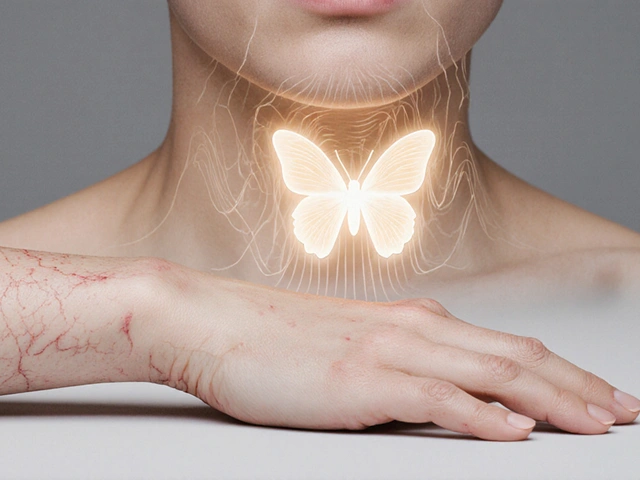
Postpartum thyroiditis is an autoimmune condition that strikes within the first year after childbirth, miscarriage, or abortion. Your immune system, which was suppressed during pregnancy to protect the baby, rebounds after delivery-and sometimes it goes too far. It starts attacking your thyroid gland, the butterfly-shaped organ in your neck that controls your metabolism. This attack doesn’t cause a lump or pain, but it does two things in sequence: first, it makes your thyroid leak too much hormone; then, it burns out and stops making enough.
This isn’t rare. About 5 to 10% of women develop it after birth. That’s roughly 1 in every 10 to 20 new moms. Yet most doctors don’t screen for it unless you ask. And because the symptoms look so much like normal postpartum stress, it often goes undiagnosed for months-even years.
The Two-Phase Pattern: Hyperthyroidism Then Hypothyroidism
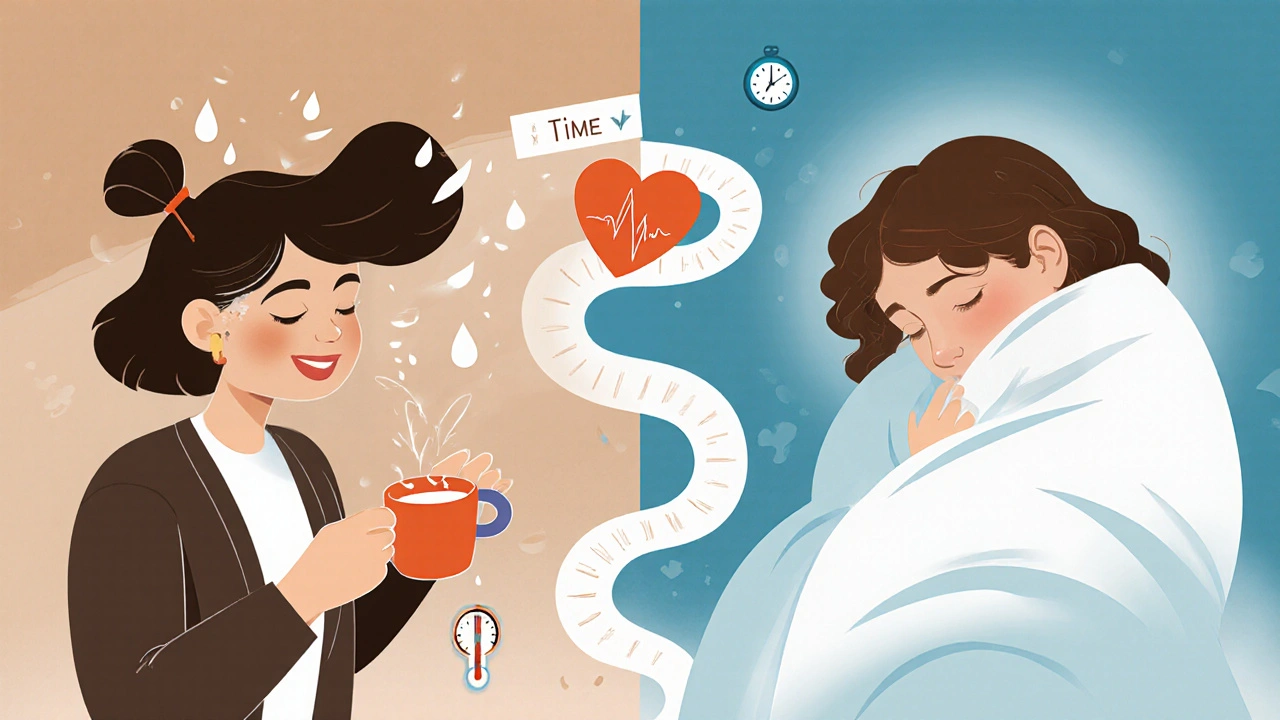
Postpartum thyroiditis doesn’t just make you tired. It swings you between two very different states.
Phase 1: The Hyperthyroid Phase (1-4 months postpartum)
For some women, the first sign is feeling wired. You can’t sleep. Your heart races. You lose weight even though you’re eating more. You feel hot when everyone else is cold. These are classic signs of too much thyroid hormone flooding your system. It’s not Graves’ disease (which causes bulging eyes and a swollen neck). This is a silent destruction-your thyroid is leaking stored hormones because immune cells are tearing it apart. About half of women don’t even notice this phase. They chalk it up to adrenaline from new motherhood.
Phase 2: The Hypothyroid Phase (4-8 months postpartum)
This is where most women finally feel something’s wrong. Fatigue hits like a brick. You can’t get out of bed. Your hair falls out in clumps. Your skin feels dry and flaky. You gain weight despite eating less. Your brain feels foggy-you forget names, miss appointments, can’t focus on simple tasks. Cold intolerance becomes unbearable. Constipation lingers. And your milk supply? It drops, even if you’re pumping regularly.
Up to 25% of women skip the hyperthyroid phase entirely and go straight into hypothyroidism. That’s why just looking for one set of symptoms can lead to a missed diagnosis.
How Is It Diagnosed?
You can’t diagnose this with symptoms alone. You need blood tests.
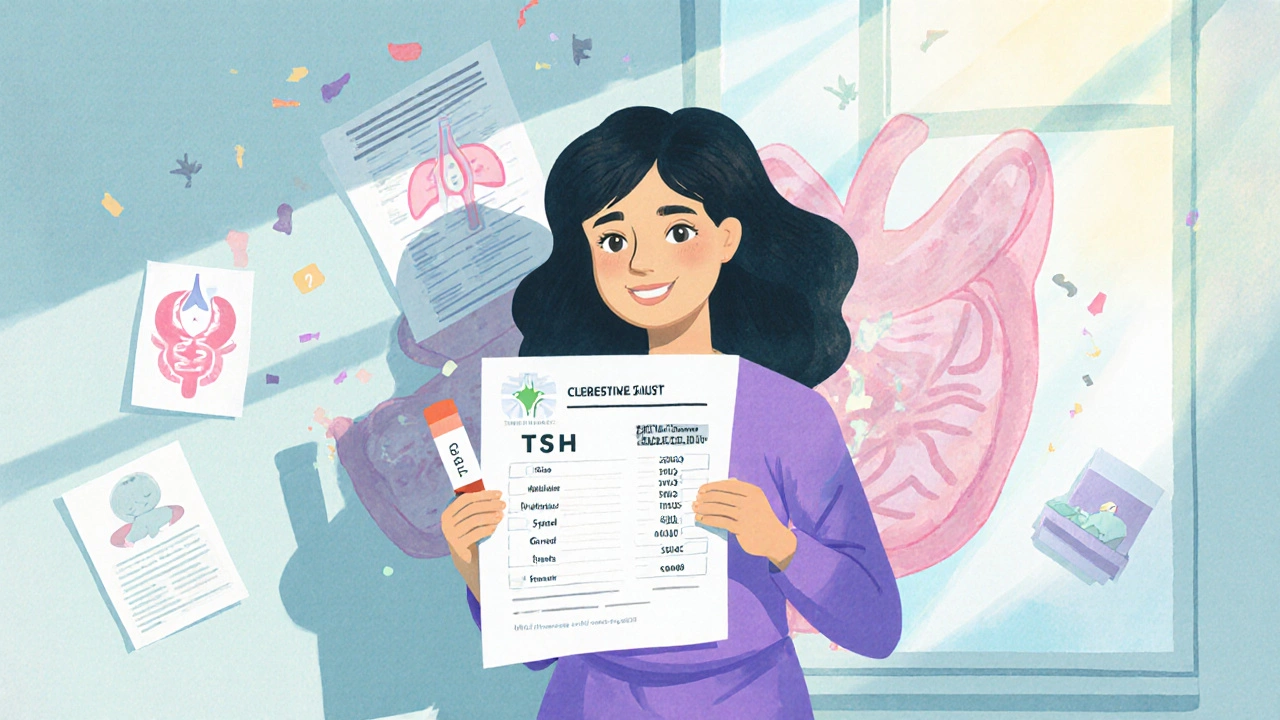
- TSH (Thyroid Stimulating Hormone): Low in the hyperthyroid phase (<0.4 mIU/L), high in the hypothyroid phase (>4.5 mIU/L).
- Free T4: High during hyperthyroidism, low during hypothyroidism.
- TPO Antibodies: Positive in 80-90% of cases. This is the smoking gun-it confirms your immune system is attacking your thyroid.
Doctors often skip testing because they assume it’s just stress. But if you’re still feeling off after 8-12 weeks, ask for a full thyroid panel. Don’t wait for your six-week checkup-those tests rarely include thyroid function.
Who’s at Risk?
Not everyone gets postpartum thyroiditis. But certain factors make it much more likely:
- Having type 1 diabetes (25-30% risk)
- Previous postpartum thyroiditis (40% chance it comes back)
- Other autoimmune diseases like lupus or rheumatoid arthritis
- High TPO antibody levels before or during pregnancy
- Family history of thyroid disease
If you fall into any of these categories, get tested at 10-12 weeks postpartum. Early detection can prevent months of unnecessary suffering.
Differentiating It From Postpartum Depression
This is critical. Many women are misdiagnosed with depression when they actually have thyroid dysfunction.
Postpartum depression feels like sadness, guilt, hopelessness, and loss of interest in your baby. Postpartum thyroiditis feels like your body is breaking down-physical symptoms dominate. You’re not just sad-you’re cold, achy, constipated, and your heart won’t stop pounding. You’re not just tired-you can’t think straight, even after 8 hours of sleep.
But here’s the problem: they often overlap. Up to 30% of women with thyroiditis are prescribed antidepressants before their thyroid levels are checked. And if you’re given antidepressants and your thyroid is still low? The meds won’t work. You’ll keep feeling broken.
What Happens If It’s Left Untreated?
For most women (70-80%), thyroid function returns to normal within 12-18 months. But for 20-30%, the thyroid never recovers. They develop permanent hypothyroidism and need lifelong levothyroxine treatment.
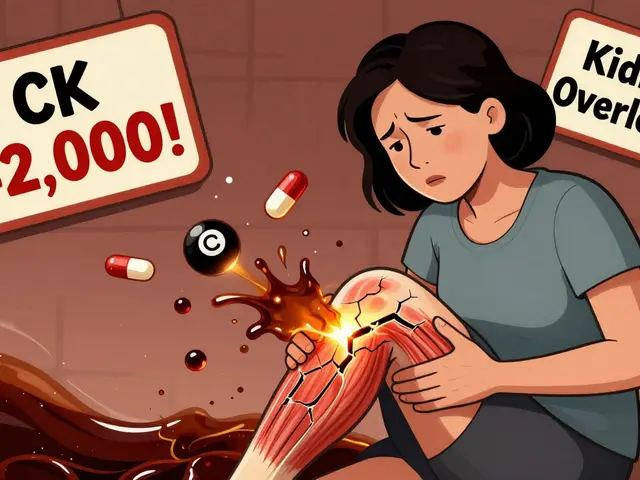
Leaving it untreated isn’t just about feeling bad. Low thyroid levels during breastfeeding can reduce milk supply. Chronic fatigue can impact your ability to care for your child. Long-term, untreated hypothyroidism raises your risk of heart disease and high cholesterol.
And if you plan to have another child? The risk of recurrence jumps to 70% if you had it before-and even higher if your TPO antibodies are still high.
Treatment: What Works and What Doesn’t
There’s no cure, but there’s smart management.
During the hyperthyroid phase: Most women don’t need medication. Beta-blockers (like propranolol) can help if your heart is racing or you’re shaking badly. But you don’t need antithyroid drugs-they won’t help because your thyroid isn’t overproducing; it’s leaking.
During the hypothyroid phase: If your TSH is above 10 mIU/L or you have symptoms, levothyroxine (a synthetic thyroid hormone) is recommended. Many women feel better within weeks. If your thyroid recovers, you may be able to stop the medication after 6-12 months. But if your TPO antibodies stay high and your TSH remains elevated after a year, you likely need to stay on it permanently.
Important: Never stop thyroid medication without testing. Even if you feel fine, your levels might still be off.
What About Breastfeeding?
Good news: both levothyroxine and beta-blockers are safe while breastfeeding. Levothyroxine passes into breast milk in tiny, harmless amounts. Propranolol is also considered safe in low doses. If your milk supply drops during the hypothyroid phase, treatment often brings it back.
Why Most Doctors Miss It
Only 42% of obstetricians routinely check thyroid function in postpartum women beyond the six-week visit. Primary care doctors often assume fatigue is just “new mom stuff.” One study found the average time to diagnosis is over 5 months. Women report visiting three or four doctors before someone orders a TSH test.
It’s not negligence-it’s lack of awareness. But that’s changing. Endocrinologists are pushing for universal screening in high-risk groups. Some clinics now offer TPO antibody testing at 10 weeks for women with diabetes or prior thyroid issues. And in Europe, routine screening is standard.
Here’s the reality: if you’re a new mom and you’re not feeling like yourself after 8 weeks, don’t wait. Ask for a thyroid panel. Bring a list of your symptoms. Be persistent. Your health matters just as much as your baby’s.
What’s Next?
Research is moving fast. Scientists have identified a new biomarker-interleukin-10-that may predict postpartum thyroiditis before symptoms appear. Digital tools are being tested to track symptoms and flag red flags automatically. And experts predict that within five years, TSH testing at 6 and 12 weeks postpartum will be standard care.
Until then, knowledge is power. If you’ve had a baby and you’re still exhausted, cold, foggy, or losing hair-it’s not just stress. It might be your thyroid.
Don’t let it go unnoticed. Get tested. Speak up. Your body is trying to tell you something.



Nicola Mari
November 28, 2025 AT 04:00So many women are told to just ‘sleep when the baby sleeps’ like that’s some magical cure. No one mentions your thyroid could be on fire and you’re just expected to grin and bear it. This is systemic neglect wrapped in ‘new mom’ platitudes.
Sam txf
November 29, 2025 AT 01:21Jesus Christ. I read this and thought my ex-wife had postpartum thyroiditis and they just pumped her full of Zoloft for a year. She lost 20 lbs, cried nonstop, and still couldn’t hold a conversation. They didn’t test her until she collapsed at work. This is medical malpractice with a smiley face.
Michael Segbawu
November 29, 2025 AT 08:03why do doctors keep missing this its insane my sister had this and they told her she was just depressed then she lost her job because she couldnt focus then they finally tested her and she was on levothyroxine for 6 months and boom back to normal like nothing happened why is this not routine
Aarti Ray
December 1, 2025 AT 05:15in india we dont even get thyroid checked after delivery unless you ask for it specifically my cousin had hair fall and extreme fatigue for 8 months and everyone said its normal after baby then she went to a private doctor and found out she had tpo antibodies high they gave her medicine and now she is fine but so many women suffer silently here
Madison Malone
December 2, 2025 AT 23:18I wish more people knew this. I had no idea my exhaustion wasn’t just from being a new mom. I felt so guilty for not being ‘strong enough’ until I got tested. Levothyroxine changed my life. You’re not broken-you’re just out of balance. Please get checked.
Jacob Hepworth-wain
December 4, 2025 AT 08:36My wife went through this and no one warned us. We thought she was just stressed. She cried every night for months. When we finally got the blood test, the doctor said ‘oh this is common’ like it was nothing. It’s not nothing. It’s debilitating. Thanks for putting this out there.
Craig Hartel
December 6, 2025 AT 06:44Man I’m so glad this exists. I’ve been telling my friends to get tested for months after having kids. I had a friend who thought she was failing as a mom because she couldn’t get out of bed. Turned out her TSH was 28. She’s now back to hiking and cooking and laughing again. Don’t wait-ask for the panel.
anant ram
December 6, 2025 AT 15:25Yes, yes, yes! This is exactly what I experienced! The hyperthyroid phase was terrifying-heart racing, insomnia, weight loss-I thought I was having a nervous breakdown. Then the hypothyroid phase hit like a truck. I couldn’t remember my child’s name for a week. TPO antibodies were through the roof. I’m so thankful I found this information. Please, if you’re reading this and feel off-get tested!
Bruce Hennen
December 7, 2025 AT 10:46There is no such thing as 'temporary' thyroid dysfunction in the clinical sense. Either your thyroid is functioning or it isn't. The term 'postpartum thyroiditis' is a misnomer that dilutes medical accuracy. If TSH remains elevated beyond 12 months, it is permanent hypothyroidism-period. Stop using euphemisms.
Chuckie Parker
December 8, 2025 AT 05:18Why are we even talking about this like it's some secret? In America we have the best medical system in the world yet women are being left to suffer because doctors are lazy. This is why I don't trust the medical establishment. They'd rather hand out antidepressants than do a simple blood test. Wake up people.
George Hook
December 9, 2025 AT 06:09As someone who’s spent over a decade in maternal health advocacy, I’ve seen this pattern repeat across socioeconomic lines. The issue isn’t just lack of screening-it’s the cultural normalization of maternal suffering. We tell women to be grateful for their children, to ‘suck it up,’ to ‘be strong’-but we never ask if their bodies are still working. The fact that this condition affects 1 in 10 women and remains underdiagnosed for months speaks to a deeper failure in how we value maternal health. It’s not just a medical oversight-it’s a moral one.
jaya sreeraagam
December 10, 2025 AT 00:58I had postpartum thyroiditis after my first baby and didn’t know it till my second. I was exhausted, my hair was falling out, I was gaining weight even though I was eating salad every day. I thought it was because I was older. But when I got my bloodwork done after my second child, my TPO antibodies were sky high. I started levothyroxine and within 3 weeks I felt like myself again. Please ladies if you’re feeling off after baby don’t wait-get tested. It’s not weakness, it’s wisdom.
Katrina Sofiya
December 10, 2025 AT 09:24Thank you for this comprehensive and compassionate overview. As a healthcare professional, I am deeply concerned that this condition remains under-recognized. I encourage all new mothers to request a full thyroid panel at their 6- to 12-week postpartum visit, regardless of symptom severity. Early detection prevents long-term complications and supports not only maternal well-being but infant development through optimal breastfeeding.
kaushik dutta
December 10, 2025 AT 22:35The pathophysiology here is fascinating-immune reconstitution postpartum triggering autoimmune thyroid destruction via molecular mimicry. TPO antibodies serve as a biomarker for immune dysregulation, and the biphasic pattern reflects thyrocyte lysis followed by gland exhaustion. The clinical implication is that TSH alone is insufficient-free T4 and antibody titers must be tracked longitudinally. This is not just endocrinology-it’s immunology in the postpartum window.
Olivia Gracelynn Starsmith
December 12, 2025 AT 18:49My OB didn’t test my thyroid until I begged. I was misdiagnosed with anxiety. I’m so glad I pushed. Levothyroxine made me feel human again. If you’re tired beyond reason-get tested. It’s simple. It’s cheap. It’s life-changing.