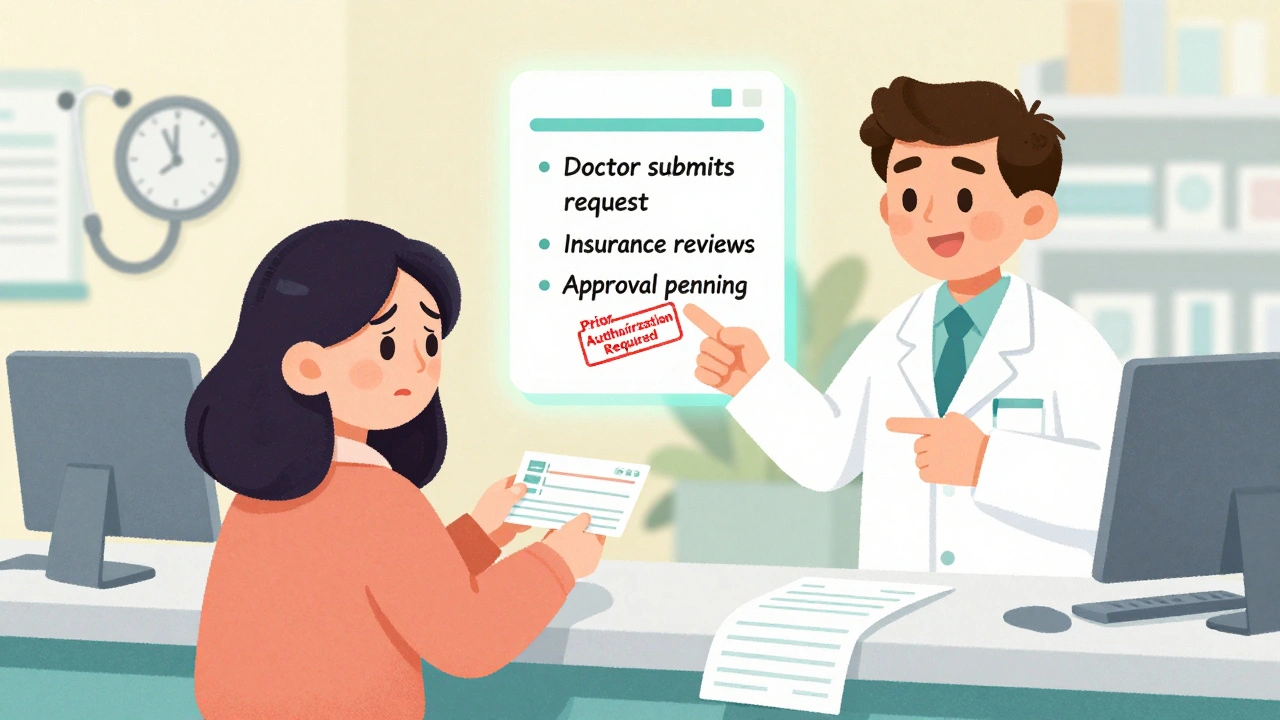
Imagine you’re prescribed a medication your doctor says you need. You get to the pharmacy, ready to pick it up-and they tell you the insurance won’t cover it. Not because it’s unsafe. Not because it’s wrong for you. But because your plan requires prior authorization first. This isn’t a glitch. It’s standard. And if you’ve ever been caught off guard by it, you’re not alone.
What Is Prior Authorization?
Prior authorization, sometimes called pre-authorization or prior auth, is a rule used by health insurance companies to decide whether they’ll pay for certain medications. It’s not about denying care. It’s about making sure the right drug is being used for the right reason-while keeping costs under control. Your insurer doesn’t automatically cover every drug on the market. Some medications are expensive. Others have cheaper, equally effective alternatives. Some are only meant for specific conditions. Prior authorization helps the plan check that your prescription fits their guidelines before they pay for it. According to Medicare, prior authorization means you and your doctor must get approval from your plan before the drug is covered. Your doctor has to show that the medication is medically necessary. That doesn’t mean it’s a hurdle-it means your plan wants to make sure you’re getting the best, safest, and most cost-effective treatment possible.Which Medications Usually Need Prior Authorization?
Not every prescription requires this step. But certain types almost always do:- Brand-name drugs with generic versions - If a cheaper generic exists, your plan may require you to try it first.
- High-cost medications - Think cancer treatments, rare disease drugs, or newer biologics that cost thousands per month.
- Drugs with strict usage rules - For example, a medication only approved for rheumatoid arthritis might be denied if you’re being treated for back pain.
- Medications with safety risks - Those that can interact badly with other drugs, have abuse potential, or require close monitoring.
- Off-label uses - If your doctor prescribes a drug for a condition it wasn’t officially approved for, they’ll need to explain why it’s necessary.
Who Starts the Prior Authorization Process?
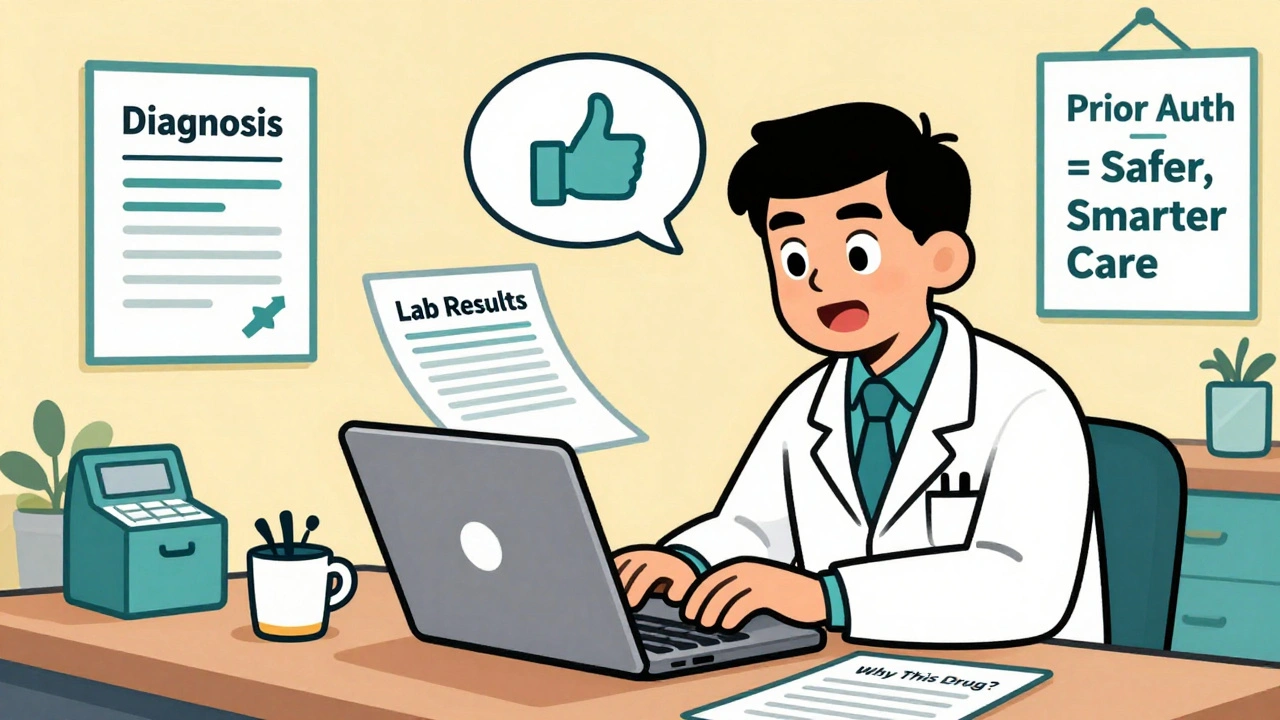
It’s your doctor’s job to start it. When they write a prescription for a drug that needs prior authorization, they must submit a request to your insurance company. This request includes:- Your diagnosis
- Why this specific drug is needed
- Any previous treatments you’ve tried (and why they didn’t work)
- Lab results or other medical evidence
What Happens After the Request Is Submitted?
Once your doctor sends the request, your insurance company reviews it. A pharmacist or medical reviewer checks if the prescription meets the plan’s criteria. If everything looks good, they approve it. You’ll get a notice-usually by mail or through your online portal. If they deny it, you’re not stuck. You have options:- Your doctor can appeal the decision by submitting more information.
- You can ask for a different drug that’s already covered.
- You can pay out-of-pocket and later file for reimbursement after approval.
How Can You Check If Your Drug Needs Prior Authorization?
Don’t wait until you’re at the pharmacy. Take control before your prescription is filled.- Look up your plan’s drug formulary - This is the list of medications your insurance covers. Most insurers have this online. Search for your drug’s name. If it says “Prior Authorization Required,” you’ll know.
- Use tools like Blue Shield of California’s “Price Check My Rx” - These let you see if a drug is covered, what your cost will be, and if alternatives exist.
- Call your insurance company. Have your prescription details ready. Ask: “Does this medication need prior authorization?”
What If You Need the Drug Right Away?
Sometimes, waiting days or weeks isn’t an option. If you’re in pain, sick, or your condition is worsening, you can ask for an urgent prior authorization. Many insurers have a fast-track process for urgent cases. Your doctor can mark the request as urgent. In some cases, approval can happen within 24 hours. If you can’t wait and can’t afford to pay upfront, some pharmacies offer temporary discounts or patient assistance programs. You can also ask your doctor about samples. And remember: if you need emergency care, prior authorization doesn’t apply. Medicare and other plans cover emergency medications without pre-approval.What Happens When Prior Authorization Expires?
Approval isn’t permanent. Most prior authorizations last for a set time-often 30 to 90 days. After that, you’ll need to go through the process again for refills. This can be frustrating. You’ve already jumped through the hoops. But insurers do this to ensure your condition hasn’t changed and the drug is still necessary. Some plans automatically renew if your treatment hasn’t changed. Others require a new request each time. Always check the expiration date on your approval notice. Set a reminder in your phone. Don’t wait until your prescription runs out.How Does This Affect Your Costs?
Prior authorization doesn’t change your copay directly. But it can save you money-or cost you more-if you don’t follow the rules. If your plan requires you to try a generic first and you skip that step, you might pay full price. If you get a brand-name drug without approval, your claim could be denied. You could end up paying hundreds or even thousands out of pocket. On the flip side, if prior authorization leads you to a cheaper, covered alternative, your out-of-pocket cost drops significantly. It’s not about the insurance company saving money at your expense. It’s about making sure you’re not overpaying for something you don’t need.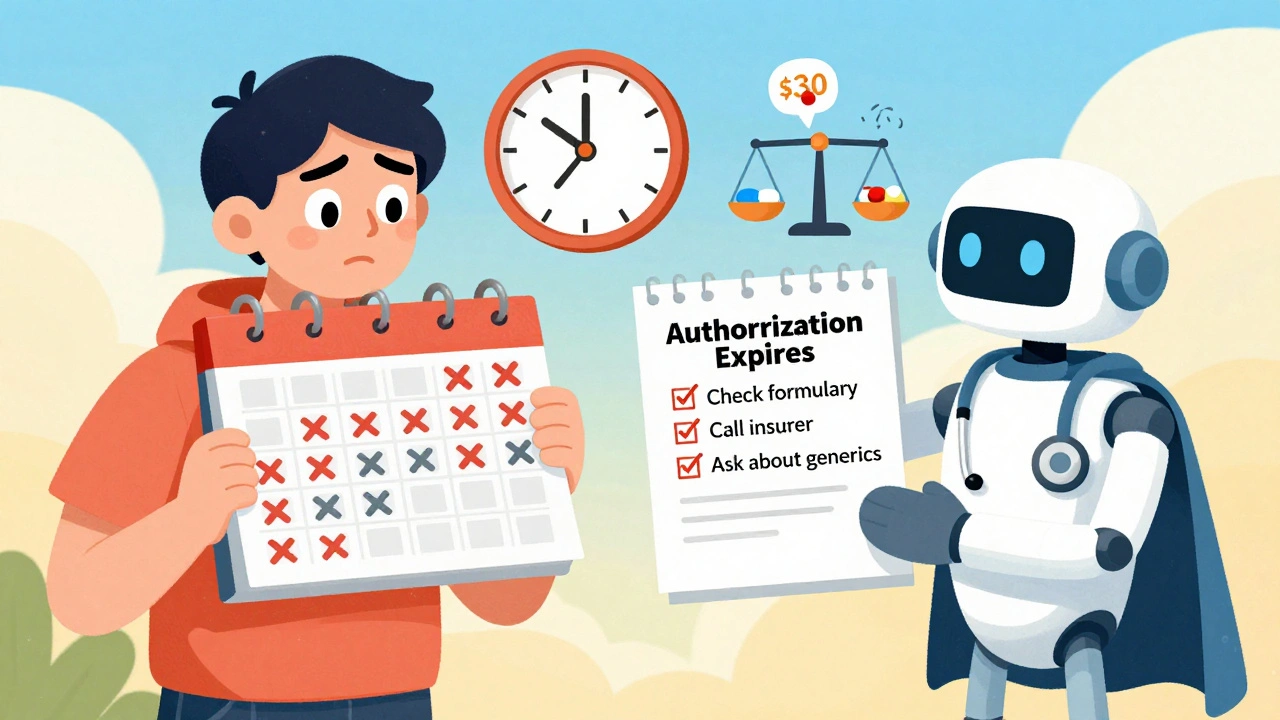
What Can You Do to Make This Easier?
Here’s how to reduce stress and avoid delays:- Ask your doctor at the appointment: “Does this drug need prior authorization?”
- Write down the name, dose, and reason for the prescription.
- Call your insurer before you leave the office to confirm coverage.
- Keep a copy of the approval notice and expiration date.
- If your request is denied, ask your doctor to appeal. Don’t give up.
- Use GoodRx or other price-comparison tools to see cash prices-even if you’re insured.
Why Does This System Exist?
It’s easy to hate prior authorization. It feels bureaucratic. It delays care. But it’s not arbitrary. The Academy of Managed Care Pharmacy says it’s an “essential tool” to ensure medications are safe, effective, and provide the best value. Without it, plans could pay for expensive drugs that don’t work better than cheap ones. That drives up premiums for everyone. Think of it like this: if every patient got the most expensive drug right away, insurance costs would skyrocket. Prior authorization keeps the system from collapsing under its own weight. Still, it’s imperfect. Doctors spend hours filling out forms. Patients miss doses. Delays hurt. That’s why many states and federal agencies are pushing for reforms-faster approvals, fewer requirements, electronic systems. But for now, it’s part of the system. And knowing how it works gives you power.What If You’re on Medicare?
If you’re enrolled in Medicare Part D, prior authorization is called a “coverage determination.” The rules are similar: your doctor must prove medical necessity. Medicare plans can limit drugs to certain conditions. For example, a drug approved for diabetes might not be covered if you have heart disease-unless your doctor explains why it’s needed. You have the right to appeal a denial. Call the number on your Medicare card. You can also ask for a formulary exception. And remember: emergency medications are covered without prior auth. You’re protected if you need help right away.Final Thoughts
Prior authorization isn’t the enemy. It’s a system designed to balance cost, safety, and access. But it only works if you’re informed. Don’t wait for the pharmacy to tell you there’s a problem. Ask your doctor. Check your plan. Know your options. If you’re denied, appeal. If you’re unsure, call your insurer. The more you understand how it works, the less power it has over you. You’re not just a patient-you’re a partner in your care. And that means you have the right-and the responsibility-to make sure you get the treatment you need, without unnecessary delays or surprise bills.What is prior authorization for medications?
Prior authorization is a process where your health insurance requires your doctor to get approval before covering certain medications. It ensures the drug is medically necessary, safe for your condition, and the most cost-effective option available.
Who is responsible for starting the prior authorization request?
Your doctor or healthcare provider starts the request. They submit details about your diagnosis and why the medication is needed. You don’t need to file it yourself, but you should confirm it was sent.
How long does prior authorization take?
Approval can take anywhere from 24 hours for urgent cases to several weeks for standard requests. Some plans offer fast-track options if your condition is worsening. Always ask your doctor if you need it expedited.
What happens if my prior authorization is denied?
If denied, your doctor can appeal by submitting more medical evidence. You can also ask for a different, covered medication. In some cases, you can pay out of pocket and later request reimbursement after approval.
Do I need prior authorization for emergency medications?
No. If you need medication in an emergency, your insurance must cover it without prior authorization. However, non-emergency follow-up prescriptions may still require approval.
Can prior authorization expire?
Yes. Most approvals last 30 to 90 days. After that, you’ll need to reapply for refills. Always check the expiration date on your approval notice to avoid gaps in coverage.
How can I check if my medication needs prior authorization?
Check your insurance plan’s drug formulary online, use tools like Price Check My Rx, or call your insurer directly. Ask your doctor at the appointment if the prescription requires prior auth.
Are there cheaper alternatives if my drug needs prior authorization?
Yes. Often, generic versions or other covered medications work just as well. Ask your doctor: “Is there another option that’s covered right away?” This can save you time and money.



john damon
December 12, 2025 AT 03:49Taylor Dressler
December 13, 2025 AT 13:30Jean Claude de La Ronde
December 15, 2025 AT 09:09Katherine Liu-Bevan
December 15, 2025 AT 17:53Ariel Nichole
December 17, 2025 AT 11:39Aman deep
December 18, 2025 AT 18:38Eddie Bennett
December 18, 2025 AT 20:49Sylvia Frenzel
December 19, 2025 AT 15:53Vivian Amadi
December 20, 2025 AT 08:14Jimmy Kärnfeldt
December 21, 2025 AT 01:41matthew dendle
December 22, 2025 AT 07:16Monica Evan
December 22, 2025 AT 13:40Aidan Stacey
December 24, 2025 AT 00:21Jim Irish
December 24, 2025 AT 03:31