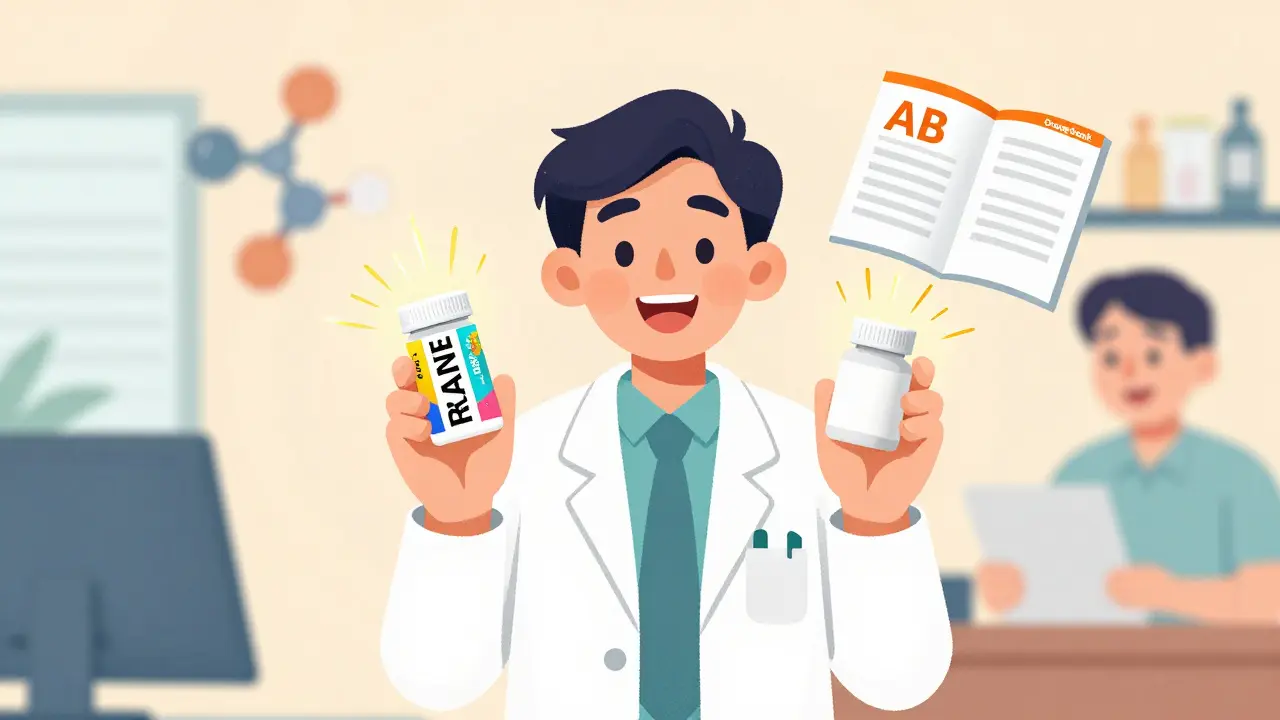
When you pick up a prescription, you might not notice the difference between the brand-name pill and the generic one. They look different. The packaging is simpler. The price is way lower. But here’s the thing: if it’s listed as therapeutic equivalence in the FDA’s Orange Book, it’s not just a cheaper copy-it’s a medically identical replacement. And that’s not marketing. It’s science. And it’s what keeps millions of patients safe every day.
What therapeutic equivalence actually means
Therapeutic equivalence isn’t just about having the same active ingredient. That’s pharmaceutical equivalence, and it’s only the first step. Two drugs can have the same chemical compound and still behave differently in your body. Therapeutic equivalence goes further. It means the generic version delivers the same amount of medicine into your bloodstream at the same rate as the brand-name drug. No more. No less. And that’s backed by hard data. The U.S. Food and Drug Administration (FDA) uses strict standards to prove this. For most drugs, they test bioequivalence by measuring two things: how much of the drug gets into your blood (AUC) and how fast it peaks (Cmax). The generic must stay within 80% to 125% of the brand-name drug’s numbers. That’s not a guess. It’s a statistical requirement with 90% confidence. If it doesn’t hit that range, it doesn’t get approved. And it’s not just about numbers. The FDA also looks at clinical outcomes. Has this drug been used in real patients? Did it work the same way? Did it cause the same side effects? If the answer is yes, it gets an “A” rating in the Orange Book. That’s the green light for substitution.Why this matters for your health
Imagine you’re on warfarin, a blood thinner with a narrow therapeutic index. A tiny change in how much drug gets into your system can mean the difference between a clot and a bleed. For drugs like this, the FDA doesn’t use the standard 80-125% range. It demands tighter control: 90-110%. That’s because safety isn’t theoretical. It’s life-or-death. The same logic applies to thyroid meds like levothyroxine, seizure drugs like phenytoin, or immunosuppressants like cyclosporine. Even small variations can throw off your entire treatment. That’s why the FDA tracks these drugs more closely-and why pharmacists are trained to check the Orange Book before swapping them out. You might have heard stories about people feeling different after switching to a generic. Maybe they had headaches. Or felt more tired. But when researchers dug into those cases, most didn’t involve drugs with an “A” rating. A 2022 UnitedHealthcare survey of over 12,500 patients found 87% reported no change in how they felt after switching to a therapeutically equivalent generic. Only 3.2% blamed the switch for new side effects. And of those, many turned out to be anxiety, not chemistry.How the FDA’s Orange Book keeps things safe
The Orange Book isn’t just a list. It’s a living database of over 13,000 drug products, each with a two-letter code. “AB” means the drug is therapeutically equivalent to the brand. “A” without a second letter? Still equivalent. “B”? That’s a red flag. It means the FDA has reason to believe the generic might not work the same-maybe because of how it’s made, how it dissolves, or how it’s absorbed. Pharmacists in 49 U.S. states can legally substitute an “AB”-rated generic without asking your doctor. But they’re not guessing. They’re looking up the code. And if a drug is marked “B,” they can’t switch it unless you or your doctor says yes. That’s the system working as designed. The European Medicines Agency and Japan’s PMDA have similar rules, but they don’t use the same coding system. That’s why patients traveling abroad sometimes get confused. In the U.S., the Orange Book is the gold standard. It’s the only system that combines pharmaceutical equivalence, bioequivalence, and clinical outcome data into one clear rating.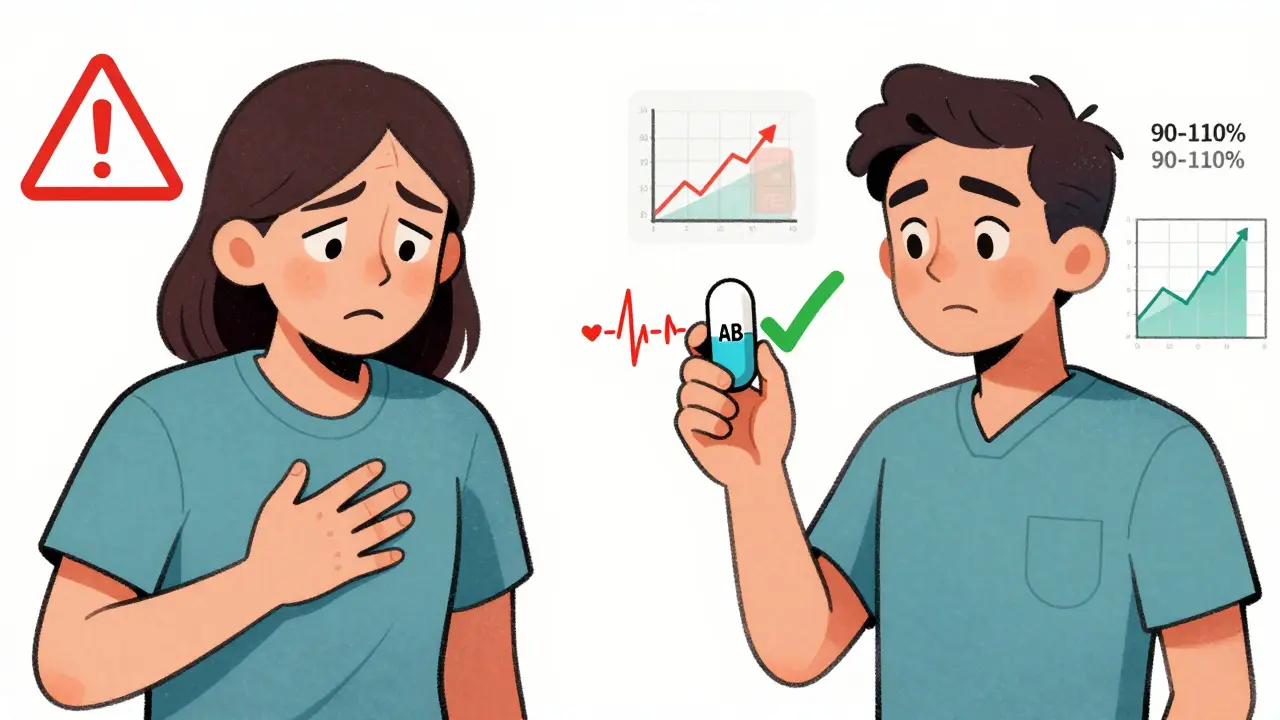
What about complex drugs like inhalers or creams?
Here’s where things get tricky. For pills, we can measure blood levels easily. But for an asthma inhaler? A topical cream? The drug doesn’t just enter your bloodstream-it’s delivered to your lungs or skin. And how it’s sprayed, how it’s absorbed, how it sticks to the surface-all that matters. The FDA admits that traditional bioequivalence tests don’t always work for these products. That’s why they’re updating their guidance. In late 2023, they released draft rules for topical corticosteroids and inhalers, requiring more advanced testing like in vitro studies and clinical endpoint trials. These aren’t just lab tests-they’re real-world simulations of how the drug behaves in the body. The FDA is also investing $65 million through 2027 to improve methods for complex generics. And they’re teaming up with MIT to build AI models that predict which formulation changes might cause problems-before they even reach patients. This isn’t science fiction. It’s the next step in making sure safety keeps pace with innovation.Cost savings without compromise
Therapeutic equivalence isn’t just about safety. It’s about access. In 2022, 90.7% of all prescriptions filled in the U.S. were generics. That’s over 4 billion prescriptions. And yet, those generics made up only 58% of total drug spending. The rest went to brand-name drugs that cost 10 to 20 times more. That’s not luck. It’s policy. Thanks to the Hatch-Waxman Act of 1984, generics can enter the market faster-without repeating expensive clinical trials. But they still have to prove they’re therapeutically equivalent. That’s why the system works. It cuts costs without cutting corners. Between 2009 and 2019, generic drugs saved the U.S. healthcare system $1.7 trillion. In 2023 alone, the savings were estimated at $158 billion. That’s money that goes back into care-for more screenings, more specialists, more treatments. And it’s all possible because we trust the science behind therapeutic equivalence.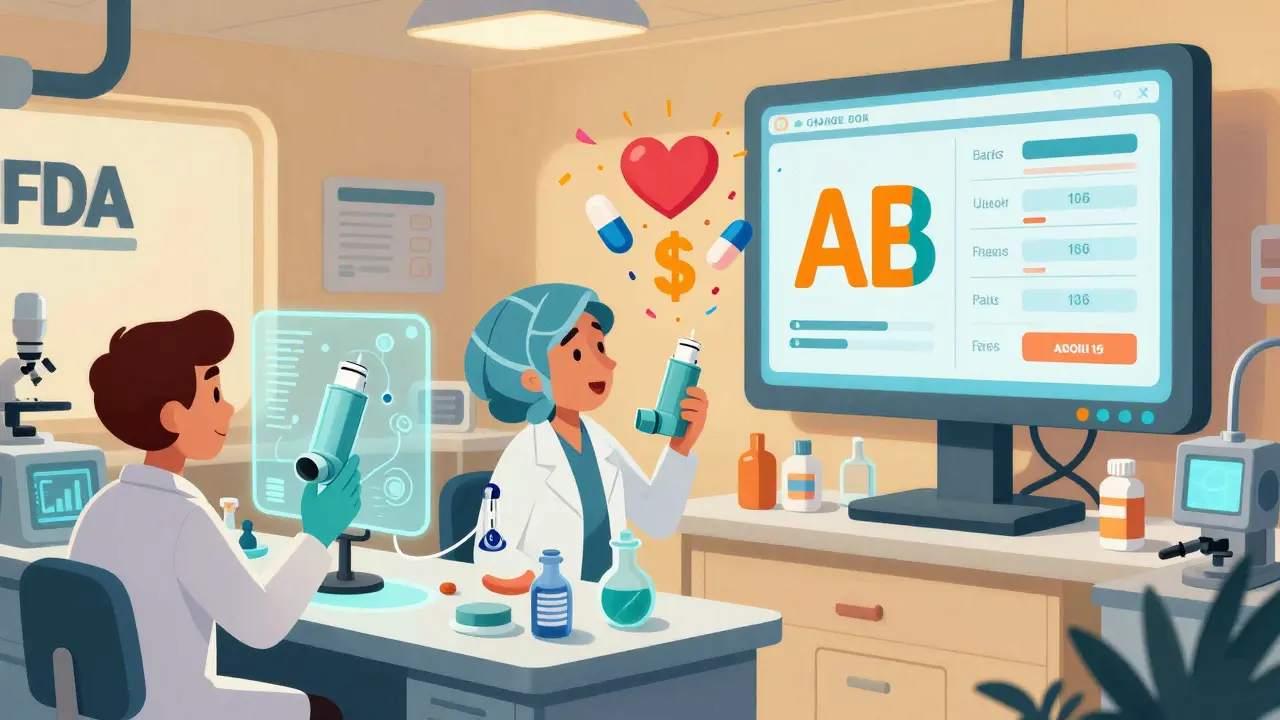
What patients should know
You don’t need to memorize the Orange Book. But you should know this: if your pharmacist switches your drug to a generic, and it’s marked “AB,” you’re getting the same medicine. No less effective. No more dangerous. If you feel different after a switch, tell your doctor. Don’t assume it’s the drug. But don’t dismiss it either. Some people are sensitive. Some conditions are fragile. Your doctor can check the Orange Book, confirm the rating, and decide whether to stick with the generic or go back to brand. And if you’re on a narrow therapeutic index drug-warfarin, levothyroxine, digoxin-ask your pharmacist to confirm the rating. Most will do it without you asking. But it never hurts to check.What’s next for therapeutic equivalence
The future is about complexity. Biosimilars-generic versions of biologic drugs like insulin or rheumatoid arthritis treatments-aren’t covered by the same rules. They need a separate “interchangeability” designation. That’s a higher bar. The FDA is building that system now. We’re also seeing more pressure to include real-world data in equivalence reviews. Not just lab results. Not just blood tests. But how patients actually feel, how often they refill, whether they end up in the ER. That’s the next frontier. For now, therapeutic equivalence remains one of the most reliable safety nets in modern medicine. It’s not perfect. But it’s proven. And for millions of people who rely on affordable, effective drugs every day, it’s the reason they can keep taking their medicine-without choosing between their health and their wallet.Are generic drugs really as safe as brand-name drugs?
Yes, if they’re rated as therapeutically equivalent (AB) by the FDA. Generic drugs must meet the same strict standards for active ingredients, strength, dosage form, and bioequivalence as brand-name drugs. The FDA requires that the generic delivers the same amount of medicine into your bloodstream at the same rate. Over 90% of prescriptions in the U.S. are generics, and studies show they produce the same clinical outcomes with equivalent safety profiles.
What does an AB rating mean in the FDA Orange Book?
An AB rating means the generic drug is therapeutically equivalent to the brand-name drug. The “A” indicates it’s considered interchangeable based on bioequivalence and clinical data. The “B” means the FDA has concerns about therapeutic equivalence-either due to formulation differences or lack of sufficient evidence. Only AB-rated drugs can be automatically substituted by pharmacists in most states.
Can I be switched to a generic without my doctor’s permission?
In 49 U.S. states, pharmacists can substitute a therapeutically equivalent generic without asking your doctor, as long as the drug is rated AB in the FDA Orange Book. However, if your doctor writes “dispense as written” or “no substitution,” the pharmacy must follow that instruction. Some states also require prescribers to note if substitution is not allowed.
Why do some people say they feel different on generics?
Some people report changes after switching, but investigations often show the issue isn’t therapeutic inequivalence. A 2022 UnitedHealthcare survey found only 3.2% of patients blamed the switch for new side effects. In many cases, anxiety, changes in pill appearance, or unrelated health changes are the real cause. The Institute for Safe Medication Practices found only 17 out of 127 adverse event reports linked to generics involved AB-rated drugs-most were due to other factors.
Are there drugs where generics aren’t recommended?
Yes. For drugs with a narrow therapeutic index-like warfarin, levothyroxine, phenytoin, and cyclosporine-even small differences in absorption can matter. While FDA-approved generics for these drugs are still considered safe, some doctors prefer to stick with one brand to avoid any risk. The FDA requires tighter bioequivalence standards (90-110%) for these drugs, and pharmacists are trained to flag them for extra review.
How do I check if my drug is therapeutically equivalent?
You can search the FDA’s Orange Book online for free. Just enter the drug name or active ingredient. Look for the “Therapeutic Equivalence Code.” If it starts with “A,” it’s considered equivalent. If it’s “B,” the FDA has concerns. Your pharmacist can also tell you the rating-just ask. Don’t assume all generics are the same. Only AB-rated ones are approved for automatic substitution.
Evan Smith
January 9, 2026 AT 01:07So let me get this straight - you’re telling me I can pay $4 for my blood thinner instead of $400 and it’s literally the same thing? And the government says so? Wild. I thought generics were just placebo pills with a different color.
Also, why does my pill look like a tiny rainbow now? Is that part of the bioequivalence?
Annette Robinson
January 10, 2026 AT 16:33I’ve been on levothyroxine for 12 years. Switched to generic twice - once by accident, once by choice. Felt zero difference. My TSH levels stayed perfect. My doctor checked the Orange Book before approving it. This isn’t magic - it’s science. And it’s why I can afford to keep living.
People panic because the pill looks different. But your body doesn’t care about the logo on the capsule. It cares about the chemistry. And the FDA makes sure that part doesn’t slip.
Lois Li
January 11, 2026 AT 21:22I work in a pharmacy and I see this every day. Patients come in scared because their pill changed shape. They think they’re being swapped for something cheap and dangerous. We spend 10 minutes explaining the Orange Book codes - AB, A, B - and half the time they still don’t believe us.
But when we show them the FDA’s data, the bioequivalence ranges, the clinical studies - they relax. It’s not about trust in corporations. It’s about trust in the system. And honestly? The system works.
Also, if you’re on warfarin, always double-check the rating. Even if it’s AB. Your INR doesn’t lie.
christy lianto
January 13, 2026 AT 03:28Let me be real - I used to hate generics. Thought they were ‘pharma’s dirty little secret.’ Then my dad got cancer. Chemo was $12,000 a month. The generic? $1,200. Same drug. Same results. He’s alive today because we didn’t have to choose between rent and medicine.
This isn’t about cost-cutting. It’s about dignity. People shouldn’t have to beg to stay alive. And the FDA? They’re the only ones holding the line. So stop acting like generics are a compromise. They’re a victory.
Aubrey Mallory
January 13, 2026 AT 10:09For anyone who says ‘I felt different’ after switching - you’re not wrong. But you’re also not necessarily right. The placebo effect is real. So is the nocebo effect. If you expect to feel worse, you will. That doesn’t mean the drug changed. It means your brain did.
And yes - some people are sensitive. But the data doesn’t lie. 87% of patients report no change. That’s not coincidence. That’s regulation working.
Don’t dismiss your experience. But don’t let fear rewrite science either.
Donny Airlangga
January 13, 2026 AT 18:40I’m a nurse. I’ve seen patients on phenytoin switch to generics and have seizures. I’ve also seen patients switch and never miss a beat.
The difference? One group had their levels monitored. The other didn’t.
It’s not the generic. It’s the lack of follow-up. If you’re on a narrow therapeutic index drug, get your blood tested after the switch. Don’t assume. Don’t panic. Just check.
And if your pharmacist doesn’t offer to do that - find a new one.
Molly Silvernale
January 14, 2026 AT 21:38Therapeutic equivalence… it’s like saying two symphonies are the same because they use the same notes - but one’s played by a world-class orchestra and the other by a high school band with a broken tuba.
Numbers don’t capture the soul of a drug. The rhythm of absorption. The quiet hum of metabolism. The way your body breathes with the chemistry.
Yes, the FDA’s standards are rigorous. But is ‘within 80-125%’ really enough when your life depends on a milligram?
Maybe we need more than statistics. Maybe we need… reverence.
Kristina Felixita
January 16, 2026 AT 15:41My mom is 78 and takes 7 meds. Half are generics. She’s been on the same ones for 5 years. No issues. No hospital visits. No weird side effects.
She doesn’t know what the Orange Book is. But she knows her pills. And she knows she’s not broke.
So to all the people worrying about ‘quality’ - maybe stop worrying and start thanking the people who made this possible.
Also, the FDA isn’t perfect. But they’re trying. And that’s more than most companies do.
Joanna Brancewicz
January 16, 2026 AT 21:56AB-rated = bioequivalent = clinically interchangeable. No exceptions. No gray zones. FDA requires it. Pharmacists enforce it. Patients benefit. End of story.
Complex drugs? Still AB-rated. Still safe. Just need monitoring. Not fear.
Ken Porter
January 17, 2026 AT 19:59Why are we letting the FDA decide what’s safe? What about American-made drugs? Why are we trusting some government database over real American pharmaceutical companies?
Generics are for losers who can’t afford the real thing. And if your doctor can’t afford to prescribe the brand, maybe they shouldn’t be prescribing anything.
This is socialism for pills. And it’s dangerous.
Luke Crump
January 18, 2026 AT 16:32What if… the FDA is wrong?
What if therapeutic equivalence is a myth? A corporate illusion? A placebo for the masses who’ve been conditioned to believe that cheaper = better?
What if the real difference isn’t in the blood - but in the soul?
What if the brand-name pill carries the weight of decades of research, of human hands, of American ingenuity - and the generic… is just a shadow?
Don’t you feel it? The emptiness?
…I think I just cried reading this post.