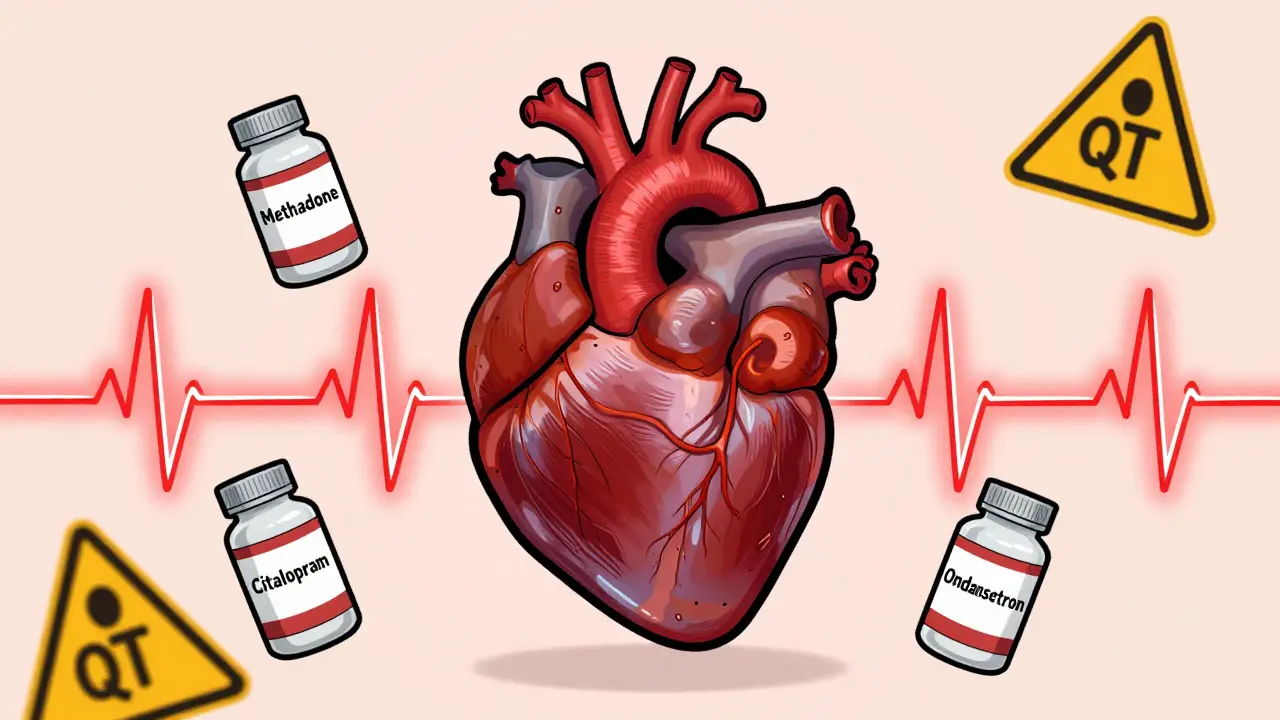
QT Prolongation Risk Assessment Tool
Risk Assessment Tool
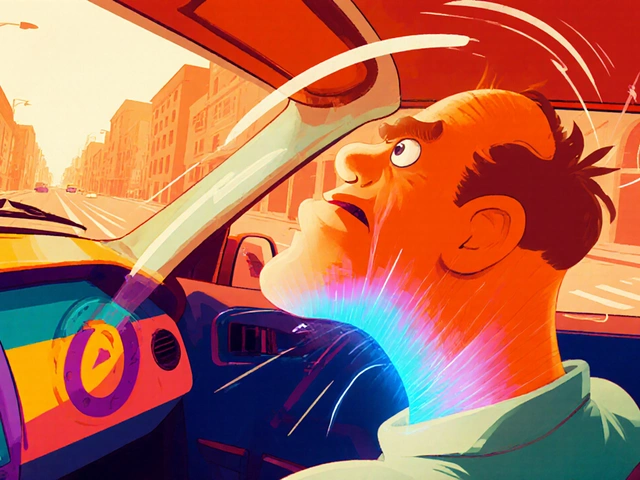
Every year, about 4 in every million women and 2.5 in every million men experience Torsades de Pointes - a chaotic, life-threatening heart rhythm triggered by common medications. Many of these patients had no warning. No chest pain. No dizziness. Just a sudden collapse. And in 1 in 5 cases, it’s fatal.
This isn’t rare. It’s preventable. And it’s happening right now in hospitals, clinics, and even at home because doctors and patients don’t know what to look for.
What Exactly Is Torsades de Pointes?
Torsades de Pointes (TdP) isn’t just any irregular heartbeat. It’s a specific kind of ventricular tachycardia where the QRS complexes on an ECG appear to twist around the baseline - like a ribbon spinning. It only happens when the heart’s electrical reset time - the QT interval - is stretched too long. That delay creates the perfect storm for random electrical sparks to fire off in the lower chambers of the heart.
These sparks don’t just cause palpitations. They can spiral into ventricular fibrillation - a state where the heart quivers uselessly instead of pumping blood. Without immediate treatment, brain damage starts in under a minute. Death follows quickly after.
The problem? Many people don’t feel anything until it’s too late. No warning signs. No fluttering. Just silence - then collapse.
Which Medications Cause QT Prolongation?
Over 200 medications can lengthen the QT interval. Some are obvious - like antiarrhythmics. Others? You’d never guess.
High-risk drugs include:
- Antibiotics: Erythromycin, clarithromycin, moxifloxacin
- Antifungals: Ketoconazole, voriconazole
- Antipsychotics: Haloperidol, thioridazine, ziprasidone
- Antidepressants: Citalopram, escitalopram (especially above 20 mg/day in older adults)
- Antiemetics: Ondansetron (especially doses over 16 mg IV)
- Opioid replacement: Methadone (risk jumps sharply above 100 mg/day)
Even azithromycin - often considered safer - carries a small but real risk, especially in older adults with heart disease. The FDA has reviewed these risks and still allows these drugs on the market because they work well. But that doesn’t mean they’re safe for everyone.
The CredibleMeds database classifies these drugs into three levels: Known Risk, Possible Risk, and Conditional Risk. The difference matters. A drug labeled Conditional Risk might only be dangerous if you’re low on potassium or have kidney problems. That’s where prevention starts.
Who’s Most at Risk?
It’s not just about the drug. It’s about the person taking it.
Women make up 70% of TdP cases - even though men get just as much QT prolongation from the same meds. Why? Hormones. Estrogen slows down the heart’s recovery phase, making repolarization more vulnerable.
Age is another huge factor. Two-thirds of cases happen in people over 65. Why? Kidneys and liver slow down. Drugs build up. Doses that were fine at 40 become dangerous at 70.
Electrolytes are the silent killers:
- Low potassium (< 3.5 mmol/L) triples your risk
- Low magnesium (< 1.6 mg/dL) nearly triples it too
- Low calcium? That adds fuel to the fire
Other red flags:
- Heart rate under 60 bpm (bradycardia)
- History of heart failure, heart attack, or structural heart disease
- Taking two or more QT-prolonging drugs at once
- Chronic kidney or liver disease
- Genetic long QT syndrome (even if undiagnosed)
One study found that 87% of people who had TdP had at least two of these risk factors. Most were never checked.
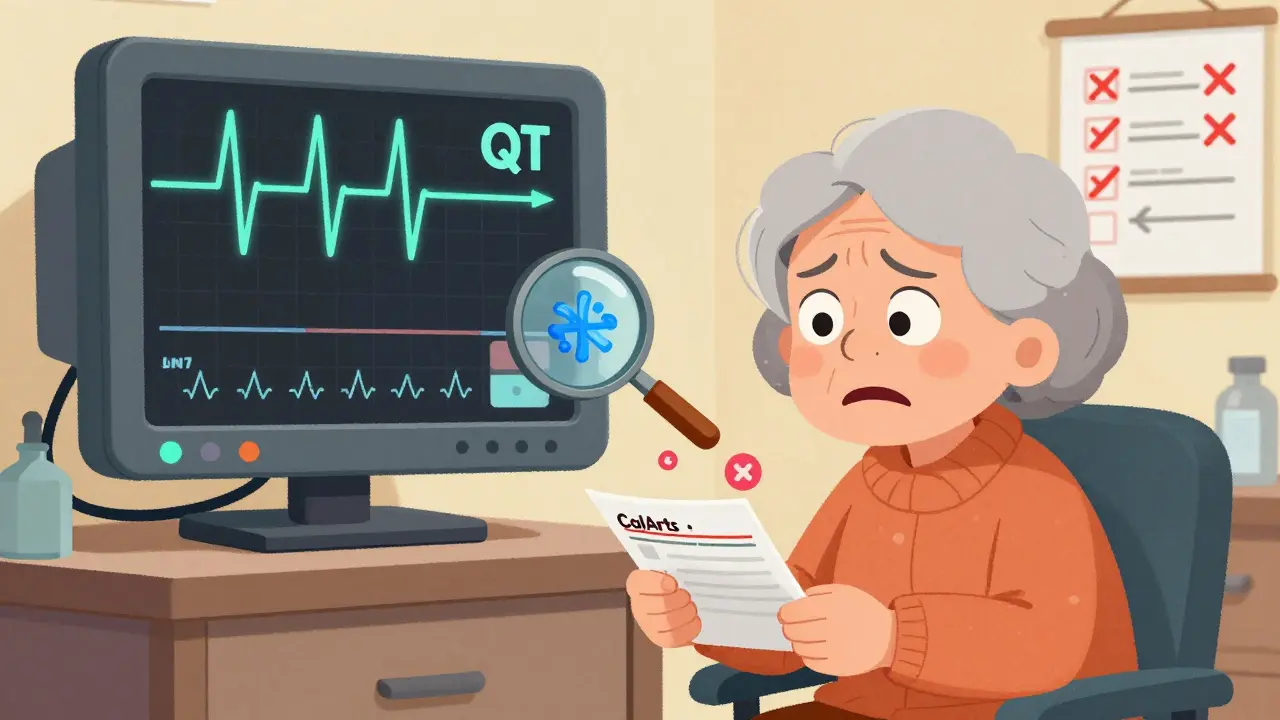
How Do You Spot It Before It’s Too Late?
The ECG is your best friend. But not all doctors check it.
A normal QTc (corrected QT) is under 450 ms in men and 460 ms in women. Anything over 500 ms? That’s a major warning sign. A jump of 60 ms or more from your baseline? Also dangerous.
Look for these ECG clues before TdP strikes:
- Long QT interval
- Prominent U waves (small humps after the T wave)
- Labile QT - the interval keeps changing beat to beat
- Short-long cycle pattern: a pause followed by a fast beat
These aren’t just academic details. They’re the early signs. If you see them, stop the drug. Check potassium. Check magnesium. Get a cardiologist involved.
And don’t wait for symptoms. Many patients never feel a thing until they faint.
How to Prevent Torsades de Pointes
Prevention isn’t complicated. It’s just not done often enough.
Here’s the 5-step plan used by top cardiac safety teams:
- Screen for inherited long QT: Use the Schwartz score - family history, unexplained fainting, ECG changes. If it’s high, avoid QT drugs entirely.
- Check your electrolytes: Get potassium and magnesium levels before starting high-risk meds. If low, correct them. Don’t just say ‘we’ll monitor.’ Fix them.
- Review every medication: Use CredibleMeds.org. If you’re on two or more QT-prolonging drugs, ask: Is this necessary? Can one be switched?
- Do a baseline ECG: Before starting citalopram, methadone, or ondansetron - get an ECG. Compare it later.
- Plan follow-up: For methadone above 100 mg/day, repeat ECG at 1 week and 4 weeks. For citalopram over 20 mg/day in seniors, repeat ECG in 2 weeks.
At the VA Healthcare System, following this plan cut TdP cases by 78% between 2018 and 2022. That’s not luck. That’s protocol.
And for drugs like ondansetron? Don’t give 16 mg IV. Give 8 mg. It’s just as effective. Safer too.
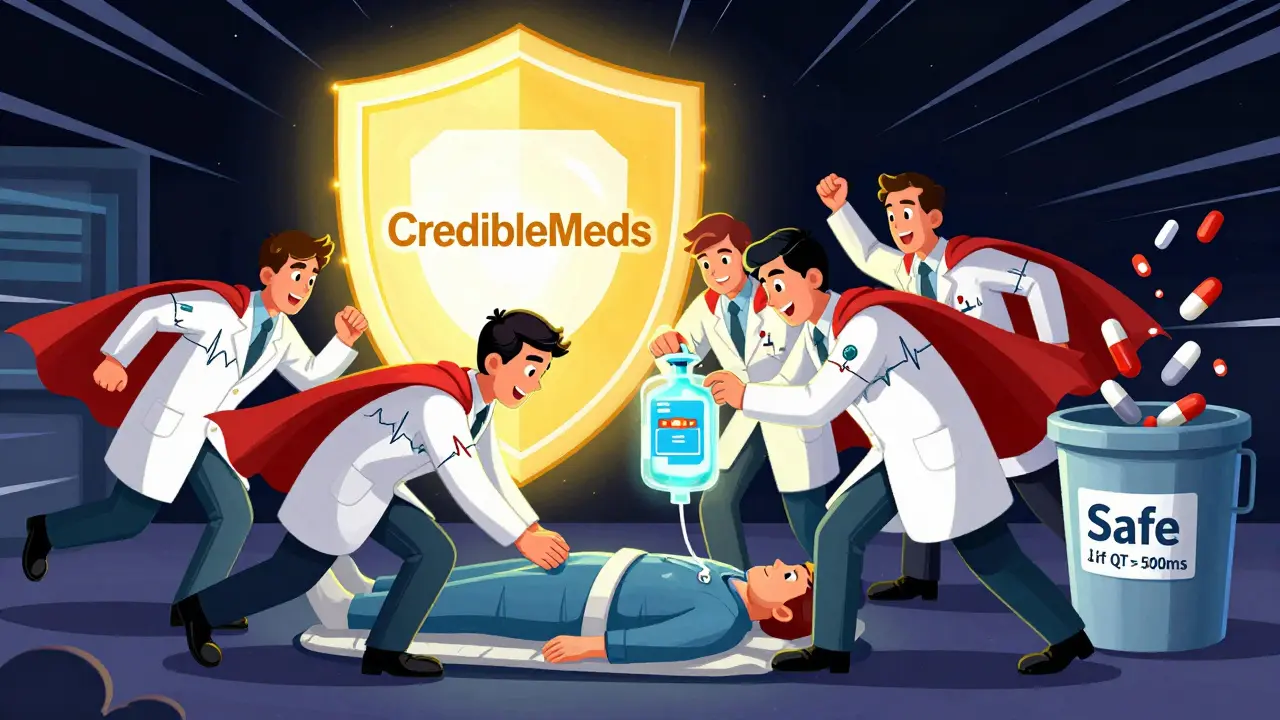
What to Do If TdP Happens
If someone goes into Torsades de Pointes, time is everything.
First: Give magnesium sulfate - 1 to 2 grams IV over 1 to 2 minutes. It works in 82% of cases. It’s cheap. It’s safe. Use it even if magnesium levels are normal.
Second: Speed up the heart. TdP thrives in slow rhythms. Temporary pacing to keep the heart rate above 90 bpm stops it in 76% of cases. If pacing isn’t available, give isoproterenol - a drug that makes the heart beat faster.
Third: Fix the electrolytes. Get potassium above 4.0 mmol/L. Get magnesium above 2.0 mg/dL. Keep them there.
And stop the drug. Immediately.
Defibrillation? Only if it turns into ventricular fibrillation. TdP often self-terminates. But don’t wait. Treat it like a medical emergency - because it is.
Why This Isn’t Just a Doctor’s Problem
Patients need to know too.
If you’re on methadone, citalopram, or even a strong antibiotic like clarithromycin, ask your doctor: “Could this affect my heart rhythm?”
Ask: “Have you checked my potassium and magnesium?”
Ask: “Can we do an ECG before I start this?”
Don’t assume it’s safe because it’s common. Don’t assume your doctor already checked. Most don’t.
The FDA now says: don’t avoid useful drugs. But do monitor them. That’s the new standard. And it’s working.
The Bigger Picture
Drug companies now spend over $1 million extra and add 6 to 8 months to development just to test for QT effects. That’s how seriously this is taken.
Thirty-seven drugs carry black box warnings. Twelve have been pulled from the market entirely - like terfenadine (Seldane), which killed people before anyone realized it was dangerous.
Now, machine learning models are being trained to predict TdP risk with 89% accuracy by combining age, sex, kidney function, ECG, and medication list. That’s the future - personalized risk, not one-size-fits-all.
But today? The solution is simple: check the ECG. Check the electrolytes. Check the meds. Don’t wait for collapse.
Torsades de Pointes is rare. But it’s deadly. And it’s avoidable. With the right checks, it doesn’t have to happen to anyone else.



Jacob Hill
January 18, 2026 AT 23:55Wow. This is one of those posts that makes you realize how many lives are quietly being lost because we assume 'common' means 'safe.' I’ve seen this in my ER shifts-patients on azithromycin and citalopram, no ECG, potassium at 3.2, and then-bam. Collapse. No warning. No screaming. Just silence. We need mandatory QT checks before prescribing anything on that list, especially for seniors. It’s not extra work-it’s basic safety.
Jackson Doughart
January 20, 2026 AT 01:03The clinical precision of this piece is commendable. One cannot overstate the importance of distinguishing between 'possible risk' and 'known risk'-a nuance often lost in clinical decision-making. The data from the VA system, particularly the 78% reduction in incidence, should be replicated nationally. Moreover, the emphasis on electrolyte correction prior to initiation, rather than as an afterthought, represents a paradigm shift in pharmacovigilance.
Tracy Howard
January 20, 2026 AT 03:58Of course Americans are still letting this happen. You people let Big Pharma write your prescriptions and then act shocked when people die. In Canada, we don’t hand out 16mg IV ondansetron like candy-we use 4mg, we check electrolytes, and we don’t prescribe methadone without a cardiologist’s sign-off. This isn’t rocket science. It’s basic medical ethics. Your system is broken because you trust corporations more than patients.
Valerie DeLoach
January 21, 2026 AT 17:09This is exactly the kind of education we need-not just for clinicians, but for patients too. I’m a nurse practitioner, and I’ve started handing out one-page handouts to every patient on citalopram or methadone: 'Check your potassium. Get an ECG. Ask if you’re on another QT drug.' Simple. No jargon. Just facts. One woman came back last month because she asked her pharmacist about her antibiotics-and he didn’t know they could cause torsades. We’re failing people when we assume they know to ask.
Christi Steinbeck
January 22, 2026 AT 04:57STOP WAITING FOR SOMEONE TO COLLAPSE. If you’re on any of these meds, especially if you’re over 60 or female-get an ECG. Now. Don’t wait for your next appointment. Walk into urgent care. Call your pharmacy. This isn’t hype. It’s survival. I’ve lost two patients to this. One was 72, on clarithromycin and citalopram. No one checked. No one asked. Don’t be that person. Don’t be that doctor. Act now.
Erwin Kodiat
January 22, 2026 AT 11:13Man, this is the kind of post I wish I’d seen before my grandma went into TdP. She was on methadone for chronic pain, had a history of kidney disease, and no one ever mentioned her heart. She just… stopped breathing one morning. I didn’t even know what Torsades was until I Googled it after. This should be required reading for every med student. And every patient over 50. Seriously. Share this everywhere.
Jake Rudin
January 24, 2026 AT 00:12It’s fascinating how we’ve engineered a system where we prioritize drug efficacy over safety-then act surprised when people die. The FDA’s stance-'don’t avoid useful drugs, just monitor'-isn’t a solution. It’s a cop-out. We’ve known about QT prolongation since the 90s. Why are we still using terfenadine-level risks in 2025? Because it’s cheaper than building better algorithms. And because no one’s holding anyone accountable.
Phil Hillson
January 25, 2026 AT 19:49So basically we’re saying don’t use any meds unless you’re rich enough to get 5 different tests before a prescription? That’s not prevention. That’s healthcare elitism. My uncle got a 3-day antibiotic for a sinus infection and now he’s dead because someone forgot to check his potassium? Yeah, that’s tragic. But now I’m supposed to avoid every drug because of one in a million odds? That’s fearmongering. Just let people live.
Aman Kumar
January 26, 2026 AT 07:50As a pharmacologist trained in Mumbai, I find this discussion dangerously Western-centric. In India, we don’t have the luxury of ECGs for every patient on citalopram. We rely on clinical judgment, not algorithmic checklists. The risk is real, yes-but so is the risk of undertreating depression in a population with 80% mental health care access gaps. You can’t export American protocols to resource-poor settings and call it 'prevention.' It’s colonial medicine.
Malikah Rajap
January 27, 2026 AT 02:42Can we just pause for a second and realize how many people are dying because we treat medicine like a checklist instead of a relationship? I’m not just talking about potassium levels or ECGs-I’m talking about the fact that no one sat with my aunt and said, 'Hey, this drug might mess with your heart, and I’m going to help you stay safe.' We’ve lost the human part. The care part. The 'I see you' part. The tech is great. But the heart? That’s what saves lives.