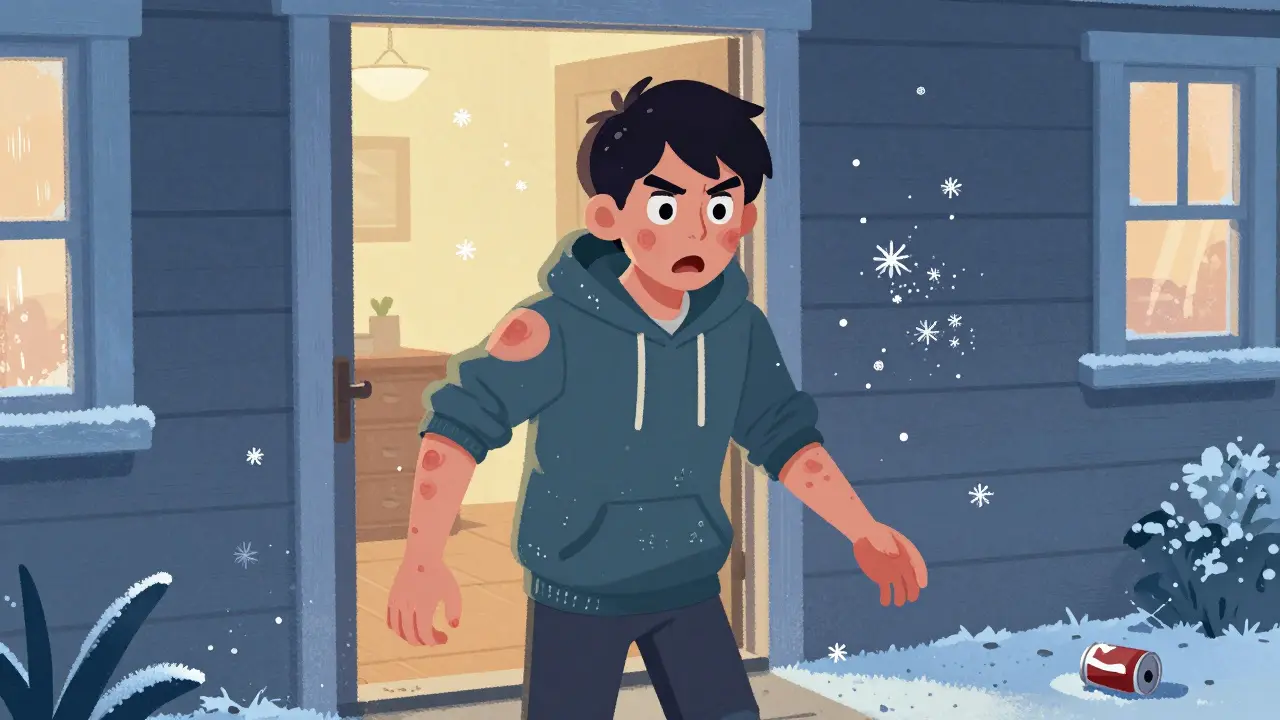
Imagine stepping out into a chilly morning, grabbing a cold soda, or swimming in a lake - and within minutes, your skin breaks out in angry, itchy welts. It’s not a rash from laundry detergent or an allergic reaction to pollen. It’s cold-induced urticaria - a rare but real condition where your body overreacts to cold temperatures, triggering hives, swelling, and sometimes life-threatening symptoms.
What Exactly Is Cold-Induced Urticaria?
Cold-induced urticaria (CU) is a type of physical urticaria - meaning your hives are triggered by a physical stimulus, not an allergen like peanuts or pet dander. In this case, the trigger is cold. It could be cold air, cold water, a cold drink, or even holding an ice cube. Your skin reacts by releasing histamine and other chemicals from mast cells, causing red, itchy bumps (hives) and swelling. Symptoms usually show up within 5 to 30 minutes after cold exposure and fade within an hour as your skin warms up again.
This isn’t just a minor annoyance. About 0.05% of people have it, and most cases start between ages 18 and 25. For most, there’s no clear cause - it just happens. But in rare cases, it’s tied to infections, blood disorders, or even inherited conditions like familial cold autoinflammatory syndrome (FCAS), which requires completely different treatment.
How Do You Know It’s Cold Urticaria?
The classic sign? Hives that appear only after cold exposure. But it’s more specific than that. People with CU often notice:
- Itchy, raised red welts on skin touched by cold - like your hands after holding a cold can or your lips after eating ice cream
- Swelling of the lips or tongue after cold drinks or foods
- Redness and swelling that gets worse during rewarming, not while you’re still cold
- Headaches, dizziness, or a racing heart after full-body exposure, like swimming in cold water
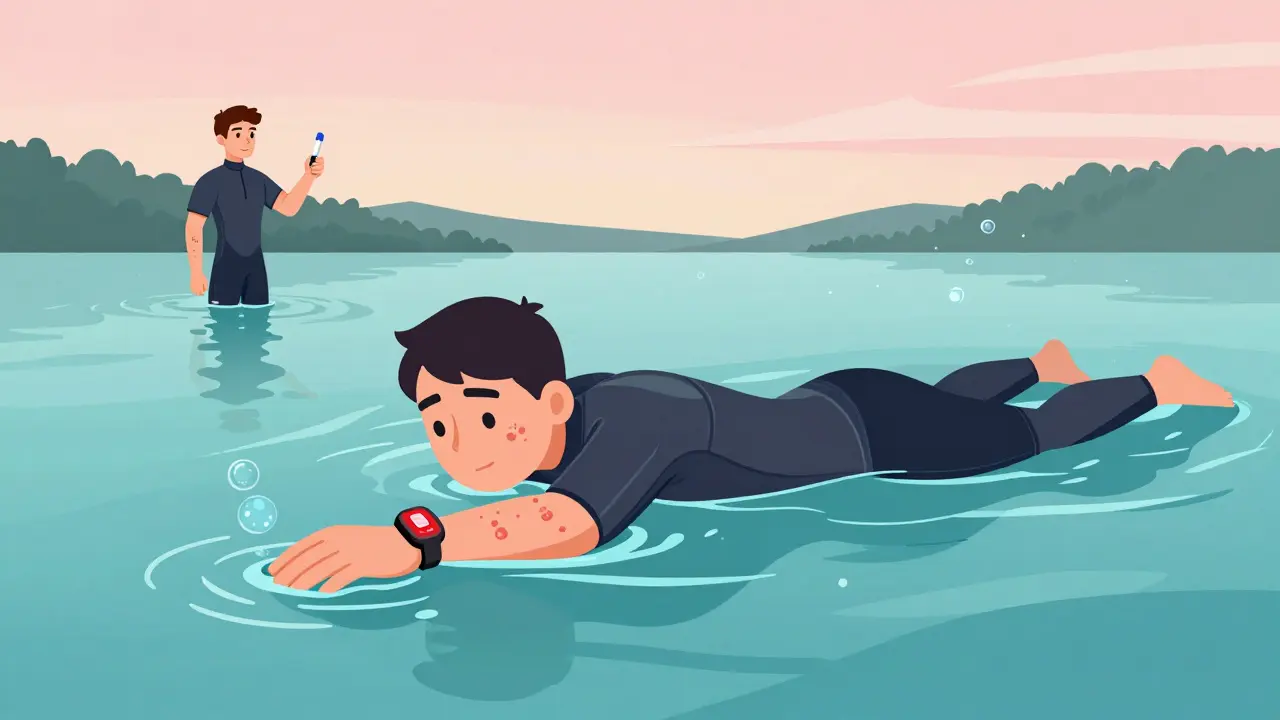
One of the most dangerous scenarios? Swimming in cold water. There are documented cases of people fainting underwater and drowning because their entire body reacted at once. That’s why this isn’t something to ignore.
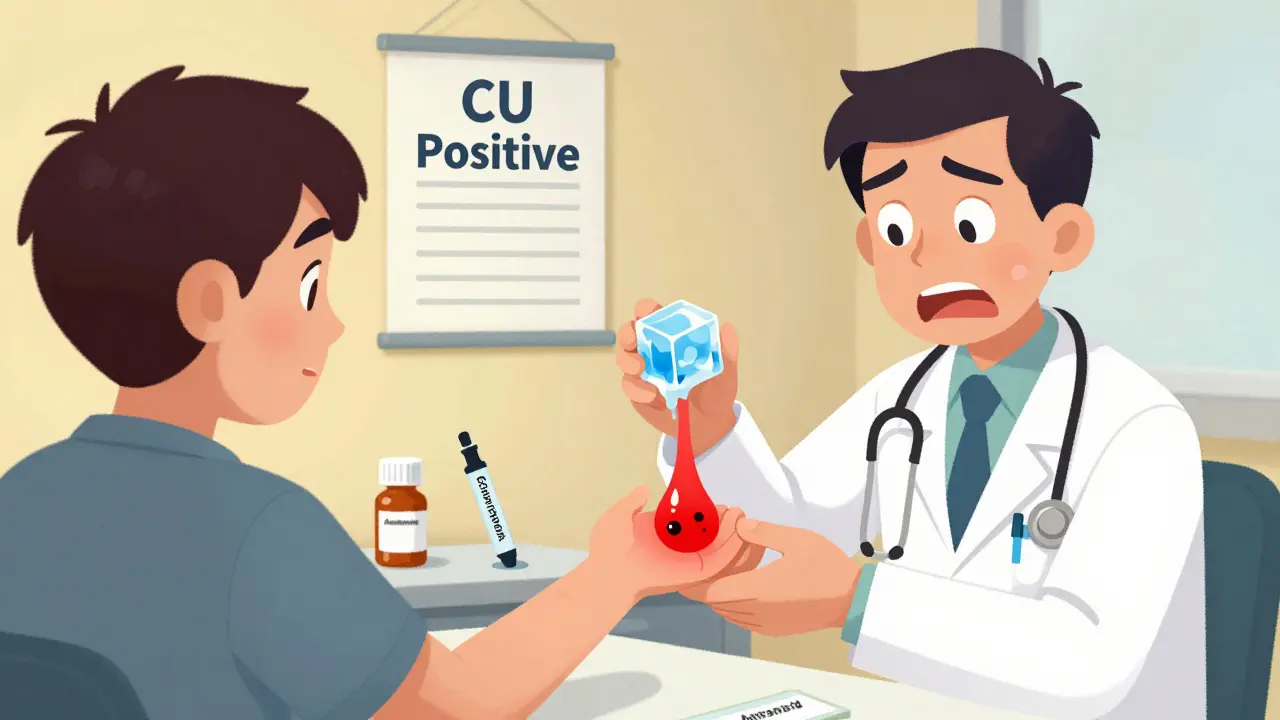
Doctors diagnose it with a simple test: the ice cube test. An ice cube is taped to the forearm for 5 minutes. If a red, swollen bump forms within 10 minutes after removing the ice, it’s positive for CU. This test is 98% accurate for acquired cases. Blood tests might be done to rule out underlying conditions like cryoglobulinemia or infections.
What Triggers the Reaction - And How Cold Is Too Cold?
There’s no universal temperature that triggers CU. Some people react to air as warm as 20°C (68°F). Others only break out when they touch ice or jump into a chilly pool. Your threshold is personal - and it can change over time.
Common triggers include:
- Swimming in water below 20°C (68°F)
- Drinking ice-cold beverages or eating frozen desserts
- Walking outside in winter without gloves or a scarf
- Using a cold pack or holding a chilled drink
- Going from a warm room into an air-conditioned space
Even sweat can trigger a reaction if it cools quickly on your skin. That’s why layering up with moisture-wicking fabrics helps - it keeps your skin dry and reduces sudden temperature drops.
Treatment: From Antihistamines to Emergency Gear
There’s no cure for cold-induced urticaria - but there are effective ways to manage it.
First-line treatment: Non-sedating antihistamines like cetirizine (Zyrtec), loratadine (Claritin), or desloratadine (Clarinex). Many people need higher doses - up to four times the standard - to get control. For example, 40mg of cetirizine daily is a common prescription for CU patients who don’t respond to 10mg.
If antihistamines aren’t enough, the next step is omalizumab (Xolair), a monthly injection originally for asthma and chronic hives. Clinical trials show it works for 60-70% of CU patients who don’t respond to antihistamines.
For those with severe reactions - especially those who’ve had swelling in the throat or fainting - carrying an epinephrine autoinjector (EpiPen) is critical. Your doctor will train you on when to use it: if you feel your throat closing, your chest tightens, or you get dizzy after cold exposure.
There’s also berotralstat (Orladeyo), a newer drug approved for hereditary angioedema, now showing 58% symptom reduction in CU patients who didn’t respond to omalizumab. And for the rare genetic form (FCAS), drugs like anakinra (Kineret) that block interleukin-1 are life-changing.
Living With Cold Urticaria: Practical Tips
Managing this condition isn’t just about pills - it’s about changing habits.
- Test before you swim: Dip one hand in cold water for 5 minutes. If your skin reacts, don’t go in. This simple step prevents 85% of serious aquatic reactions.
- Avoid ice-cold foods and drinks: Even a spoonful of ice cream can cause lip swelling. Stick to room-temperature beverages.
- Dress smart: Wear moisture-wicking base layers under sweaters and coats. This reduces sweat cooling on your skin - a hidden trigger.
- Use a cold alert device: Wearables like the Cold Alert sensor can notify you when ambient temperatures drop below your personal threshold. In a 2022 trial, they were 92% accurate.
- Track your symptoms: Apps like Urticaria Tracker help you log triggers and symptoms. Users report 30% better control by spotting patterns.
For medical procedures - even a routine dental cleaning - tell your provider you have CU. Operating rooms must be kept above 21°C (70°F), and IV fluids need to be warmed. Anesthesia teams need to be prepared.
Can It Go Away?
Yes - and that’s the good news. About 35% of people with cold urticaria see their symptoms disappear within five years. The odds are higher if it started suddenly (acute onset) rather than creeping in over time. Some patients even report spontaneous remission after a few years of avoiding triggers and staying on medication.
But don’t assume it’s gone until you’ve been symptom-free for at least a year. A single cold exposure can bring it back.
What’s on the Horizon?
Research is moving fast. Trials are testing low-dose naltrexone, which reduced symptoms by 45% in early studies. Other researchers are refining cold desensitization - slowly exposing patients to colder temperatures over weeks to build tolerance. So far, 70% of participants stick with it, and many report fewer reactions.
Genetic studies have found mutations in the PLCG2 gene linked to familial cold autoinflammatory syndrome. That’s led to targeted treatments that work where antihistamines fail.
And while cold urticaria is rare, it’s not rare enough to be ignored. With better awareness, better tools, and better treatments, people with this condition can live full, active lives - even in chilly Auckland winters.
Can cold-induced urticaria be cured?
There’s no known cure, but many people experience spontaneous remission within 5 years. For others, symptoms can be controlled with medication, lifestyle changes, and avoiding triggers. Some cases, especially those linked to genetics, require targeted therapies like anakinra.
Is cold urticaria dangerous?
Yes, in severe cases. Full-body exposure - like swimming in cold water - can trigger anaphylaxis, causing fainting, airway swelling, or cardiac issues. There have been fatal drownings linked to sudden reactions underwater. Carrying an EpiPen and avoiding cold water immersion are critical safety steps.
Can I still swim if I have cold urticaria?
You can, but only with extreme caution. Never swim alone. Always test your reaction by dipping one hand in the water first. Avoid water below 20°C (68°F). Wear a wetsuit to reduce skin exposure. And always have someone nearby who knows how to use an EpiPen.
Do antihistamines work for everyone?
No. About half of patients get good control with standard doses. Many need higher doses (up to 40mg of cetirizine daily). If that doesn’t work, omalizumab or berotralstat are next steps. Some also benefit from adding leukotriene blockers like montelukast.
Can I outgrow cold-induced urticaria?
Yes. About 35% of people see their symptoms fade within five years, especially if it started suddenly. Those with inherited forms or long-standing chronic cases are less likely to outgrow it. Regular check-ins with an allergist help track progress.
Should I avoid cold weather entirely?
Not necessarily. You don’t need to live in a heated bubble. Layering up, using moisture-wicking fabrics, and limiting direct skin exposure to cold air can reduce reactions by 60-70%. Many people with CU live normally in cold climates - they just plan ahead.



Stephen Rock
January 21, 2026 AT 05:37Amber Lane
January 22, 2026 AT 07:20Andrew Rinaldi
January 23, 2026 AT 20:34Gerard Jordan
January 24, 2026 AT 03:21Samuel Mendoza
January 24, 2026 AT 19:03Glenda Marínez Granados
January 26, 2026 AT 08:44Coral Bosley
January 28, 2026 AT 05:37MAHENDRA MEGHWAL
January 28, 2026 AT 23:18Dee Monroe
January 30, 2026 AT 22:57Ben McKibbin
January 31, 2026 AT 17:49Melanie Pearson
February 2, 2026 AT 12:48Rod Wheatley
February 3, 2026 AT 15:06