
QT Prolongation Risk Estimator
1. Select Antibiotic
2. Patient Risk Factors
Select all that apply:
3. Concurrent Medications
Are you currently taking any of the following?
Risk Assessment
Recommendations
- • Inform your doctor of this assessment.
- • Monitor for symptoms like dizziness or palpitations.
It is a common scene in clinics across the country: a patient walks in with a respiratory infection, and the doctor prescribes azithromycin, a widely trusted antibiotic. For millions of people, this medication clears up infections quickly and safely. But for a specific group of patients, this routine prescription can trigger a dangerous chain reaction in the heart. When macrolide antibiotics mix with other medications that affect heart rhythm, or when a patient has underlying heart conditions, the result can be QT prolongation, an electrical disturbance that increases the risk of life-threatening arrhythmias like Torsades de Pointes (TdP). This is not just theoretical medical jargon; it is a real safety concern documented by major health organizations. The American Heart Association and the FDA have issued warnings about these interactions. Yet, because macrolides are so commonly prescribed, many patients and even some healthcare providers overlook the subtle signs of risk. Understanding how these drugs interact with your heart’s electrical system is crucial for preventing serious complications.
How Macrolides Affect Your Heart Rhythm
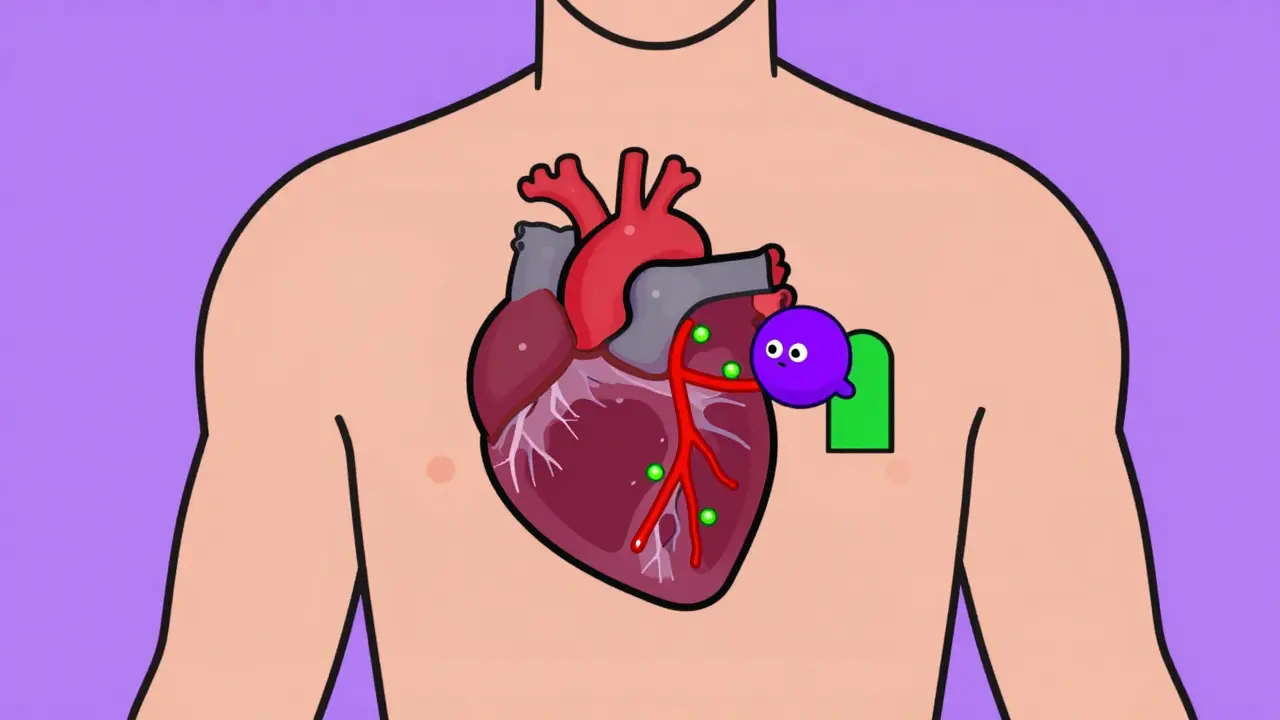
To understand the risk, you first need to know how your heart beats. Every heartbeat is driven by an electrical signal that travels through your heart muscle. This signal relies on tiny channels in your heart cells that let potassium move in and out. One specific channel, known as the IKr potassium channel (encoded by the HERG gene), is responsible for resetting the heart muscle after each beat, allowing it to prepare for the next contraction.Macrolide antibiotics, including azithromycin, clarithromycin, and erythromycin, can block these IKr channels. When these channels are blocked, potassium cannot leave the heart cells fast enough. This delays the reset process, stretching out the time between heartbeats. On an electrocardiogram (ECG), this delay shows up as a longer QT interval. If the QT interval becomes too long, the heart muscle can become irritable. Instead of beating normally, it may start quivering or fluttering uncontrollably. This chaotic rhythm is called Torsades de Pointes (TdP). TdP can lead to fainting, seizures, or sudden cardiac arrest if not treated immediately.
The risk is concentration-dependent. Intravenous (IV) administration of macrolides delivers a higher dose directly into the bloodstream, creating a greater peak concentration than oral pills. This means IV treatments carry a higher immediate risk of triggering these electrical changes compared to standard oral doses.
Not All Macrolides Are Equal
While all macrolides carry some risk, they do not all pose the same threat. Clinical data and pharmacological studies show distinct differences among the three most common types:- Clarithromycin: This drug carries the highest arrhythmia risk. It is a potent blocker of the IKr channel and also inhibits liver enzymes (CYP3A4) that break down other drugs. This dual action means clarithromycin not only affects the heart directly but can also raise the levels of other QT-prolonging drugs in your body, compounding the danger. Studies show it has a relative risk of 2.16 for QT prolongation compared to non-macrolide antibiotics.
- Azithromycin: Often considered safer, azithromycin does not significantly inhibit CYP3A4 enzymes. However, it still blocks IKr channels directly. Early studies suggested it was risk-free, but large observational data, such as the Ray et al. study published in the New England Journal of Medicine, indicated an increased risk of cardiovascular events in high-risk patients. The absolute risk remains low for healthy individuals, but it is not zero.
- Erythromycin: This older macrolide shows intermediate cardiac risk but is often limited by gastrointestinal side effects. It shares similar mechanisms with clarithromycin regarding enzyme inhibition, making drug interactions a significant concern.
Interestingly, newer antibiotics like solithromycin were developed specifically to avoid this issue. Clinical trials showed solithromycin had no significant QT-prolonging effects, proving that structural modifications can mitigate this risk. However, solithromycin faced regulatory hurdles due to other safety concerns, leaving the traditional macrolides as the primary options for many infections.
| Antibiotic | IKr Blockade Potency | CYP3A4 Inhibition | Relative Arrhythmia Risk |
|---|---|---|---|
| Clarithromycin | High | Strong | Highest (RR 2.16) |
| Erythromycin | Moderate-High | Moderate | Intermediate |
| Azithromycin | Moderate | Minimal | Lower (RR 1.77) |
Who Is at Highest Risk?
For a healthy young adult with no other medical issues, the risk of developing Torsades de Pointes from a course of macrolides is extremely low-estimated at less than 1 in 100,000 patients. However, this risk skyrockets when certain factors are present. Research by Schinkel et al. found that patients with pre-existing QT prolongation face a more than 24-fold increase in risk.You should be particularly cautious if you fall into one of these high-risk categories:
- Female Sex: Women naturally have slightly longer QT intervals than men and are 2 to 3.5 times more likely to develop TdP.
- Age Over 65: Older adults often have reduced kidney function, which can cause drugs to build up in the body, and are more likely to take multiple medications.
- Electrolyte Imbalances: Low levels of potassium (hypokalemia) or magnesium (hypomagnesemia) destabilize the heart’s electrical system. Hypokalemia alone can increase the risk by 3.1 times.
- Structural Heart Disease: Conditions like heart failure or previous heart attacks weaken the heart muscle and make it more susceptible to rhythm disturbances.
- Concurrent Medications: Taking other drugs that prolong the QT interval is the most dangerous combination. This includes certain antiarrhythmics, antipsychotics, antidepressants, and antifungal agents.
- Genetic Predisposition: Some people are born with Long QT Syndrome, a genetic condition that makes them highly vulnerable to triggered arrhythmias. For these individuals, the risk multiplier can be as high as 10 times.
The Danger of Drug Interactions
The most critical aspect of this topic is not just the macrolide itself, but what else is in your medicine cabinet. Macrolides, especially clarithromycin and erythromycin, interfere with the liver’s ability to process other drugs. They block the CYP3A4 enzyme, which acts like a trash compactor for many medications. When this enzyme is blocked, other drugs stay in your system longer and at higher concentrations.If you are taking another QT-prolonging drug, adding a macrolide can push the total effect over the safety threshold. Common culprits include:
- Antiarrhythmics: Such as amiodarone, sotalol, and dofetilide.
- Antipsychotics: Including haloperidol, ziprasidone, and thioridazine.
- Antidepressants: Certain tricyclic antidepressants and citalopram.
- Antifungals: Like ketoconazole and fluconazole.
- Methadone: Used for pain management and opioid addiction treatment.
A 2022 study in JAMA Internal Medicine highlighted the scale of this problem, finding that 42% of macrolide prescriptions in cardiac patients involved concurrent use of another QT-prolonging drug. This polypharmacy scenario creates a perfect storm for arrhythmia. Even azithromycin, which doesn’t inhibit CYP3A4 strongly, still adds its own direct QT-prolonging effect to the mix, creating additive toxicity.

Practical Steps for Safe Prescribing
So, how do doctors navigate this risk? The American Heart Association recommends a structured approach to ensure patient safety without denying necessary antibiotic treatment.- Screen for Risk Factors: Before prescribing, check the patient’s history. Look for female sex, age over 65, heart disease, and electrolyte issues. Review current medications carefully using resources like the CredibleMeds database, which lists drugs with known QT risks.
- Check Baseline ECG: For high-risk patients, a baseline electrocardiogram is essential. A QTc interval greater than 450 ms in men or 470 ms in women is a red flag. If the QTc is already prolonged, avoid macrolides entirely.
- Monitor Electrolytes: Ensure potassium and magnesium levels are within normal ranges before starting treatment. Correcting these imbalances can significantly reduce arrhythmia risk.
- Consider Alternatives: If the risk is high, choose a different antibiotic. Doxycycline is a popular alternative for respiratory infections with minimal cardiac risk. Respiratory fluoroquinolones are another option, though they also carry some QT risk, so they require careful selection.
- Use Decision Support Tools: Many electronic health records now include alerts for QT-prolonging combinations. Healthcare systems like Kaiser Permanente have seen a 28% reduction in high-risk prescriptions after implementing these digital safeguards.
For moderate-risk patients, such as an elderly person with one additional risk factor, monitoring is key. Regular checks of potassium and magnesium levels during the course of treatment can catch problems early. The QT Risk Score Calculator, developed by the University of Arizona, offers a validated way to quantify this risk, helping clinicians decide when to switch therapies.
What Patients Should Know
As a patient, you play a vital role in your own safety. Never assume that a "common" antibiotic is safe for you without context. Here is what you can do:- Disclose All Medications: Tell your doctor about every pill you take, including over-the-counter drugs, supplements, and herbal remedies. Many people forget that certain cold medicines or antacids can interact with antibiotics.
- Ask About Heart History: If you have ever been told you have an irregular heartbeat, long QT syndrome, or heart failure, mention it explicitly before accepting any new prescription.
- Watch for Symptoms: While rare, symptoms of Torsades de Pointes can include dizziness, lightheadedness, fainting, or palpitations (a feeling of your heart racing or skipping beats). If you experience these while taking a macrolide, seek medical attention immediately.
- Request an Alternative if Concerned: If you know you are at high risk, ask your doctor, "Is there a non-QT-prolonging antibiotic option for my infection?" Most clinicians will appreciate your proactive approach and will consider alternatives like doxycycline.
The goal is not to fear macrolides, but to respect their power. These drugs save lives by fighting serious bacterial infections. By understanding the specific risks associated with QT prolongation and taking simple preventive steps, we can continue to benefit from their therapeutic effects while keeping our hearts safe.
Can azithromycin cause heart problems?
Yes, azithromycin can cause heart problems, specifically QT prolongation, which increases the risk of a dangerous arrhythmia called Torsades de Pointes. However, the risk is generally low for healthy individuals. The risk increases significantly if you have existing heart conditions, electrolyte imbalances, or are taking other medications that also prolong the QT interval.
Which macrolide has the highest risk of arrhythmia?
Clarithromycin has the highest risk of causing arrhythmias among macrolides. It strongly blocks the IKr potassium channels in the heart and also inhibits liver enzymes (CYP3A4), which can increase the levels of other QT-prolonging drugs in your body. Azithromycin has a lower risk, while erythromycin falls in between.
What are the symptoms of QT prolongation?
QT prolongation itself often has no symptoms and is detected via an ECG. However, if it progresses to Torsades de Pointes, symptoms may include dizziness, lightheadedness, fainting (syncope), palpitations, or sudden collapse. If you experience these symptoms while taking a QT-prolonging drug, seek emergency medical care immediately.
Are there safer antibiotic alternatives to macrolides?
Yes, several antibiotics have minimal or no risk of QT prolongation. Doxycycline is a common alternative for respiratory and skin infections with a very favorable cardiac safety profile. Other options depending on the infection type include cephalosporins (like cefdinir) or penicillins (like amoxicillin), provided the bacteria are sensitive to them.
Should I get an ECG before taking azithromycin?
For most healthy people, a baseline ECG is not required before taking azithromycin. However, if you are over 65, female, have a history of heart disease, electrolyte imbalances, or are taking other QT-prolonging medications, an ECG is recommended to assess your baseline QT interval and ensure it is safe to proceed with treatment.



dane thorp
May 28, 2026 AT 01:29I've been tracking my own QT intervals since my last cardiac checkup, and this article highlights exactly why that diligence matters. It is not paranoia to read the fine print on antibiotic prescriptions when you have a history of arrhythmia.
Frank Arlyss
May 29, 2026 AT 11:22Why do doctors still prescribe azithromycin like it's candy? I had a fainting spell last year after taking it with my antidepressants, and my GP just shrugged it off as 'dehydration.' This negligence is unacceptable and frankly terrifying for anyone who knows what Torsades de Pointes actually looks like.
Michael Schurmann
May 31, 2026 AT 01:19The distinction between clarithromycin and azithromycin regarding CYP3A4 inhibition is often glossed over in general medical advice. Clarithromycin is a potent inhibitor, creating a pharmacokinetic trap that elevates serum concentrations of co-administered drugs. Azithromycin lacks this specific enzymatic interference, which explains its comparatively safer profile despite both being macrolides. The data supports avoiding clarithromycin in polypharmacy scenarios entirely.
Christina Mitchell
May 31, 2026 AT 04:55It is wonderful to see more awareness around these interactions. Knowledge really is power when it comes to our health. I always make sure to bring a full list of my supplements to appointments because even natural remedies can interact with medications. Let's keep sharing this information so everyone stays safe!
Christopher Laver
May 31, 2026 AT 13:09Boring stuff. Just take the pill and hope for the best.
Russell Russell
June 2, 2026 AT 07:39Let us look at the bigger picture here. Understanding the mechanism of IKr channel blockade empowers patients to advocate for themselves. If you are over sixty-five or female, your baseline risk is higher. Do not hesitate to ask for an ECG if you feel uneasy. Your heart rhythm is vital, and proactive monitoring can prevent catastrophic outcomes. We must treat our bodies with respect and curiosity.
Naresh Chandra
June 4, 2026 AT 07:20I completely agree with the emphasis on electrolyte balance.;; Hypokalemia and hypomagnesemia are silent killers in this context.;; Many patients do not realize that diuretics can lower potassium levels significantly.;; It is crucial to monitor these levels regularly.;; Thank you for bringing this important topic to light.;;
Cyburg Adeoye
June 5, 2026 AT 04:59This is a critical discussion point for clinical pharmacology.;; The synergistic effect of multiple QT-prolonging agents creates a perfect storm for arrhythmogenesis.;; As healthcare providers, we must utilize decision support tools rigorously.;; Polypharmacy is rampant in geriatric care, and the margin for error is slim.;; We need to prioritize patient safety above convenience.;;
Joseph Teichman
June 5, 2026 AT 11:18u should def ask ur doc about doxy instead. its way safer for the heart. i made that switch and felt much better. no more weird palpitations.
Angela Niculescu
June 6, 2026 AT 22:29I disagree with the panic here. Millions of people take azithromycin without issue. The absolute risk is tiny. You are scaring people unnecessarily by focusing on the outliers rather than the norm. Most healthy young adults will never experience TdP from a standard course.
Victoria Mangiapane
June 7, 2026 AT 10:57Oh please, spare me the doom and gloom. I've taken antibiotics for years and I'm fine. Doctors know what they're doing, unlike some internet armchair experts trying to diagnose everything. It's exhausting how everyone thinks they're smarter than their physician now.
Nivetha Narayanan
June 7, 2026 AT 21:49hey guys! just wanted to say thanks for the info. im always worried about side effects but this helps put things in perspective. gotta love learning new stuff! keep it chill tho :)
Gary Helminiak
June 8, 2026 AT 01:40As a pharmacist, I see this interaction play out weekly. 😟 The CredibleMeds database is an invaluable resource that every clinician should bookmark. When a patient presents with a respiratory infection and is already on methadone or certain antipsychotics, the choice of antibiotic becomes a critical safety decision. Doxycycline or a cephalosporin are excellent alternatives that bypass the QT prolongation risk entirely. Always double-check the drug-drug interaction profile before dispensing. 💊❤️