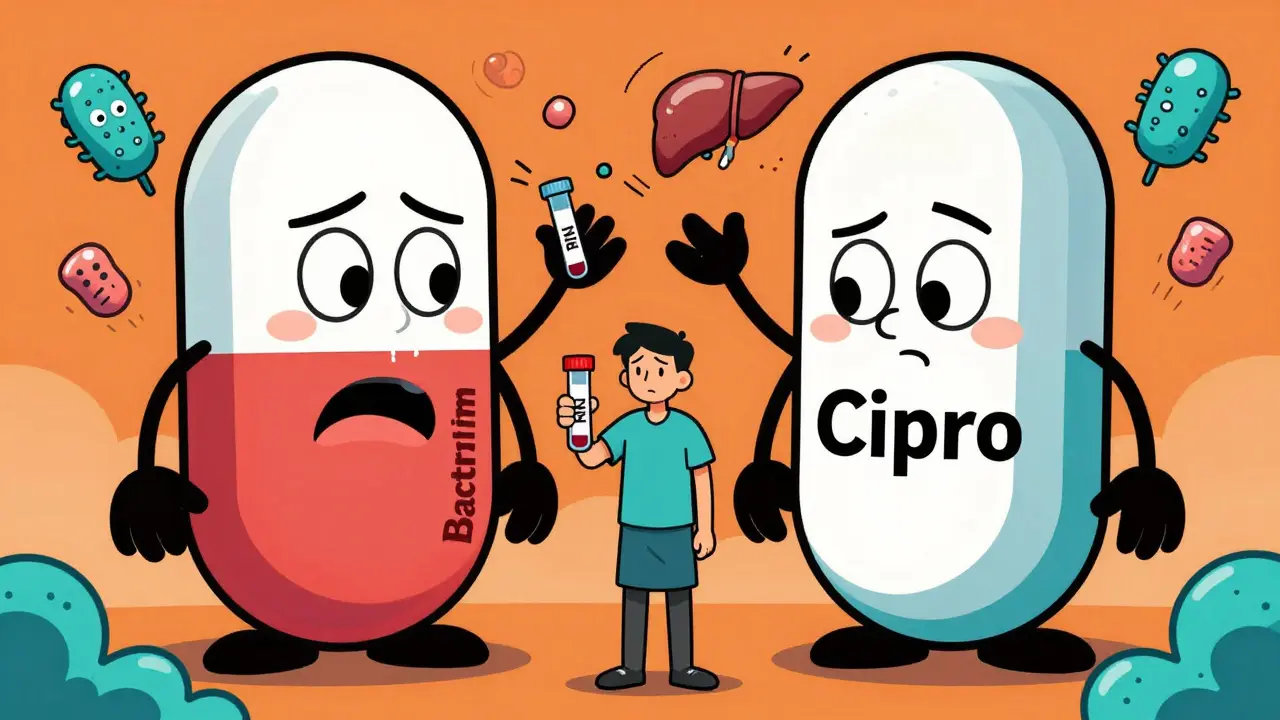
Warfarin-Antibiotic Interaction Checker
Check Antibiotic Interaction Risks
Interaction Results
This tool provides general guidance. Always consult your healthcare provider for personalized advice.
Critical Safety Information
Signs of bleeding: unusual bruising, pink/red urine, nosebleeds that won't stop, dark or bloody stools. Contact your doctor immediately if these occur.
When you're on warfarin, even a simple course of antibiotics can throw your blood thinning off balance. It's not rare - about one in five people taking warfarin end up on antibiotics each year. And when they do, their INR - the number that tells doctors how thin their blood is - can spike dangerously high. That spike means a higher risk of bleeding, sometimes severe enough to land someone in the hospital. But here's the thing: it doesn't have to be scary. With the right monitoring and a clear understanding of which antibiotics are risky, you can stay safe without stopping either medication.
Why Warfarin and Antibiotics Don't Play Nice
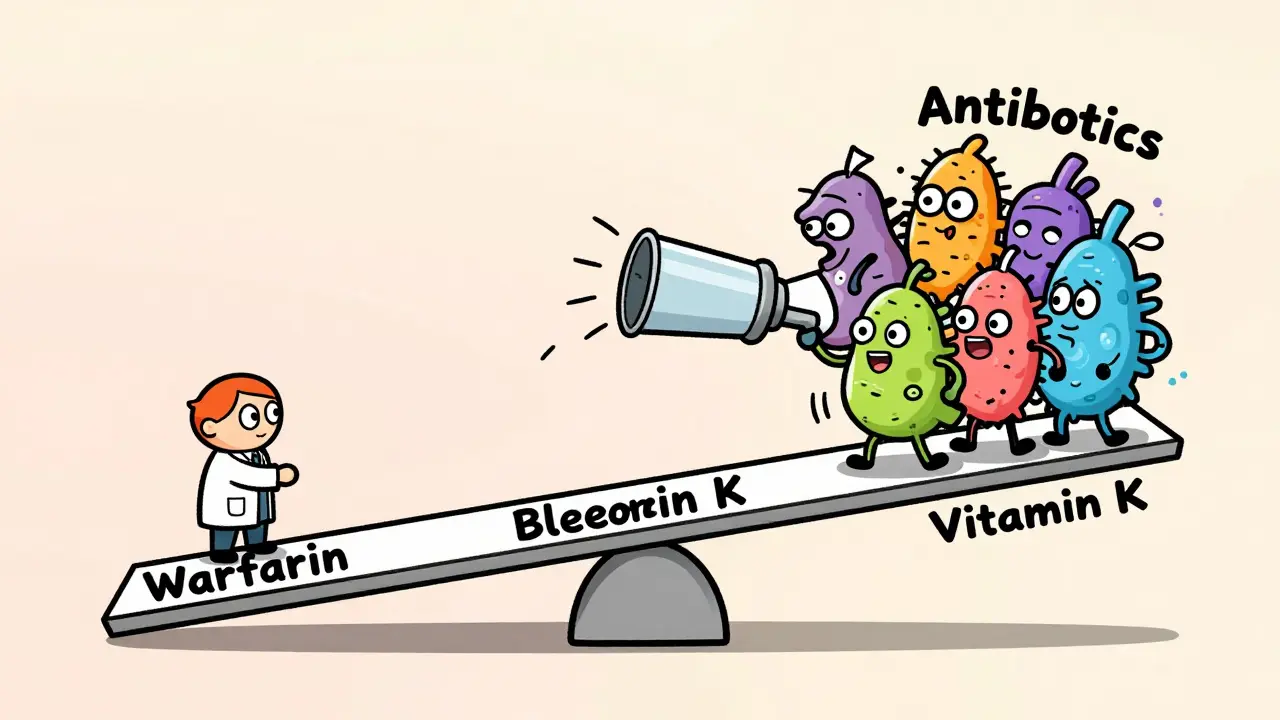
Warfarin works by blocking vitamin K, which your body needs to make clotting factors. But vitamin K doesn't just come from your food. About 10-15% of it is made by bacteria in your gut. When antibiotics kill off those bacteria, your body suddenly has less vitamin K. That means warfarin works harder than usual - and your blood thins too much. There's another layer: your liver. Warfarin is broken down by enzymes called CYP2C9. Some antibiotics block these enzymes, so warfarin builds up in your system. This is especially true for drugs like trimethoprim-sulfamethoxazole (Bactrim), ciprofloxacin, and erythromycin. These can double or even triple the amount of active warfarin in your blood within days. Then there's rifampin - the odd one out. Instead of blocking warfarin, it speeds up its breakdown. If you start rifampin while on warfarin, your INR might drop. That means your blood could start clotting again, which is just as dangerous as bleeding. You need to watch for this too.Not All Antibiotics Are Created Equal
Some antibiotics are high-risk. Others? Not so much. Knowing the difference matters.- High-risk: Trimethoprim-sulfamethoxazole (Bactrim), fluconazole. These can push your INR up by more than 1.5 units in most people. For many, this means cutting your warfarin dose by 25-50% - sometimes even skipping a dose. Bactrim alone has been linked to more than three times the risk of serious bleeding.
- Moderate-risk: Ciprofloxacin, levofloxacin, amoxicillin, azithromycin (in some cases), ceftriaxone. These usually raise INR by 0.5-1.5 units. A 10-25% warfarin reduction may be needed, but not always. Your doctor will decide based on your history.
- Low-risk: Clindamycin, azithromycin (in most cases). These rarely affect INR. In fact, dentists often choose clindamycin for patients on warfarin because it’s the safest bet.
It’s not about avoiding antibiotics. It’s about knowing which ones to watch for. A 2023 review found that nearly all broad-spectrum antibiotics disrupt gut bacteria - but only a few directly interfere with liver enzymes. That’s why some drugs are riskier than others.
When to Check Your INR
Don’t wait for bruising or nosebleeds. By then, it might be too late.- For high-risk antibiotics like Bactrim or fluconazole: Check your INR within 3-5 days of starting the antibiotic. Many patients need a dose reduction before the first check.
- For moderate-risk antibiotics like ciprofloxacin or amoxicillin: Check at 5-7 days. If your INR is rising, your dose may need a small tweak.
- For low-risk antibiotics: Stick to your regular schedule. No extra checks needed unless you feel off.
And if you’re on rifampin? That’s a whole different game. It takes weeks for the effect to peak. You’ll need INR checks every 1-2 weeks for 6-8 weeks while adjusting your warfarin dose upward. Skipping this step can lead to a stroke or pulmonary embolism.
What Happens After the Antibiotic Ends?
Many people assume once the antibiotic is done, everything goes back to normal. Not always. Your gut bacteria take time to recover - sometimes weeks. That means vitamin K production slowly comes back. If you didn’t adjust your warfarin dose during the antibiotic course, your INR might now be too low. That puts you at risk for clots. That’s why you need a follow-up INR 7-10 days after finishing the antibiotic. Your doctor may need to increase your warfarin dose again. This back-and-forth is normal. It’s not a mistake - it’s part of the process.What About Dental Work?
You don’t need to stop warfarin for a filling or cleaning. But if you’re being prescribed antibiotics for dental infection or prophylaxis, choose wisely. Clindamycin is the go-to for patients on warfarin. It doesn’t touch your INR. Azithromycin is also safe in most cases. Avoid amoxicillin or ciprofloxacin unless there’s no other option. And yes - even if you feel fine after dental work, get your INR checked in three days. Bleeding isn’t always visible. A high INR can be silent.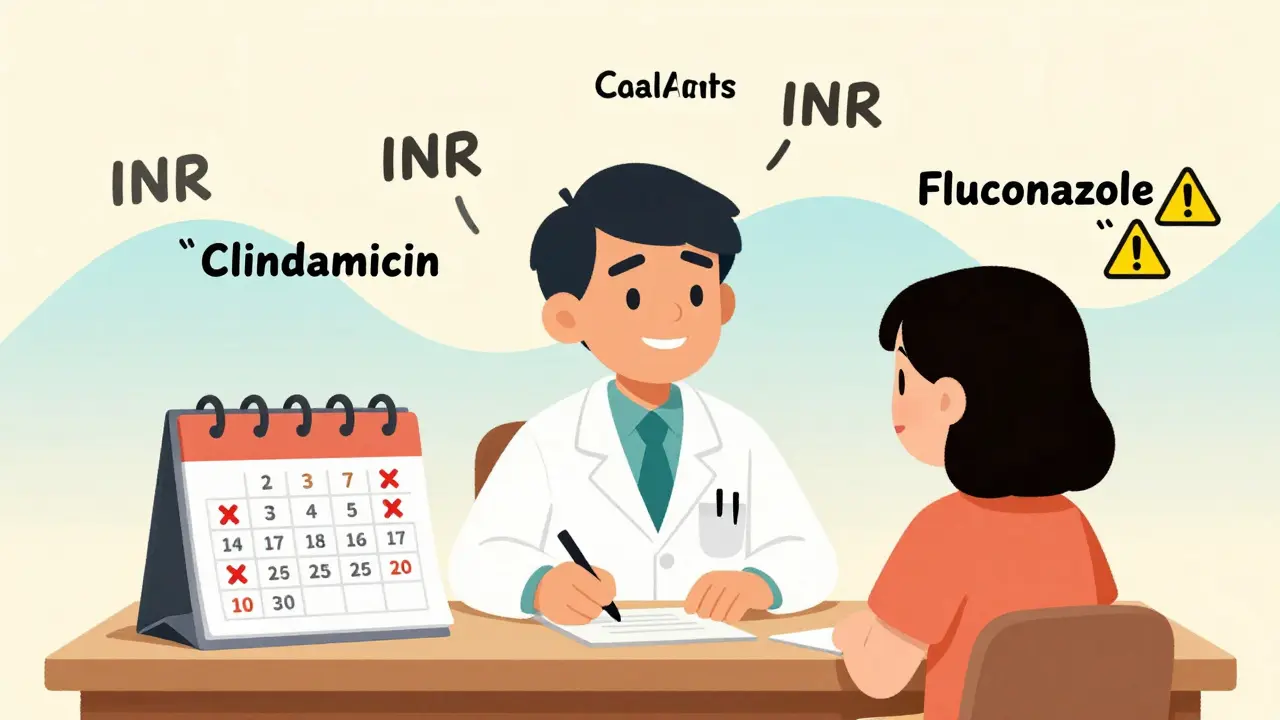
Real-World Evidence: Is This Really a Big Deal?
A 2014 study of nearly 40,000 warfarin users found something surprising: most people who took antibiotics didn’t end up with dangerous bleeding. The same was true for people who got sick but didn’t take antibiotics. The risk was low - but it was there. That doesn’t mean you should ignore it. It means you should be smart about it. The real danger isn’t the antibiotic. It’s the lack of monitoring. When doctors and patients skip INR checks, that’s when things go wrong. The American Heart Association says it plainly: “The addition of antibiotics to warfarin requires vigilant monitoring but rarely necessitates discontinuation of either medication.” You don’t need to panic. You need to plan.What You Can Do Right Now
- If you’re scheduled to start an antibiotic, tell your doctor you’re on warfarin. Don’t assume they know.
- Ask: “Is this antibiotic high-risk for warfarin?” If they say yes, ask if there’s a safer alternative.
- Know your current INR. Keep a log. If it’s been more than a week since your last check, schedule one before starting the antibiotic.
- After starting the antibiotic, mark your calendar for an INR check in 3-7 days. Set a reminder.
- Watch for signs of bleeding: unusual bruising, pink or red urine, nosebleeds that won’t stop, dark or bloody stools. Call your doctor immediately if any of these happen.
There’s no magic pill here. No shortcut. Just consistency, communication, and a little bit of awareness.
What About New Blood Thinners?
Direct oral anticoagulants (DOACs) like apixaban or rivaroxaban are replacing warfarin for many people. And yes - they have fewer drug interactions. But they’re not perfect. Some antibiotics still affect them, especially those that alter kidney function or gut bacteria. If you’re considering switching from warfarin, talk to your doctor. But if you’re still on it - and many people are, especially with mechanical heart valves - this guide still applies to you. Warfarin isn’t going away. And neither are antibiotics.Managing this interaction isn’t about fear. It’s about control. You’re not powerless. You have tools: your INR numbers, your doctor, and your own attention. Use them.




Richard Harris
March 15, 2026 AT 00:44Kandace Bennett
March 15, 2026 AT 23:20Tim Schulz
March 17, 2026 AT 04:15Jinesh Jain
March 18, 2026 AT 12:47Sabrina Sanches
March 19, 2026 AT 06:49Shruti Chaturvedi
March 20, 2026 AT 16:58Katherine Rodriguez
March 21, 2026 AT 08:19Devin Ersoy
March 22, 2026 AT 08:29Rosemary Chude-Sokei
March 22, 2026 AT 15:57Dylan Patrick
March 24, 2026 AT 03:23Kathy Leslie
March 25, 2026 AT 08:09Amisha Patel
March 25, 2026 AT 08:10Elsa Rodriguez
March 26, 2026 AT 02:27Richard Harris
March 27, 2026 AT 09:12