When you can’t sleep well night after night, and daytime fatigue won’t go away no matter how much coffee you drink, something deeper might be going on. That’s where polysomnography comes in - the most detailed sleep test doctors use to find out why your sleep is broken. It’s not just about snoring or tossing and turning. This test watches your whole body while you sleep, tracking everything from brain waves to breathing patterns, to catch problems that simple home tests miss.
What Exactly Is a Polysomnography?
Polysomnography, or PSG, is a full-night sleep study that records at least seven key body functions as you sleep. The name breaks down simply: poly means many, somno means sleep, and graphy means recording. So it’s a multi-channel recording of your sleep. Unlike home sleep tests that only check breathing and oxygen, polysomnography looks at your entire sleep architecture - how you move through the stages of sleep, when you dream, if your muscles twitch, if your heart skips, and whether your brain is truly resting.
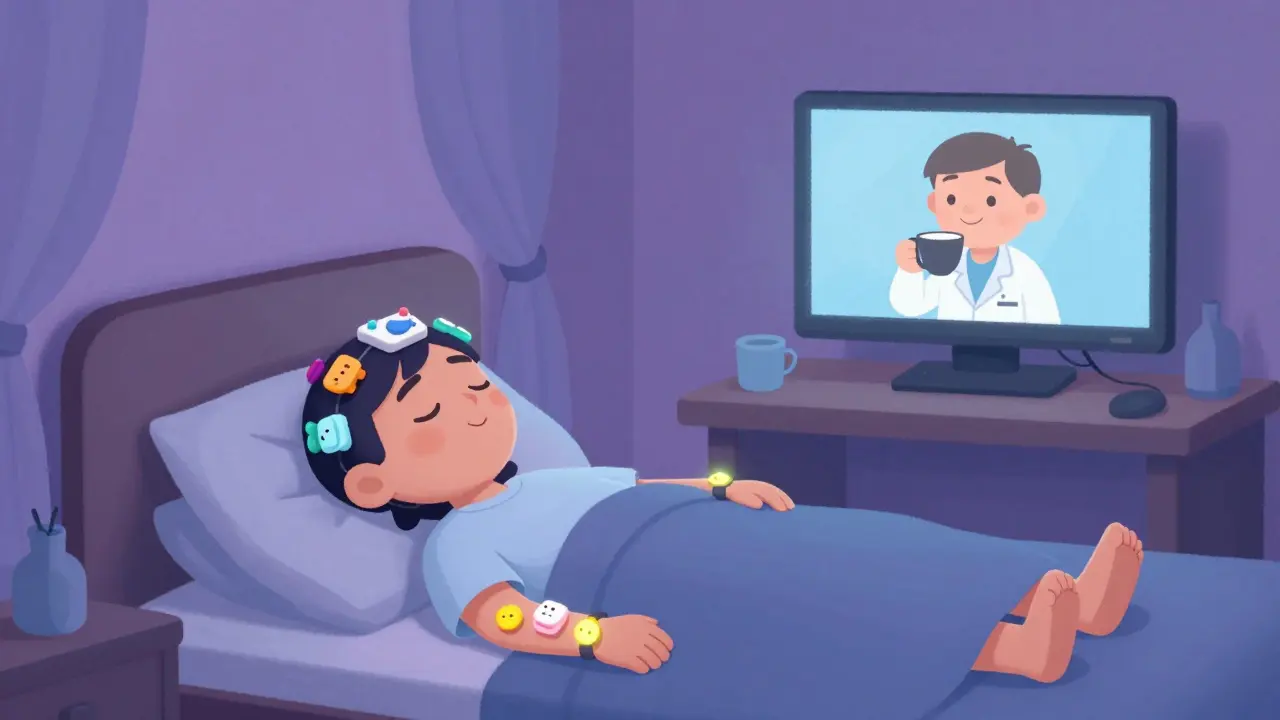
This test is done in a sleep center, not at home. You arrive in the evening, usually about an hour before your normal bedtime. A sleep technologist attaches sensors - about 22 of them - to your scalp, face, chest, legs, and fingers. Most feel like sticky patches or thin bands. You’re not hooked up to machines like in a hospital; you’re free to move, turn, and even get up to use the bathroom. The room is quiet, dim, and kept between 68-72°F so your body stays comfortable. You’ll sleep in a bed that looks like the one at home, with a TV, private bathroom, and curtains for privacy.
What Does the Test Measure?
Here’s what the sensors actually track:
- Brain waves (EEG): Electrodes on your scalp record electrical activity to tell if you’re in light sleep, deep sleep, or REM sleep. This is how doctors know if you’re cycling through sleep stages normally.
- Eyes movements (EOG): Sensors near your eyes detect rapid movements - a sign you’re in REM sleep, where dreaming happens.
- Muscle activity (EMG): A sensor on your chin and one on your leg watch for muscle twitches or leg jerks. This helps catch restless legs syndrome or sleep-related movement disorders.
- Heart rhythm (ECG): A small patch on your chest records your heartbeat. Irregular rhythms during sleep can point to heart problems linked to sleep apnea.
- Breathing effort: Two elastic belts around your chest and belly measure how hard you’re trying to breathe. This helps tell the difference between obstructive sleep apnea (you’re trying but can’t breathe) and central sleep apnea (your brain stops telling your body to breathe).
- Airflow: A thin tube under your nose or a pressure sensor measures whether air is moving in and out. No airflow means a pause - an apnea.
- Blood oxygen (SpO2): A clip on your finger tracks how much oxygen your blood carries. If it drops below 90%, it’s a red flag.
- Body position: A sensor tells if you’re sleeping on your back, side, or stomach. Some people only have apneas when lying on their back.
- Audio and video: A camera and mic record snoring, gasping, talking, or unusual behaviors like sleepwalking or night terrors.
This full picture is what makes polysomnography the gold standard. A home test might catch sleep apnea, but it won’t tell you if you have narcolepsy, periodic limb movement disorder, or seizures that happen only at night.
How Is It Different From Other Sleep Tests?
Home sleep apnea tests (HSAT) are cheaper and more convenient, but they’re limited. They usually only measure airflow, oxygen, and heart rate - maybe three to four channels. That’s fine if you have classic symptoms: loud snoring, gasping at night, and extreme daytime sleepiness. But if you have insomnia, unexplained fatigue, or weird nighttime behaviors, HSAT won’t help.
Polysomnography, on the other hand, records 7-16 channels. It can diagnose:
- Obstructive sleep apnea - airway blocked
- Central sleep apnea - brain doesn’t signal breathing
- Narcolepsy - falling into REM sleep too fast
- Restless legs syndrome - leg jerks that wake you up
- Parasomnias - sleepwalking, night terrors, REM behavior disorder
- Unexplained insomnia - when your brain just won’t shut down
There’s also the Multiple Sleep Latency Test (MSLT), done during the day after a polysomnography. It measures how fast you fall asleep in four naps. That’s how narcolepsy is confirmed. But MSLT doesn’t replace the overnight study - it builds on it.
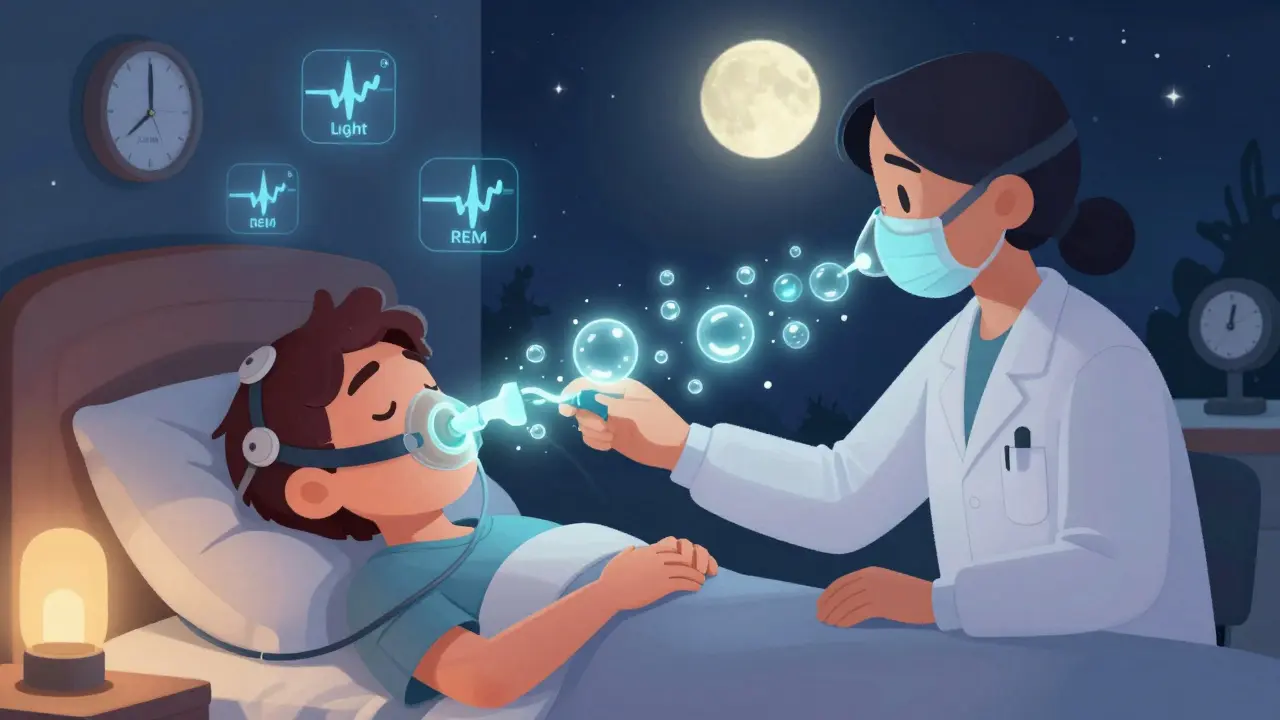
And then there’s the split-night study. If you have severe sleep apnea in the first half of the night, the technologist might wake you up, put on a CPAP mask, and adjust the pressure while you sleep. That way, you get diagnosis and treatment in one night. About 35% of polysomnography studies now include CPAP titration.
What Happens During the Night?
You might worry about sleeping with all those sensors. But most people do. Technologists monitor you from another room using video and audio. They can hear if you’re snoring, see if a sensor falls off, and even talk to you through an intercom if you need to use the bathroom. They’re trained to help you relax. Many patients say the biggest challenge is the first 30 minutes - getting used to the room, the wires, the feeling of being watched. But after that, most fall asleep naturally.
Studies show 85% of patients complete the test successfully. Sleep quality during the study doesn’t need to be perfect. Even if you only sleep four hours, the data from those hours is enough to spot patterns. The goal isn’t to get a full night’s rest - it’s to catch abnormalities.
How Are Results Interpreted?
After the test, your data goes to a board-certified sleep physician. They don’t just look at numbers - they look at patterns. The raw data can be over 1,000 pages. It takes 2-3 hours to analyze one study.
The key numbers they focus on:
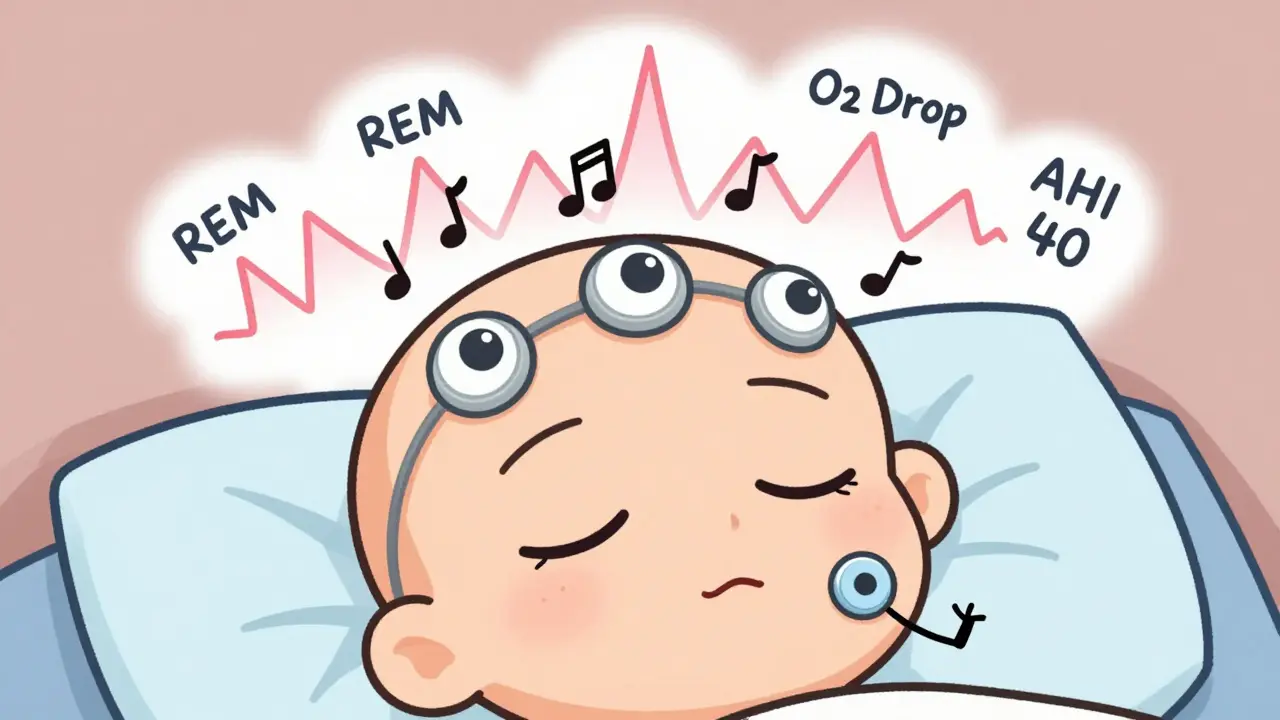
- AHI (Apnea-Hypopnea Index): How many breathing pauses or shallow breaths you have per hour. Less than 5 is normal. 5-15 is mild, 15-30 is moderate, over 30 is severe.
- Desaturation events: How often your oxygen drops below 90%. Frequent drops mean your body is struggling.
- Sleep architecture: How much time you spent in each stage. If you’re spending too little time in deep or REM sleep, your brain isn’t getting the rest it needs.
- Leg movements: If you have more than 15 leg jerks per hour, it could be periodic limb movement disorder.
- REM onset time: In narcolepsy, you enter REM sleep within 15 minutes of falling asleep - instead of the normal 90 minutes.
For example, if your AHI is 40 and your oxygen drops below 85% 15 times an hour, you have severe sleep apnea. If your brain shows you’re entering REM within 10 minutes on multiple occasions, narcolepsy is likely. If you kick your legs every 20 seconds, that’s a movement disorder. Each pattern points to a different diagnosis.
What Should You Do Before the Test?
Preparation matters. You’ll get instructions, but here’s what really helps:
- Don’t change your sleep schedule. If you usually go to bed at midnight, don’t go to bed at 10 p.m. the night before. Your body needs to be in its normal rhythm.
- Avoid caffeine after noon. Coffee, tea, soda, chocolate - all can delay sleep or mess with REM cycles.
- Don’t nap during the day. Even a 20-minute nap can make it harder to fall asleep at the center.
- Don’t use alcohol or sleep aids. These can suppress breathing or mask symptoms.
- Wash your hair. No conditioners or oils - they interfere with electrode contact.
- Bring comfortable clothes. You’ll wear them to bed. Pajamas are fine. No metal zippers or buttons.
Also, tell the sleep center about any medications you take - even over-the-counter ones. Some can affect sleep patterns.
Is It Covered by Insurance?
Most insurance plans - including Medicare - cover polysomnography if it’s ordered for diagnostic purposes. Medicare covers 80% if you have symptoms like loud snoring, witnessed apneas, or excessive daytime sleepiness. Private insurers usually require prior authorization. You’ll need documentation from your doctor showing you’ve tried lifestyle changes or home tests first.
Home sleep tests cost 30-50% less, but they fail 15-20% of the time because of poor setup or incomplete data. In-lab polysomnography fails less than 5% of the time. If you’re being tested for anything beyond simple sleep apnea - like insomnia, narcolepsy, or sleepwalking - insurance will almost always require the full study.
What’s New in Polysomnography?
Technology is making the test easier. Older studies used 20+ wires. Today’s systems use wireless sensors - some as few as 5-7. The electrodes are smaller, lighter, and more flexible. Some centers now use AI to help analyze the data faster, spotting patterns humans might miss.
But the core hasn’t changed. The American Academy of Sleep Medicine still says polysomnography is the only test that can reliably diagnose the full range of sleep disorders. Even with advances in wearable tech, nothing matches its accuracy. Research shows it will remain the gold standard through at least 2030.
What If the Results Are Normal?
Even if the test shows no sleep apnea or movement disorders, it doesn’t mean there’s nothing wrong. Sometimes the problem isn’t in the sleep itself - it’s in how your body responds to stress, anxiety, or circadian rhythm shifts. The data can still help doctors rule out physical causes and focus on behavioral or psychological ones.
For example, if your brain waves show you’re not getting enough deep sleep, even without apneas, your doctor might suggest light therapy, sleep hygiene changes, or cognitive behavioral therapy for insomnia (CBT-I). The test gives you answers - even when the answer isn’t what you expected.
Is polysomnography painful?
No, it’s not painful. The sensors are non-invasive - they stick to your skin or wrap around your body like a belt. You might feel a little awkward at first, but most people say the discomfort is minor. No needles, no injections, no electric shocks. The biggest challenge is adjusting to sleeping with equipment on, not the test itself.
Can I sleep on my side during the test?
Yes, absolutely. In fact, you’re encouraged to sleep in your normal position. Some people only have apneas when lying on their back, so the test will check both positions. You can turn, roll, and change positions as much as you want. The sensors are designed to stay in place.
How long does it take to get results?
It usually takes 7-10 business days. The data needs to be reviewed by a board-certified sleep specialist, who analyzes hundreds of pages of brain waves, breathing patterns, and movement data. Once the report is ready, your doctor will schedule a follow-up to explain the findings and recommend treatment.
Can I use my phone or watch TV before bed?
Yes, most sleep centers allow you to watch TV or use your phone until lights out. But avoid bright screens right before bed - blue light can delay sleep onset. The goal is to mimic your normal nighttime routine as closely as possible.
What if I can’t fall asleep during the test?
You don’t need to sleep all night. Even if you only get a few hours of sleep, the data from that time is often enough to detect problems. Technologists are trained to help you relax - they might talk to you, adjust sensors, or dim the lights. Most patients end up sleeping enough for a clear diagnosis.
Are there alternatives to in-lab polysomnography?
Home sleep tests exist, but they’re limited. They only measure breathing, oxygen, and heart rate - not brain waves, eye movements, or leg activity. So they can only diagnose obstructive sleep apnea, not narcolepsy, insomnia, or parasomnias. If your symptoms are complex, your doctor will likely require the full in-lab study.
Polysomnography isn’t just a test - it’s a window into your sleep. If you’ve been tired for months, if your partner says you stop breathing at night, or if you wake up confused and disoriented - this test can show you why. It’s not scary. It’s not complicated. It’s just one night of data that can change your whole life.


Prateek Nalwaya
February 17, 2026 AT 00:24Philip Blankenship
February 18, 2026 AT 00:27Carrie Schluckbier
February 18, 2026 AT 21:31guy greenfeld
February 19, 2026 AT 10:50Adam Short
February 20, 2026 AT 12:23Linda Franchock
February 22, 2026 AT 11:04Agnes Miller
February 23, 2026 AT 06:42Geoff Forbes
February 23, 2026 AT 12:27Jonathan Ruth
February 24, 2026 AT 14:18Oliver Calvert
February 26, 2026 AT 07:29Kancharla Pavan
February 27, 2026 AT 15:19PRITAM BIJAPUR
March 1, 2026 AT 12:33Digital Raju Yadav
March 2, 2026 AT 00:48Dennis Santarinala
March 2, 2026 AT 12:27