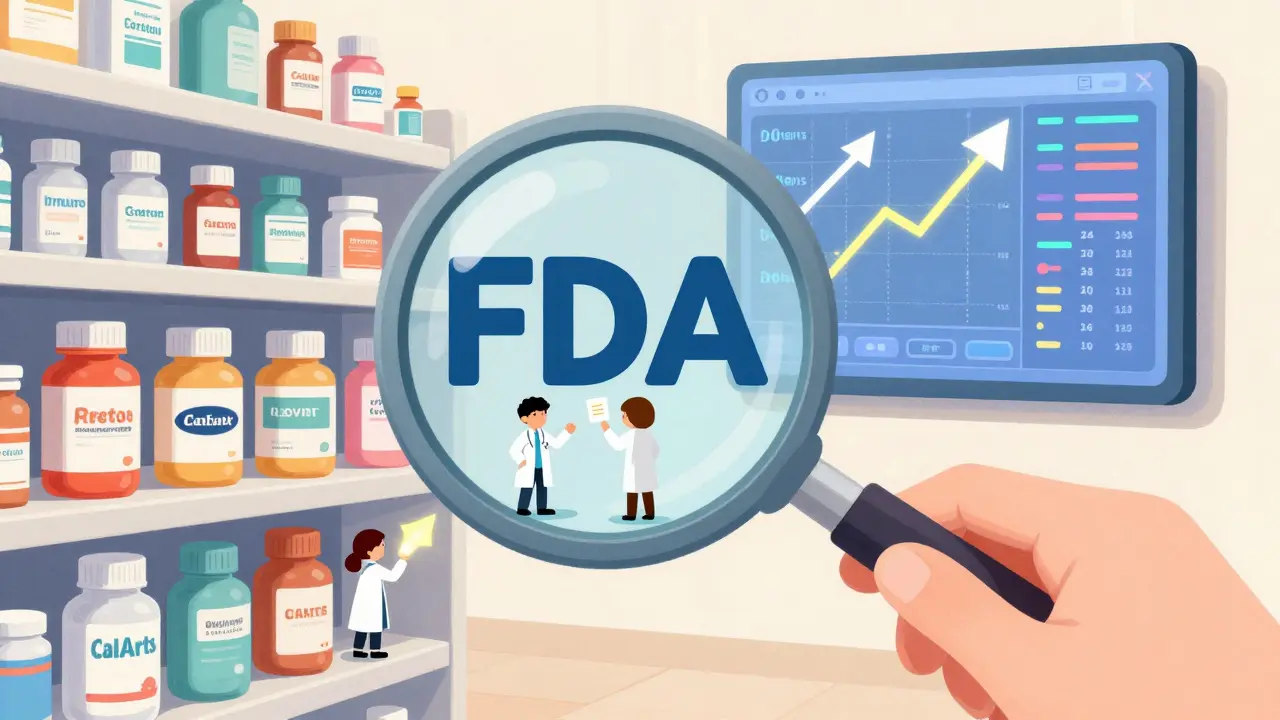
When you pick up a generic pill at the pharmacy, you expect it to work just like the brand-name version. And for most people, it does. But how does the FDA make sure that generic drugs stay safe and effective after they hit the market? Unlike new drugs, generics don’t go through years of clinical trials. Instead, they’re approved based on proving they’re bioequivalent - meaning they deliver the same amount of active ingredient into the bloodstream at the same rate as the original. That’s efficient. But it also means the real test of safety happens after millions of people start taking them. That’s where post-market surveillance comes in.
Why Post-Market Surveillance Matters for Generics
Over 90% of prescriptions in the U.S. are filled with generic drugs. That’s more than 3 billion prescriptions a year. These drugs save the healthcare system billions. But because they’re approved based on bioequivalence - not full clinical trials - the FDA can’t predict every possible side effect before they’re widely used. A rare reaction that shows up in 1 out of 10,000 patients won’t show up in the 500-1,000-person trials used for approval. That’s why the FDA watches them like a hawk after they’re sold.
Take complex generics - like inhalers, topical creams, or extended-release pills. These aren’t just copies of the original. They’re made with different inactive ingredients or manufacturing methods. Even small changes can affect how the drug is absorbed. One patient might switch from a brand-name inhaler to a generic and feel like it’s not working as well. Is it the drug? Or is it the patient’s perception? The FDA has to figure that out, and fast.
The Tools the FDA Uses to Watch Generic Drugs
The FDA doesn’t rely on guesswork. It uses three major systems to track what’s happening with generics after approval.
- FDA Adverse Event Reporting System (FAERS): This is the backbone. Doctors, pharmacists, patients, and manufacturers report any unexpected side effects, allergic reactions, or treatment failures. In 2023 alone, FAERS received over 2 million reports - nearly half involving generic drugs. The system doesn’t prove causation, but it flags patterns. If 50 people report the same rare rash after switching to a specific generic version of a blood pressure pill, that’s a signal.
- The Sentinel Initiative: Launched in 2008, Sentinel uses real-world data from insurance claims, electronic health records, and hospital systems covering over 200 million Americans. It’s like having a national health dashboard. The FDA can run automated searches to see if patients taking a certain generic have higher rates of heart attacks, liver damage, or hospitalizations compared to those on the brand-name version. This isn’t just passive reporting - it’s active, real-time monitoring.
- MedWatch: This is the public-facing portal where anyone can report a problem. If a patient notices their generic seizure medication isn’t controlling seizures like before, they can file a report. These reports often catch issues that clinicians miss - especially when multiple manufacturers make the same generic and one batch turns out faulty.
On top of that, the FDA sends inspectors to generic drug factories - unannounced. They check if the manufacturing process matches what was approved. A single change in the mixing temperature or the type of filler used can alter how the drug behaves in the body. In 2022, the FDA shut down a facility in India because the generic version of a common antibiotic was found to have inconsistent dissolution rates - meaning some pills released the drug too slowly, others too fast.
Complex Generics Are the Biggest Challenge
Not all generics are created equal. Simple tablets - like metformin or lisinopril - are easy to copy. But complex generics? That’s where things get tricky.
Inhalers, for example, need to deliver the exact same particle size and spray pattern as the brand. Topical creams must match the skin absorption rate. Extended-release pills must release the drug over 12 or 24 hours, not all at once. Bioequivalence tests for these products are less reliable. Two generics can pass the same lab test but behave differently in real patients.
That’s why the FDA launched the Center for Research on Complex Generics (CRCG) in 2020 with funding from the University of Maryland and the University of Michigan. Their goal? To build better ways to test these drugs before they even reach the market - and to improve surveillance after they’re sold.
A 2021 report from the National Academies of Sciences warned that current methods aren’t enough. For complex generics, the FDA might be missing safety signals until it’s too late. That’s why they’re investing $5.2 million in 2023 alone to develop AI and machine learning tools that can scan millions of reports and health records to spot patterns humans might miss.
How the FDA Responds When Problems Are Found
When a red flag pops up, the FDA doesn’t wait. Here’s what happens next:
- Investigation: The Office of Generic Drugs and the Office of Surveillance and Epidemiology team up. They look at all reports, check manufacturing records, and compare outcomes in Sentinel data.
- Label Update: If a new risk is confirmed, the drug’s label gets updated. A warning about dizziness or liver damage might be added. This tells doctors and patients what to watch for.
- Dear Healthcare Provider Letters: For serious risks, the FDA sends direct letters to doctors and pharmacists. In 2023, such a letter went out for a generic version of a diabetes drug linked to an increased risk of pancreatitis.
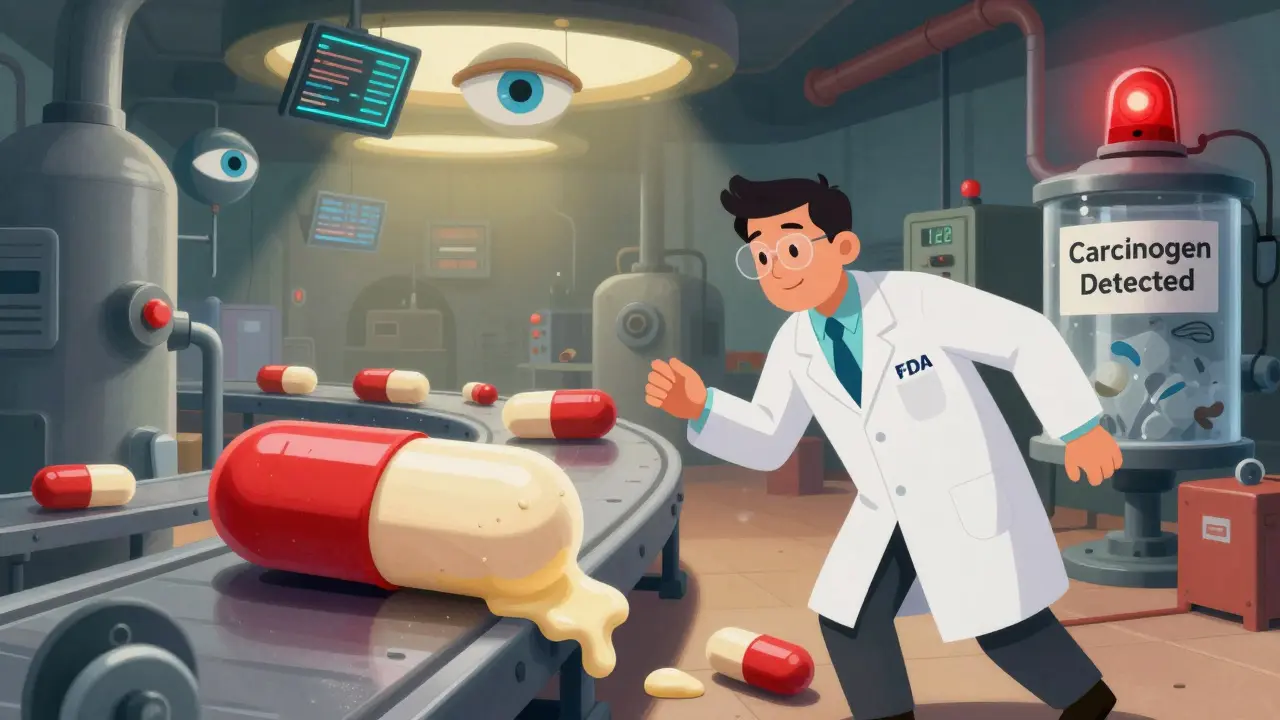
- Recall: If a batch is contaminated or dangerously inconsistent, the FDA can force a recall. In 2022, a generic version of a heart medication was pulled after testing showed it contained a carcinogen.
These actions aren’t rare. Between 2018 and 2023, the FDA took regulatory action on over 200 generic drugs based on post-market findings. Most were label updates. A few were recalls. But each one kept patients safer.
The Human Side: Perception vs. Reality
Not every problem is biological. Sometimes, it’s psychological.
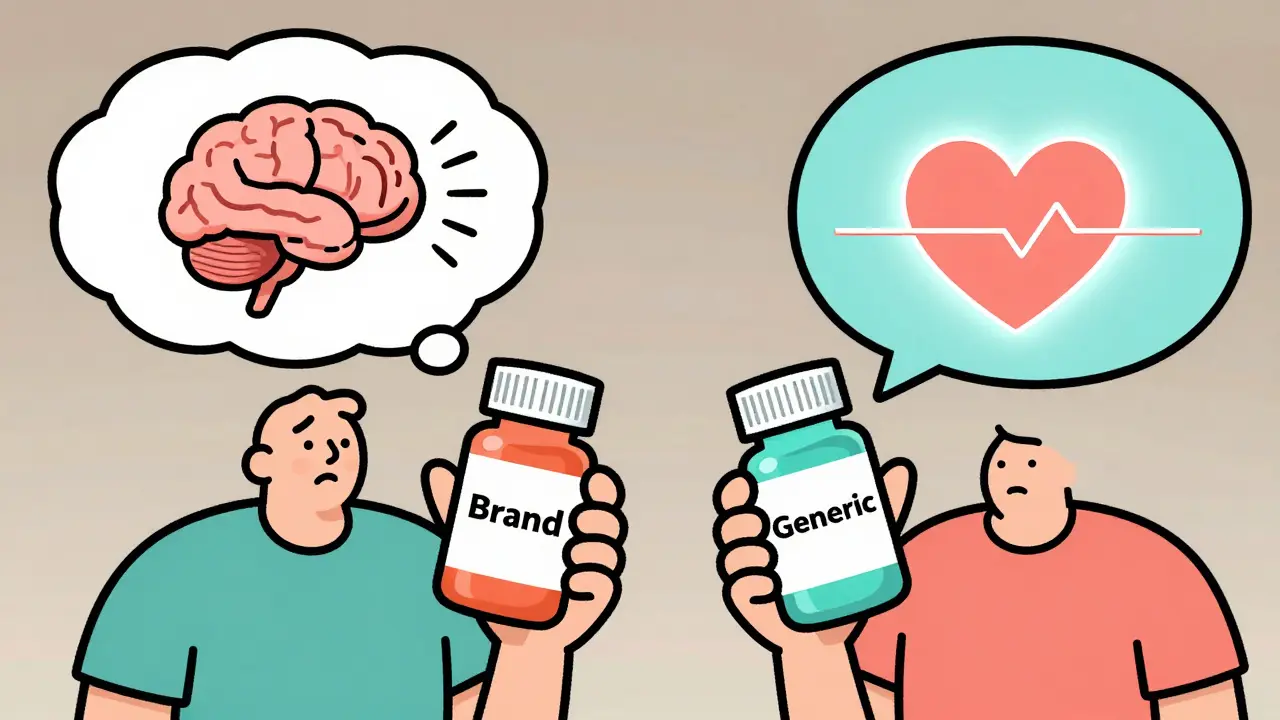
Studies show that patients who switch from a brand-name drug to a generic often report side effects - even when the generic is chemically identical. This is called the “nocebo effect.” If a patient believes generics are inferior, their brain can trigger symptoms just from the expectation.
One 2019 study in JAMA Internal Medicine analyzed 47,000 patient reports. About 15% claimed the generic didn’t work as well. But when researchers looked at clinical data - blood pressure readings, seizure frequency, cholesterol levels - there was no difference. The patients felt worse, but their bodies didn’t show it.
This is a real challenge for the FDA. How do you tell if a report is about a real drug problem or just a patient’s fear? That’s why they now train pharmacists to explain the science behind generics and encourage patients to report changes honestly - not just because they’re anxious.
What’s Next for Generic Drug Safety?
The FDA’s next big move is automation. Right now, it takes months to detect a safety signal. AI systems being tested can do it in weeks - sometimes days.
By 2027, the goal is to have AI tools that automatically compare outcomes between brand-name and generic drugs across millions of patient records. If a certain generic version of a cholesterol drug shows a 10% higher rate of muscle pain compared to others, the system flags it immediately. No waiting. No manual digging.
The FDA is also pushing for better data sharing. Right now, electronic health records from different hospitals don’t talk to each other. If the FDA could pull real-time data from all major U.S. health systems, they’d have a clearer, faster picture of what’s happening.
Industry experts agree: the future of generic drug safety isn’t just about more inspections or more reports. It’s about smarter data. Better tools. And a system that learns as it goes.
What You Can Do
You don’t have to wait for the FDA to find a problem. If you notice something unusual after switching to a generic - new dizziness, strange rashes, worsening symptoms - report it. Use MedWatch. Tell your doctor. Your report could be the one that catches a pattern before it hurts someone else.
And if you’re worried about your generic medication, talk to your pharmacist. They can tell you which manufacturer made your pills and whether others have reported issues. Don’t assume all generics are the same. Different makers use different fillers and coatings - and those can matter.
Are generic drugs as safe as brand-name drugs?
Yes, for the vast majority of patients. Generic drugs must meet the same strict standards as brand-name drugs for quality, strength, purity, and performance. The FDA requires them to be bioequivalent - meaning they deliver the same amount of active ingredient into the bloodstream at the same rate. Post-market surveillance ensures that safety holds up in real-world use. While rare issues can occur - especially with complex generics - the overall safety record is strong.
How does the FDA know if a generic drug is causing side effects?
The FDA uses multiple systems. The FDA Adverse Event Reporting System (FAERS) collects reports from doctors, patients, and manufacturers. The Sentinel Initiative analyzes real-world health data from millions of patients to spot unusual patterns, like spikes in hospital visits after a generic is prescribed. They also review published studies, check manufacturing records, and inspect production facilities. When enough reports point to the same issue, they investigate further.
Can different manufacturers of the same generic drug have different effects?
Yes. While all generics must meet FDA bioequivalence standards, they can use different inactive ingredients - like fillers, dyes, or coatings. For simple pills, this rarely matters. But for complex generics - like inhalers, creams, or extended-release tablets - these differences can affect how the drug is absorbed. Some patients report different side effects or effectiveness between brands of the same generic. That’s why the FDA tracks which manufacturer is linked to reports.
What should I do if I think my generic medication isn’t working?
Don’t stop taking it without talking to your doctor. First, check if you recently switched manufacturers - the pill might look different, but it’s the same drug. If symptoms persist, talk to your pharmacist about the manufacturer and batch. Report any concerns to MedWatch. Your doctor can help determine if it’s a real issue or a nocebo effect. In some cases, switching back to the brand or trying a different generic maker can help.
Is the FDA doing enough to monitor generics?
The FDA has one of the most advanced post-market surveillance systems in the world. But experts agree there are gaps, especially for complex generics. Critics say the system is under-resourced and reactive. The FDA acknowledges this and is investing heavily in AI, real-world data, and research partnerships to improve speed and accuracy. While the system isn’t perfect, it’s constantly evolving - and it’s saved lives by catching problems before they become widespread.
Final Thoughts
Generic drugs are one of the most important public health innovations of the last 40 years. They make life-saving medicine affordable. But affordability shouldn’t mean lower safety. The FDA’s post-market surveillance system - though invisible to most - is a quiet guardian of that promise. It’s not about trusting manufacturers. It’s about verifying, monitoring, and acting when needed. And as technology gets smarter, so will the system. For now, the best thing you can do is stay informed, speak up when something feels off, and trust that there’s a system watching out for you - even after you leave the pharmacy.
Juan Reibelo
January 24, 2026 AT 13:09Wow, this is one of the most thorough breakdowns of generic drug safety I’ve ever read. Seriously. The FDA’s use of Sentinel and FAERS is like having a national early-warning system-but most people have no idea it exists. I’ve switched generics three times for my blood pressure med, and never thought about who made it-or how the FDA tracks if something’s off. Now I check the manufacturer on the bottle. Small habit. Big difference.
Dolores Rider
January 26, 2026 AT 00:08They’re LYING. 😡 The FDA doesn’t care. Big Pharma owns them. That’s why they let generics with weird fillers slide-then when people get sick, they say ‘it’s just the nocebo effect.’ 🤡 I know someone who went into kidney failure after switching to a $2 generic. They didn’t test the *inactive ingredients* for toxins! They just check if it ‘looks’ the same. This is a death sentence waiting to happen. #FDAcorrupt
Vatsal Patel
January 27, 2026 AT 13:19Ah yes, the grand illusion of modern pharmacology: we’ve outsourced trust to a machine that calculates bioequivalence with the precision of a drunk accountant. We are not merely patients-we are data points in a statistical ballet, dancing to the tune of FDA algorithms and corporate cost-cutting. What is ‘safe’? A word invented by lawyers to soothe the guilty conscience of men who’ve never held a pill in their hand.
And yet-we still swallow. Because what choice do we have? The alternative is poverty. Or death. So we swallow. And we hope. And we pray the filler isn’t laced with the ghost of a forgotten chemist’s mistake.
Sharon Biggins
January 29, 2026 AT 10:29This was so helpful! 😊 I just switched to a generic for my thyroid med and was totally freaking out. Now I know it’s probably just my brain playing tricks. I’m gonna tell my pharmacist about MedWatch-I didn’t even know I could report stuff like that. Thanks for making me feel less alone about this! 💪
John McGuirk
January 31, 2026 AT 07:25They’re watching us. Always. FAERS. Sentinel. AI. Sounds like a dystopian movie. Who’s feeding the data? Who’s reviewing it? Who’s got access? You think they’re just looking for side effects? Nah. They’re building profiles. Your pill history. Your blood pressure. Your mood swings. All logged. Next thing you know, your insurance hikes your rates because ‘you’re a high-risk generic user.’
And don’t get me started on those unannounced inspections. They show up, take samples, then vanish. What if they’re just covering for bad plants? What if they’re paid off? You think the FDA’s clean? Come on.
lorraine england
February 2, 2026 AT 06:41My mom had a bad reaction to a generic seizure med last year. Turned out it was a different manufacturer-same name, different filler. She went to the pharmacist, they checked the batch, and switched her back. No big deal… until I read this. Now I realize how lucky we were. Everyone should ask their pharmacist: ‘Who made this?’ It’s not paranoia. It’s power.
Himanshu Singh
February 3, 2026 AT 00:35It’s beautiful, really. We’ve built a system that lets millions live longer, cheaper, and safer-just by trusting science and vigilance. The real miracle isn’t the pill. It’s the quiet, invisible network of inspectors, data analysts, pharmacists, and patients who say: ‘Something’s off.’ And then they report it. That’s the heartbeat of public health. Not the FDA. Not the lab. Us.
So next time you take a generic, don’t just swallow it. Acknowledge it. Thank it. And if something feels wrong? Report it. You’re not complaining. You’re protecting someone’s mom. 💙
Helen Leite
February 3, 2026 AT 05:38They’re putting microchips in the pills now. 😳 I heard it on a podcast. The FDA uses the fillers to track you. That’s why they don’t care if the generic works the same-they care if you take it. Your body becomes a beacon. Your heart rate, your sleep, your mood… all fed into a database. Don’t believe me? Look up the patent for ‘pharmaceutical telemetry coatings.’ They’re already doing it. 🤖💊
Marlon Mentolaroc
February 5, 2026 AT 05:32Let’s be real: the FDA’s system is better than most people think. But yeah, complex generics are a mess. I’ve seen two different brands of the same extended-release pill-one worked great, the other made me feel like I was floating. No exaggeration. The FDA needs to require more real-world testing before approval. Not just ‘bioequivalent’ on paper. Real people. Real bodies. Real results.