Have you ever looked at a bottle of prescription pills or an over-the-counter pain reliever and wondered what exactly "store in a cool, dry place" means? It’s easy to glance at the label, toss the bottle into the bathroom cabinet, and forget about it. But that quick decision could be compromising the very medicine you rely on for your health. Ignoring these small print details doesn't just waste money; it can turn effective medication into something useless-or worse, dangerous.
Reading storage instructions on medication labels is one of the most overlooked steps in managing your health. Yet, it is critical. The environment where you keep your drugs directly impacts their chemical stability. Heat, light, and humidity are silent enemies that break down active ingredients over time. This guide will walk you through exactly where to find this information, what the technical terms mean, and how to store your medications safely at home.
Where to Find Storage Information on Your Label
The first step is knowing where to look. Depending on whether your medication is prescribed by a doctor or bought off the shelf, the location of storage instructions varies slightly. However, federal regulations ensure this information is always present.
For Prescription Medications, the rules are set by agencies like the U.S. Food and Drug Administration (FDA). On the pharmacy-provided label stuck to your vial, look for lines labeled Storage or Handling. If the instructions aren't there, they are often found in the Patient Package Insert (the paper leaflet inside the box). According to FDA guidelines updated in August 2023, manufacturers must include special handling conditions in Section 16 of the labeling structure. This includes dosage forms and specific environmental requirements. If your prescription requires refrigeration, the pharmacist should also verbally confirm this when you pick it up.
Decoding Common Storage Terms
Making sense of medical jargon is half the battle. Here is what those standard phrases actually mean in practical terms:
- Controlled Room Temperature: This does not mean "anywhere in the house." The United States Pharmacopeia defines this specifically as 20°C to 25°C (which converts to 68°F to 77°F). Most tablets and capsules fall into this category. They are stable in a bedroom drawer but not in a car trunk.
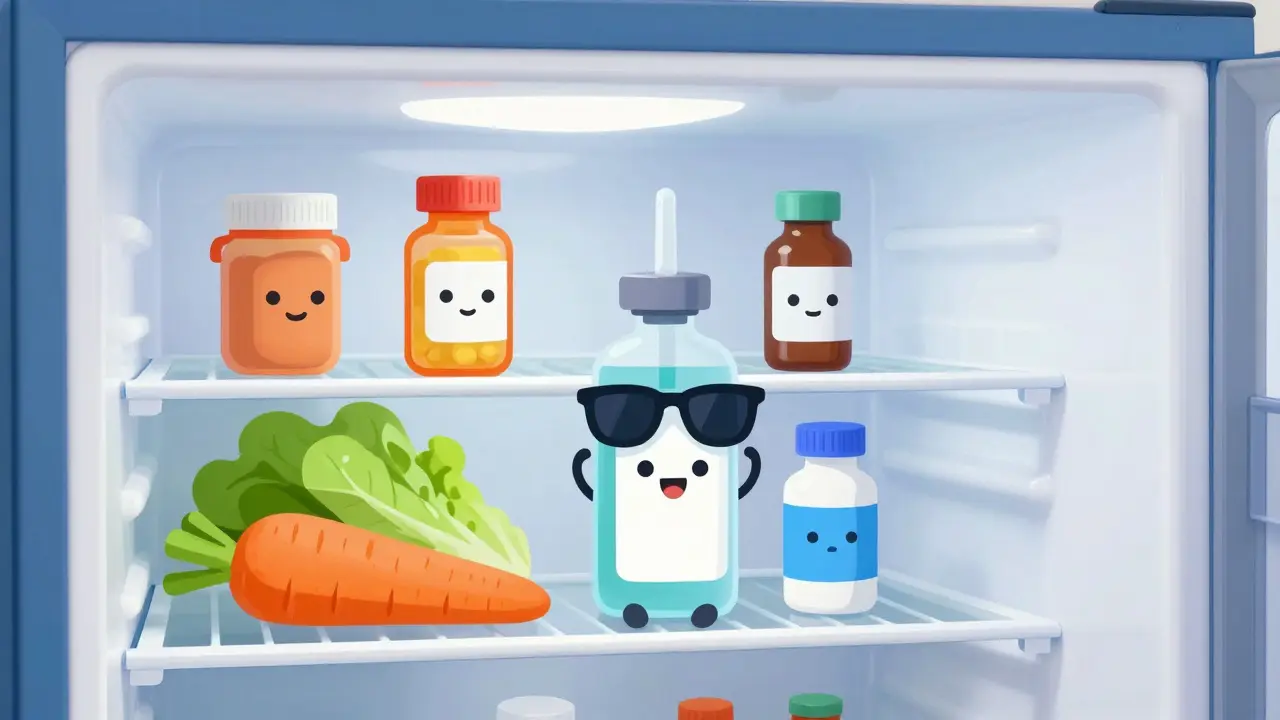
- Refrigerate: This means keeping the medication between 2°C to 8°C (36°F to 46°F). This applies to many insulin types, certain eye drops, and liquid antibiotics. Crucially, do not freeze these unless the label explicitly says "freeze." Freezing can denature proteins in biologics, rendering them ineffective.
- Protect from Light: Some drugs degrade when exposed to UV rays. These usually come in amber-colored bottles or opaque packaging. Keep them in their original container rather than transferring them to clear pill organizers.
- Avoid Humidity / Store in Dry Place: Moisture causes tablets to crumble and liquids to grow bacteria. This is why bathrooms are terrible places for medicine cabinets.
The Bathroom Myth: Why Your Medicine Cabinet is Risky
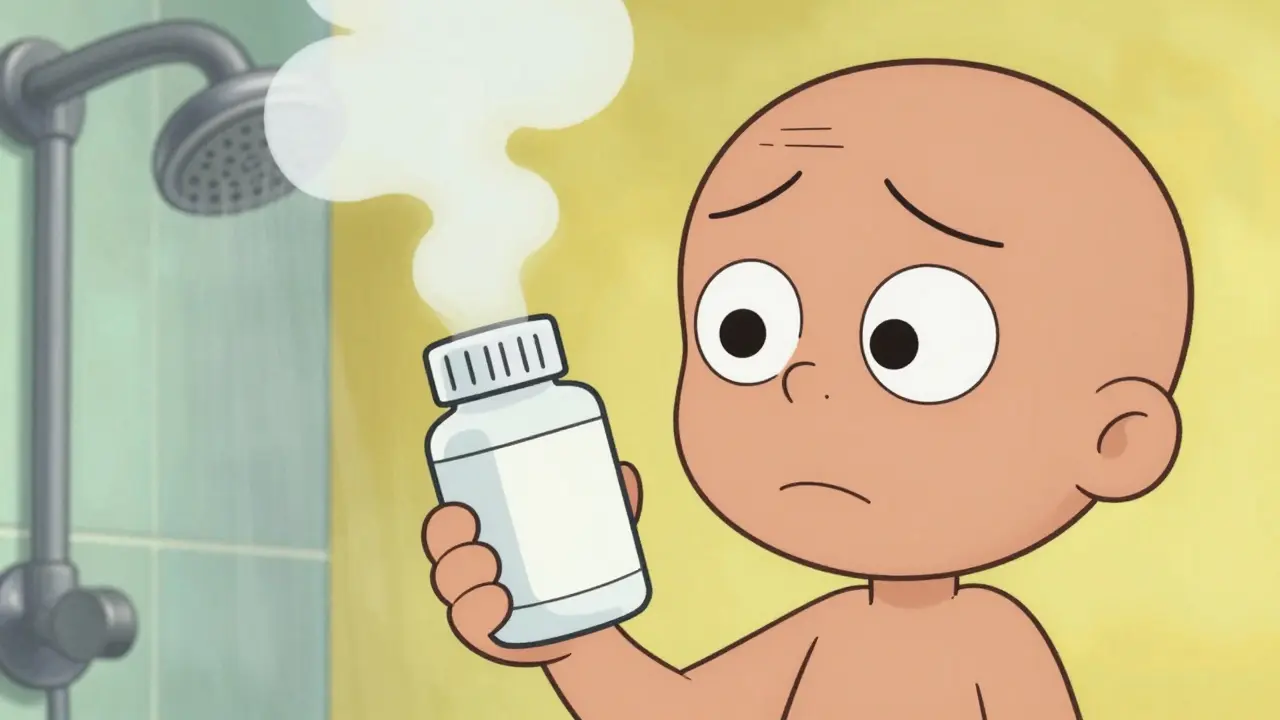
We’ve all grown up with the idea that a locked cabinet above the toilet is the safest place for meds. The data suggests otherwise. A survey by Express Scripts involving 2,500 users found that 42% of people store their medications in bathrooms. This is problematic because showers create significant fluctuations in both temperature and humidity.
Humidity is particularly damaging. When moisture gets into a bottle of aspirin or acetaminophen, the chemicals can begin to break down. Northwest Family Clinics warns that improper storage may decrease potency or even form harmful byproducts over time. For instance, degraded acetaminophen can potentially create toxic compounds. If you live in a humid climate like Auckland or Miami, this risk is even higher. Move your daily medications to a bedroom closet or a dedicated kitchen cabinet away from the stove and sink.
Traveling with Medication: Protecting Against Heat
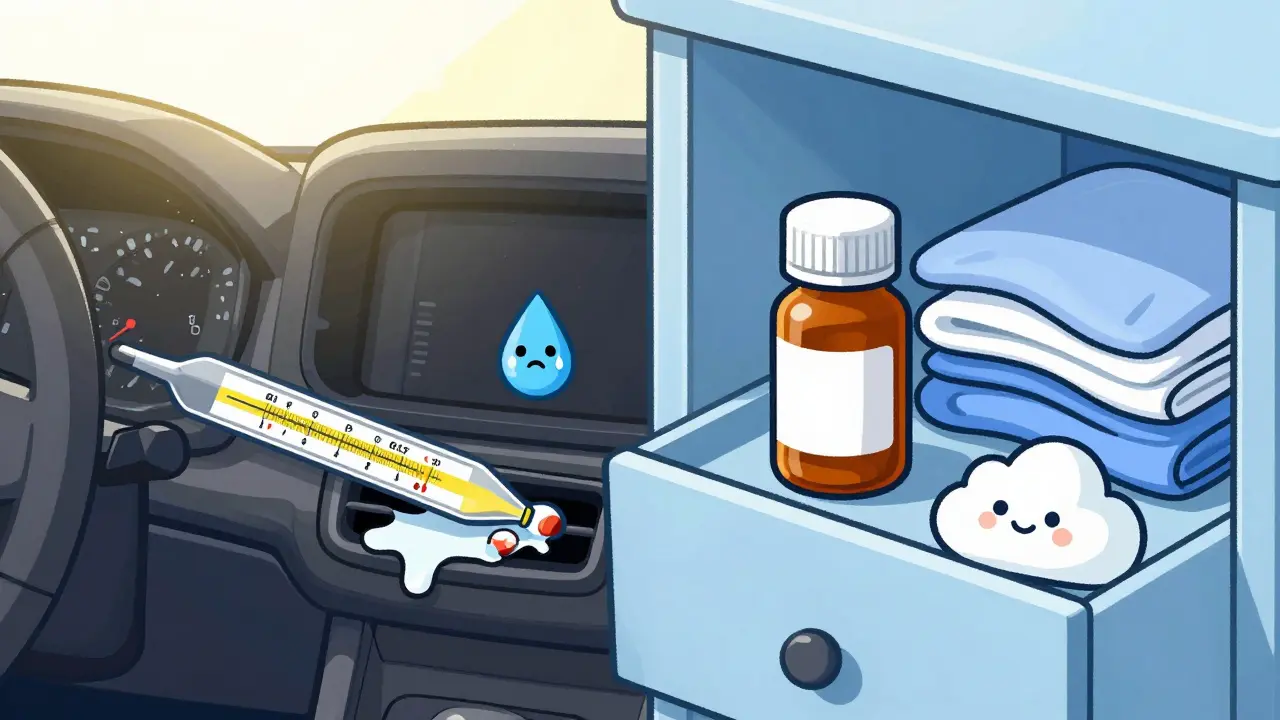
If you travel, your medication faces extreme stress. The Cleveland Clinic notes that internal vehicle temperatures can exceed 140°F (60°C) within 30 minutes on a day that feels like only 90°F (32°C). Leaving insulin or nitroglycerin in a glove compartment or trunk is essentially cooking the medicine.
To mitigate this, use insulated containers with cooling packs for temperature-sensitive drugs. The FDA recommends checking the temperature of the cooling pack so it doesn't freeze the medication directly. If you are crossing climate zones, keep essential meds in your carry-on luggage, not checked bags, where cargo holds can get extremely hot or cold. For seniors living in homes without central air conditioning, Medicare’s 2023 guide advises asking pharmacists for alternative formulations that are more heat-stable.
Liquid Antibiotics and Special Handling
Liquid medications require extra attention. Many oral antibiotics, such as amoxicillin suspensions, are sold as powders that you mix with water. Once reconstituted, the clock starts ticking. The FDA notes that these typically expire within 10 to 14 days when refrigerated. Unopened versions might last two to three years, but once mixed, they lose stability rapidly.
Dr. Sarah Thompson, a medication safety specialist at Nationwide Children's Hospital, emphasizes that parents must verify storage requirements for pediatric medications. Children’s formulations often have different stability profiles than adult versions. Always shake the bottle well before each dose to ensure the active ingredient is evenly distributed, especially if sediment has settled due to cold temperatures.
Comparison of Storage Requirements
| Medication Type | Ideal Location | Temperature Range | Key Risks |
|---|---|---|---|
| Standard Tablets/Capsules | Bedroom Drawer / Closet | 68°F - 77°F (20°C - 25°C) | Humidity, direct sunlight |
| Insulin & Biologics | Main Refrigerator Compartment | 36°F - 46°F (2°C - 8°C) | Freezing, high heat |
| Nitroglycerin | Original Amber Bottle, Pocket | Room Temp | Moisture, heat, light |
| Liquid Antibiotics (Mixed) | Refrigerator | 36°F - 46°F (2°C - 8°C) | Bacterial growth, potency loss |
| Eye Drops | Cool, Dry Place or Fridge | Varies by brand | Contamination, drying out |
Safety First: Disposal and Expiration
Proper storage extends to knowing when to throw things away. Just because a pill hasn't expired according to the date on the bottle doesn't mean it's safe if it was stored incorrectly. If a white tablet turns yellow, cracks, or smells odd, discard it. Physical changes indicate chemical degradation.
Do not flush medications unless the label explicitly instructs you to do so (usually for highly addictive opioids to prevent misuse). Instead, use local drug take-back programs. In New Zealand and the US, pharmacies often have secure drop boxes. Mixing meds with unpalatable substances like coffee grounds or cat litter in a sealed plastic bag before trash disposal is another accepted method for non-controlled substances, preventing pets or children from accessing them.
When to Ask Your Pharmacist
If you are ever unsure, ask. Dr. Michael Chen, Director of the FDA's Division of Drug Information, highlights that smart packaging with embedded temperature sensors is becoming more common for high-risk drugs. Until then, human expertise is your best tool. Pharmacists can provide specific guidance based on your home environment. If your home lacks climate control, they might suggest a different formulation of the same drug that is more robust against temperature swings. Don't hesitate to call them-it’s part of their job to ensure you get the full benefit of your prescription.
Can I store my medication in the freezer?
Generally, no. Unless the label specifically says "freeze," freezing can damage the chemical structure of many medications, especially biologics and insulins. Freezing causes ice crystals to form, which can break down protein structures, making the drug ineffective. Always check the label or ask your pharmacist before placing any medication in the freezer.
Is the bathroom medicine cabinet safe?
No, it is not recommended. Bathrooms experience frequent spikes in heat and humidity from showers and baths. This environment accelerates the degradation of medications. Experts recommend storing most medicines in a cool, dry place like a bedroom drawer or a closet away from windows and appliances.
What happens if I leave medicine in a hot car?
Leaving medicine in a hot car can ruin it quickly. Car interiors can reach temperatures over 140°F (60°C) on sunny days. This heat can melt capsules, degrade active ingredients, and cause liquids to spoil. If you suspect your medication has been exposed to extreme heat, consult your pharmacist before using it. Do not assume it is still safe.
How long do liquid antibiotics last after mixing?
Most reconstituted liquid antibiotics expire within 10 to 14 days when stored in the refrigerator. Even if the child finishes the course early, you should discard any remaining liquid after this period. The preservatives in the mixture are not strong enough to keep the drug stable for longer once water is added.
Where can I find storage info on OTC drugs?
On Over-the-Counter (OTC) medications, look for the "Drug Facts" panel. Specifically, check the section labeled "Other Information." This area contains storage instructions, expiration dates, and sometimes disposal advice. It is standardized by law to ensure consumers can easily find this critical data.