GI Bleeding Risk Estimator
Select the factors that apply to your situation or the patient you are evaluating.
Risk Assessment
Recommendation:
The combination of systemic steroids and NSAIDs inherently carries a risk (approx. 8.9x higher than baseline). Select factors above to see how your risk profile changes.
Safety Checklist
Imagine you have a severe flare-up of arthritis or a stubborn respiratory infection. Your doctor prescribes a short burst of corticosteroids is a class of anti-inflammatory drugs like prednisone used to reduce swelling and suppress the immune system. At the same time, you reach for your usual bottle of ibuprofen to manage the pain. On the surface, this seems like a reasonable plan. You are treating inflammation and pain simultaneously. But underneath that simple routine lies a dangerous pharmacological trap.
The combination of systemic steroids and nonsteroidal anti-inflammatory drugs (NSAIDs) creates a multiplicative risk for gastrointestinal (GI) bleeding and perforation. This isn't just a minor side effect; it is one of the most significant yet underappreciated drug interactions in modern medicine. When these two classes of medications meet in your stomach, they attack the protective lining from different angles, often without warning signs until it is too late.
Why This Combination Is So Dangerous
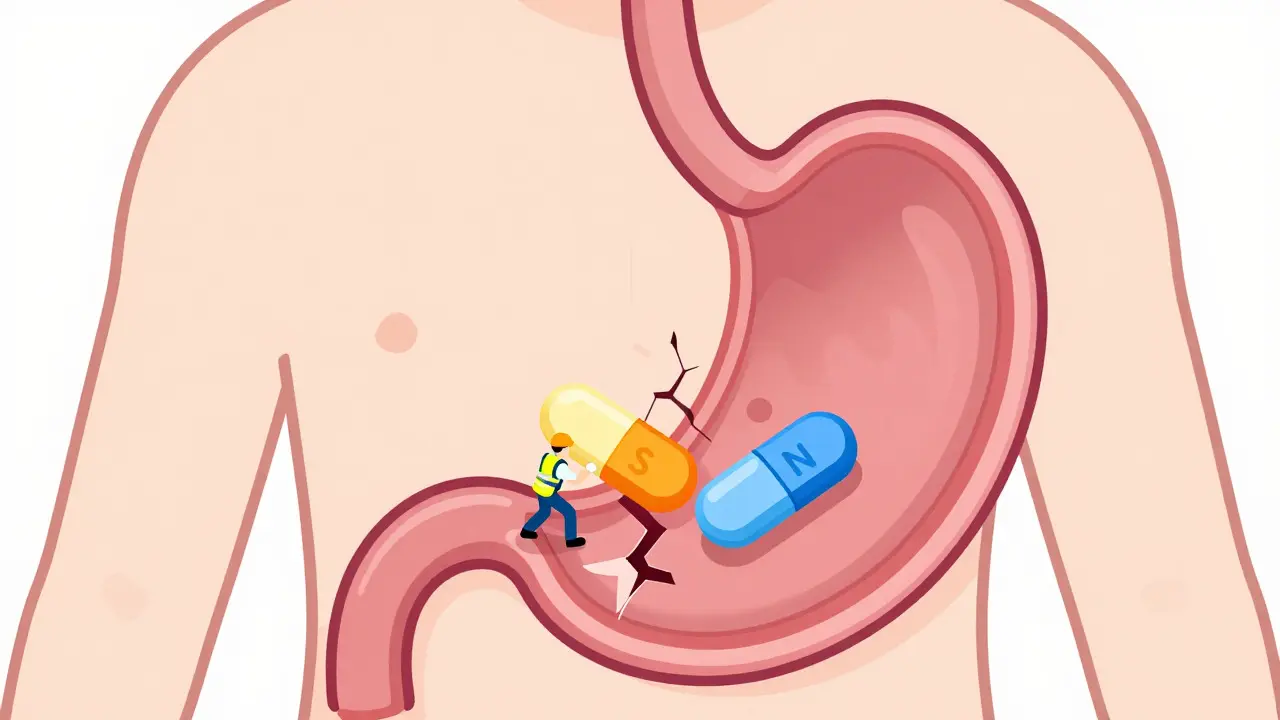
To understand why this mix is so hazardous, we need to look at how each drug affects your gut. NSAIDs are pain relievers like ibuprofen, naproxen, and diclofenac that work by blocking enzymes called cyclooxygenases. They cause damage through two main pathways. First, they irritate the gastric mucosa directly when the pill dissolves. Second, and more importantly, they inhibit COX-1, an enzyme responsible for producing prostaglandins. Prostaglandins are crucial because they stimulate mucus production and maintain blood flow to the stomach lining, keeping it healthy and resistant to acid.
When you add corticosteroids into the equation, the situation worsens dramatically. Steroids do not just add to the irritation; they impair the body's ability to repair itself. They delay ulcer healing, reduce gastric mucus secretion, and mask the symptoms of pain. Because steroids are analgesics themselves, you might not feel the burning sensation of a developing ulcer. By the time you notice black, tarry stools or experience dizziness from blood loss, the damage is often severe.
Epidemiological data paints a stark picture. A landmark study published in the American Journal of Epidemiology found that while steroid use alone increases the risk of upper GI complications by 1.8 times, combining steroids with NSAIDs skyrockets that risk. The odds ratio for upper GI bleeding or perforation jumps to 8.9 compared to people taking neither medication. In high-dose scenarios, this risk can exceed 12-fold. This is not additive; it is synergistic toxicity.
Who Is Most at Risk?
Not everyone who takes this combination will bleed, but certain factors make the outcome far more likely. The American College of Gastroenterology (ACG) identifies several major risk markers that clinicians must evaluate before prescribing:
- Advanced Age: Patients over 65 have thinner gastric linings and slower healing rates.
- History of Ulcers: If you have had a peptic ulcer before, your risk is significantly higher. The European Society of Gastrointestinal Endoscopy notes that 78% of NSAID-related bleeding fatalities occur in patients with a prior ulcer history.
- High Doses: Taking high doses of NSAIDs (e.g., ibuprofen ≥1200mg/day) combined with any dose of steroids drastically increases ulcer risk.
- Concomitant Anticoagulants: Adding blood thinners like warfarin or aspirin to the mix creates a triple-threat scenario, with odds ratios for major bleeding exceeding 13.0.
- H. pylori Infection: An undiagnosed stomach infection further compromises mucosal defense.
It is also important to note that the risk applies to both prescription and over-the-counter NSAIDs. Many patients assume that because they bought their ibuprofen at the pharmacy counter, it is safe to combine with their prescribed prednisone. This misconception leads to preventable hospitalizations.
Prevention Strategies That Actually Work
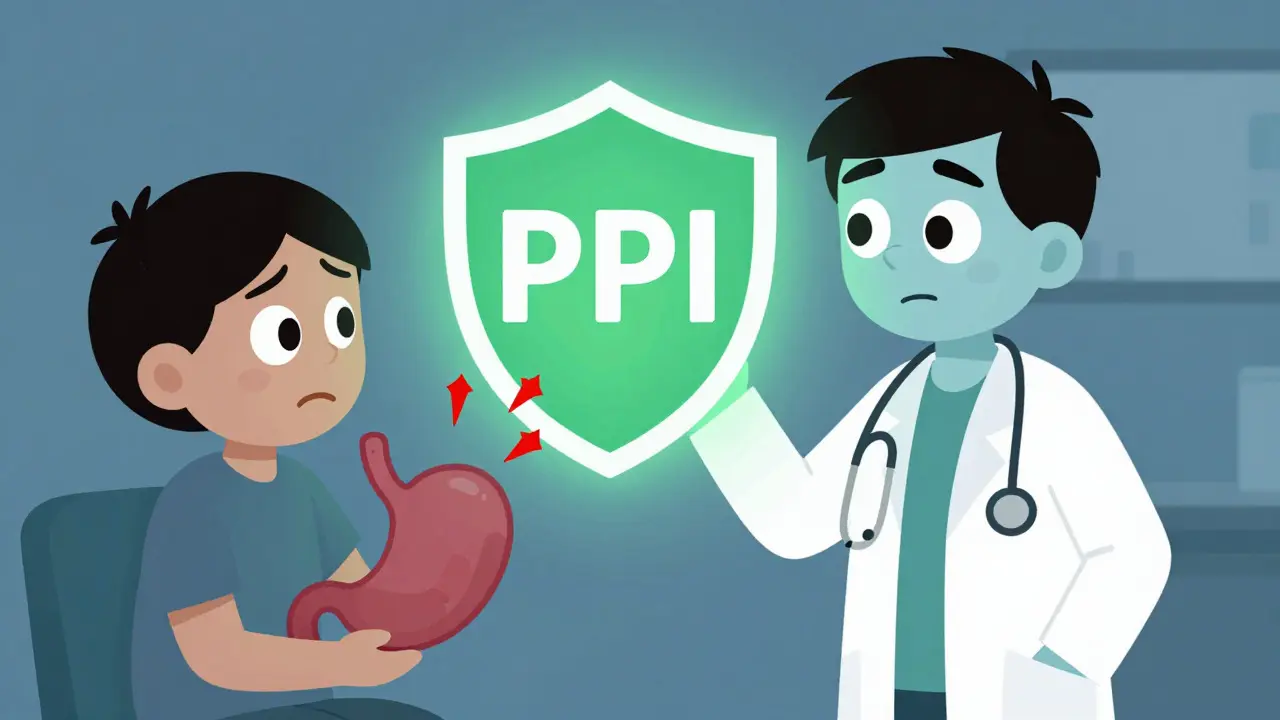
If you require both steroids and NSAIDs, prevention is not optional-it is mandatory. The gold standard for protecting your stomach in this scenario is the use of Proton Pump Inhibitors (PPIs) are medications like omeprazole, pantoprazole, and esomeprazole that strongly suppress stomach acid production.
Clinical guidelines from the American Gastroenterological Association (AGA) strongly recommend PPI co-therapy for all patients on concomitant NSAID and corticosteroid treatment. PPIs are superior to other options like histamine-2 receptor antagonists (H2RAs, such as famotidine). Studies show PPIs reduce the risk of NSAID-induced ulcers with an odds ratio of 0.27, whereas H2RAs only achieve an OR of 0.52. In plain English, PPIs are nearly twice as effective at preventing ulcers in this context.
| Agent Type | Examples | Efficacy vs. Ulcers | Recommendation Level |
|---|---|---|---|
| Proton Pump Inhibitors (PPIs) | Omeprazole, Pantoprazole | High (OR 0.27) | First-line choice |
| H2 Receptor Antagonists | Famotidine, Ranitidine | Moderate (OR 0.52) | Inferior to PPIs |
| Misoprostol | Cytotec | High | Effective but poor tolerance due to diarrhea |
| COX-2 Selective Inhibitors | Celecoxib | Moderate (when combined with PPI) | Preferred NSAID type if available |
For high-risk patients-those over 65, with a history of ulcers, or taking anticoagulants-guidelines suggest double-dose PPI therapy (e.g., omeprazole 40mg daily). For standard-risk patients, a once-daily low dose (e.g., omeprazole 20mg) is typically sufficient. Crucially, this prophylaxis must continue for the entire duration of the NSAID and steroid course, not just the first few days.
Choosing the Right NSAID Matters
Not all NSAIDs carry the same level of risk. Traditional NSAIDs (tNSAIDs) like naproxen and diclofenac have higher GI toxicity profiles. In contrast, COX-2 selective inhibitors like celecoxib demonstrate approximately 50-60% lower risk of upper GI events. The CONCERN trial showed that for patients needing both aspirin and NSAID therapy, using celecoxib plus a PPI reduced recurrent bleeding risk by 54% compared to naproxen plus a PPI.
However, even COX-2 inhibitors are not risk-free when combined with steroids. They still elevate risk compared to no NSAID use, though at a lower absolute rate than traditional NSAIDs. If you have cardiovascular risks, talk to your doctor about the trade-offs, as COX-2 inhibitors can have different cardiac implications than traditional NSAIDs.
Another emerging option is fixed-dose combination products. The FDA approved naproxen/esomeprazole (Vimovo) for high-risk patients requiring NSAID therapy. This single pill delivers both the pain relief and the stomach protection, improving adherence. Clinical trials demonstrated 54% fewer endoscopic ulcers with this combination compared to naproxen alone.
The Gap Between Guidelines and Practice
Despite clear evidence, implementation remains inconsistent. A 2022 analysis of over 12,000 hospital admissions found that only 38.7% of patients receiving both NSAIDs and corticosteroids were prescribed appropriate gastroprotection. The gap is even wider in non-rheumatology services, where compliance dropped to 22.3%. Why? Often, it comes down to communication silos. A primary care provider might prescribe a steroid burst for asthma, unaware that the patient is self-medicating with chronic ibuprofen for back pain.
This lack of awareness has real consequences. Data from the FDA Adverse Event Reporting System shows that combination therapy accounts for 18.3% of all serious NSAID-related GI adverse events, despite representing only 6.2% of prescriptions. Patient surveys reveal that 63% of those who experienced bleeding had never been warned about this specific interaction by their prescriber.
Action Plan for Patients and Clinicians
So, what should you do if you are facing this combination? Here is a practical checklist to ensure your safety:
- Disclose All Medications: Tell every doctor you see about every drug you take, including over-the-counter painkillers, supplements, and herbal remedies. Do not assume they know.
- Ask About PPIs: If you are starting a steroid course and are already on an NSAID, ask your doctor: "Do I need a proton pump inhibitor to protect my stomach?"
- Monitor for Symptoms: Watch for black, tarry stools, vomiting blood, or coffee-ground-like vomit. Also be alert for unexplained fatigue, dizziness, or abdominal pain. These are red flags for GI bleeding.
- Test for H. pylori: If you have a history of ulcers or recurrent GI issues, ask to be tested for Helicobacter pylori. Eradicating this bacteria can significantly lower your baseline risk.
- Review Duration: Use the lowest effective dose of NSAIDs for the shortest possible time. Avoid long-term daily use unless absolutely necessary and monitored.
For clinicians, integrating clinical decision support tools can help. Systems that automatically flag NSAID/steroid combinations and prompt for PPI co-prescription have reduced bleeding events by nearly 70% in early adopter networks like Mayo Clinic. Using validated risk calculators, such as the ACG’s GI Risk Calculator, ensures that prophylaxis intensity matches the patient’s actual risk profile.
The bottom line is simple: steroids and NSAIDs are powerful tools, but together they are volatile. With proper awareness and proactive gastroprotection, you can harness their benefits without paying the price in blood.
How quickly does the risk of GI bleeding increase when taking steroids and NSAIDs together?
The risk elevation is detectable within 7 days of initiating combination therapy. Even short-term steroid bursts, commonly used for viral illnesses or acute inflammation, can trigger significant bleeding events if taken with NSAIDs without gastroprotection.
Is it safe to take over-the-counter ibuprofen with prescribed prednisone?
It is generally unsafe without additional protection. Ibuprofen is an NSAID, and its combination with prednisone (a corticosteroid) significantly increases the risk of GI bleeding. If you must take them together, you should consult your doctor about adding a Proton Pump Inhibitor (PPI) like omeprazole.
Which is better for stomach protection: Famotidine or Omeprazole?
Omeprazole (a PPI) is significantly better. Clinical guidelines prefer PPIs over H2 blockers like famotidine for preventing NSAID-induced ulcers. PPIs have been shown to be nearly twice as effective in reducing ulcer risk in patients taking NSAIDs and steroids.
Does Celecoxib (Celebrex) eliminate the risk of bleeding when taken with steroids?
No, it does not eliminate the risk, but it reduces it. Celecoxib is a COX-2 selective inhibitor and has a lower GI toxicity profile than traditional NSAIDs like naproxen. However, when combined with corticosteroids, the risk is still elevated compared to baseline. Gastroprotection with a PPI is still recommended for high-risk patients.
What are the signs of a gastrointestinal bleed I should watch for?
Key signs include black, tarry stools (melena), vomiting blood or material that looks like coffee grounds, severe abdominal pain, dizziness, lightheadedness, or unexplained fatigue and weakness due to anemia. If you experience these symptoms while on NSAIDs and steroids, seek immediate medical attention.
Can I take aspirin with steroids and NSAIDs?
Taking aspirin (another NSAID) with other NSAIDs and steroids creates a "triple threat" for GI bleeding. Aspirin adds to the mucosal damage and antiplatelet effects. If you are on low-dose aspirin for heart health, discuss alternative pain management strategies or enhanced gastroprotection with your cardiologist and primary care provider.